A facility manager once scheduled an entire day to clean a large commercial building, yet several high-touch areas were still missed. The problem was not a shortage of workers—it was the lack of a clear cleaning system. With the right zoning, equipment, and task order, large buildings can be cleaned faster without reducing hygiene standards.
Quick Answer: Large buildings can be cleaned in less time by dividing the property into zones, assigning specific tasks to each team, working from top to bottom, and using commercial-grade equipment. Disinfection should focus on high-touch surfaces rather than applying chemicals unnecessarily to every area.
The most effective approach includes:
- Inspecting the building before work begins
- Dividing floors into cleaning zones
- Removing loose dust before wet cleaning
- Using separate teams for different tasks
- Prioritising high-touch surfaces
- Using colour-coded tools
- Cleaning from cleaner areas toward dirtier areas
- Completing a final quality inspection
Why Large Building Cleaning Takes Longer
Large buildings contain multiple floors, entrances, corridors, windows, staircases, lifts, washrooms, shared areas, and exterior surfaces. Without proper planning, cleaners may repeat work, carry equipment between distant areas, or overlook important sections.
Time is often wasted when:
- Cleaning materials are not prepared in advance
- Teams begin without assigned zones
- Floors are cleaned before upper surfaces
- The same worker handles unrelated tasks
- Equipment must be repeatedly moved
- High-traffic areas are cleaned during busy hours
- Disinfection products are used incorrectly
Professional building cleaning services in Dubai usually reduce these delays by creating a site-specific plan before starting the work.
Start With a Building Assessment
Before cleaning begins, inspect the property and record:
- Number of floors
- Building entrances and exits
- High-traffic areas
- Staircases and lifts
- Exterior access points
- Floor and wall materials
- Glass surfaces
- Water and electricity access
- Waste collection points
- Areas requiring specialist equipment
- Safety hazards
The assessment helps determine the number of cleaners, required equipment, chemical quantities, and expected cleaning time.
A simple floor plan can also be used to divide the building into manageable sections.
Divide the Building Into Zones
Zoning is one of the most effective ways to reduce cleaning time.
Instead of allowing cleaners to move randomly through the property, divide the building into zones such as:
- Entrances and reception areas
- Corridors and staircases
- Lifts and shared spaces
- Exterior walls and entrances
- Glass and windows
- Parking and access areas
- Waste collection zones
- Washrooms and hygiene areas
Assign each zone to a specific team or worker. This creates accountability and reduces repeated cleaning.
For multi-storey buildings, teams can begin on separate floors and move in the same direction to avoid disrupting each other.
Prepare Equipment Before Starting
Cleaning becomes slower when workers repeatedly return to storage areas for supplies.
Prepare mobile cleaning stations with:
- Microfibre cloths
- Disinfectant
- Surface cleaner
- Glass-cleaning solution
- Mop heads
- Waste bags
- Brushes
- Extension poles
- Warning signs
- Protective gloves
- Small hand tools
Colour-coded cloths and mop heads should be used for different areas. This reduces cross-contamination and makes it easier for cleaners to identify the correct equipment quickly.
Use the Top-to-Bottom Cleaning Method
Always begin with higher surfaces and finish with floors.
The recommended order is:
- Remove cobwebs from ceilings and corners.
- Dust high ledges and fixtures.
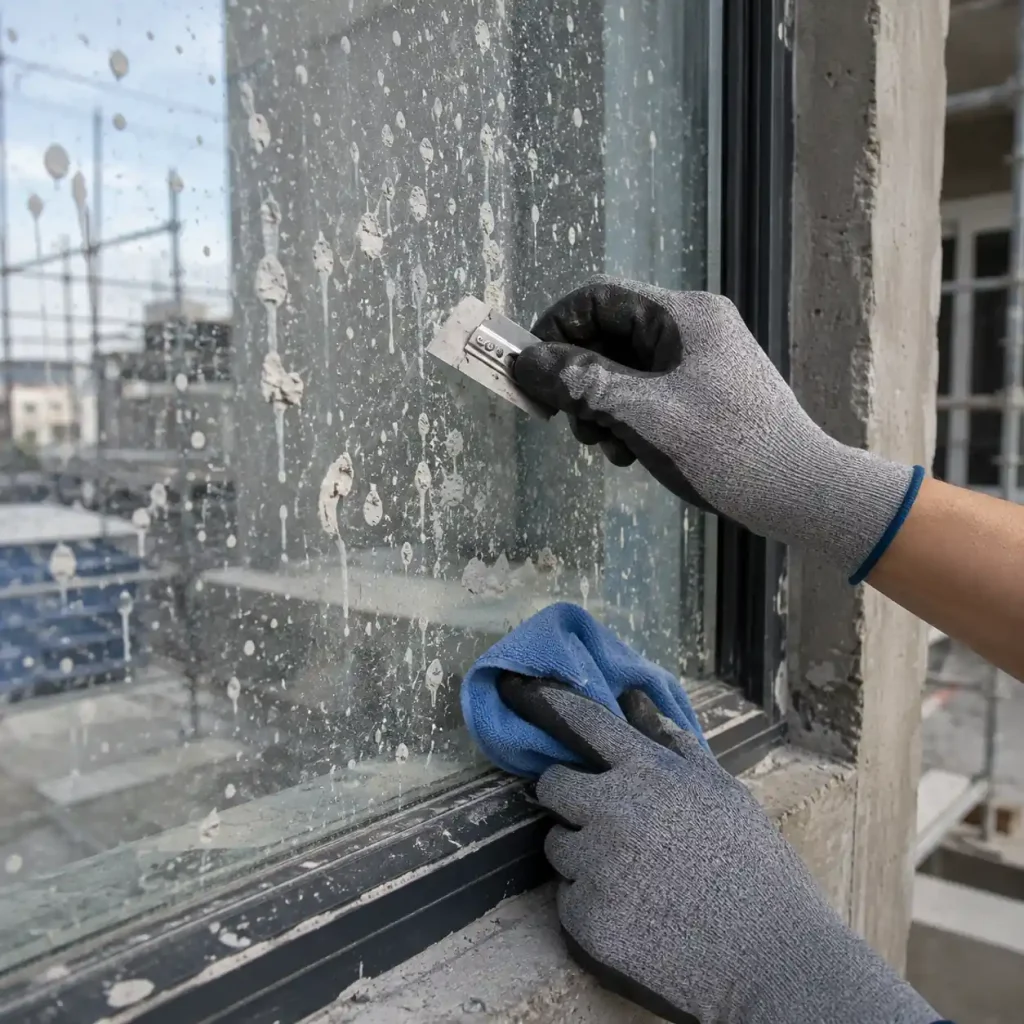
- Clean walls, railings, and glass.
- Wipe high-touch surfaces.
- Remove loose floor debris.
- Vacuum or scrub floors.
- Mop and disinfect where required.
Dust and debris naturally fall downward. Cleaning floors first creates unnecessary repeat work.
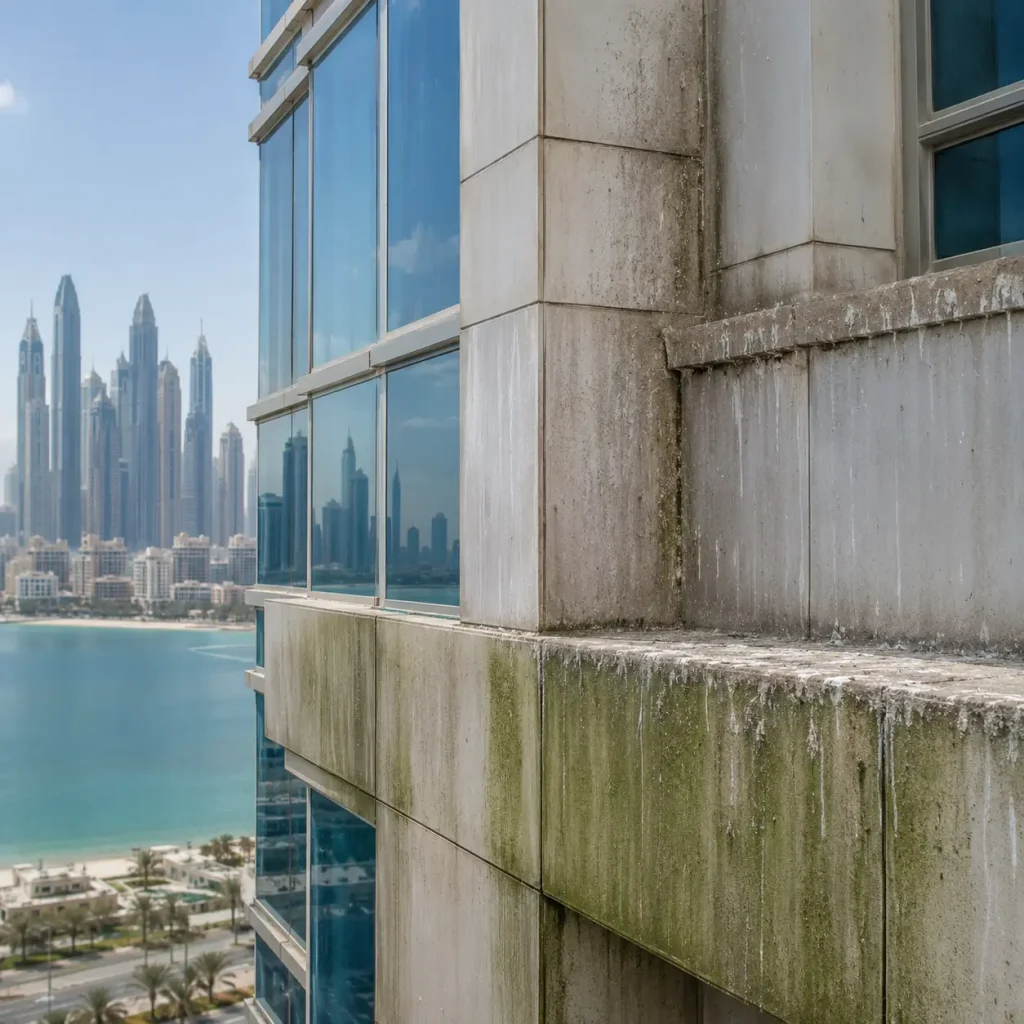
For exterior areas, begin with upper facade sections and windows before cleaning entrances, pathways, and ground-level surfaces.
Focus Disinfection on High-Touch Areas
Disinfection is most effective when used on surfaces that people touch frequently.
Priority surfaces include:
- Door handles
- Lift buttons
- Handrails
- Access-control panels
- Reception counters
- Light switches
- Intercom systems
- Shared equipment
- Entrance gates
- Push plates
- Washroom fixtures
Cleaning and disinfection are different processes. Dirt should usually be removed first because heavy dust or grease can reduce the effectiveness of disinfectants.
Follow the product’s recommended contact time. Wiping a disinfectant away immediately may prevent it from working properly.
Use the Right Equipment for Each Area
Commercial equipment can significantly reduce labour time.
| Equipment | Best use |
|---|---|
| Backpack vacuum | Staircases, corridors, and tight areas |
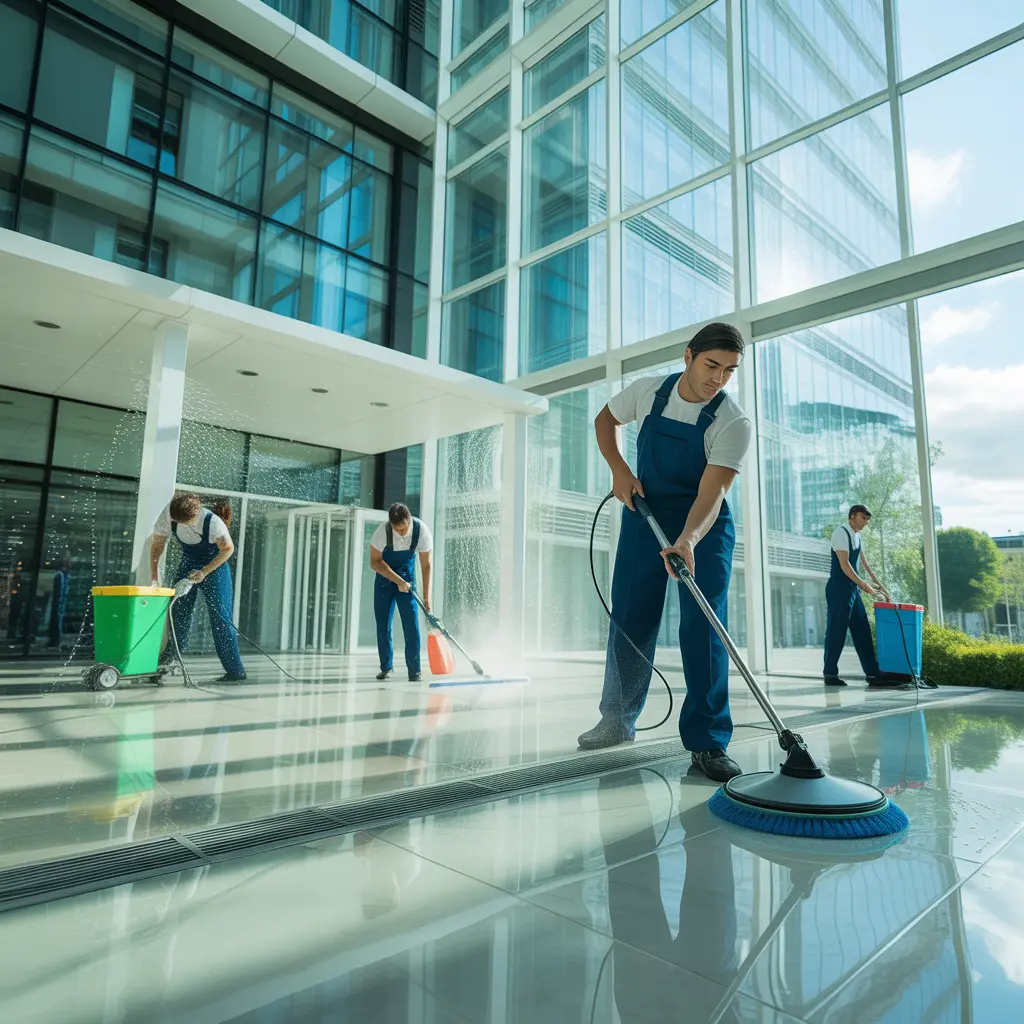
| Ride-on floor scrubber | Large open floors |
| Pressure washer | Suitable outdoor paving and concrete |
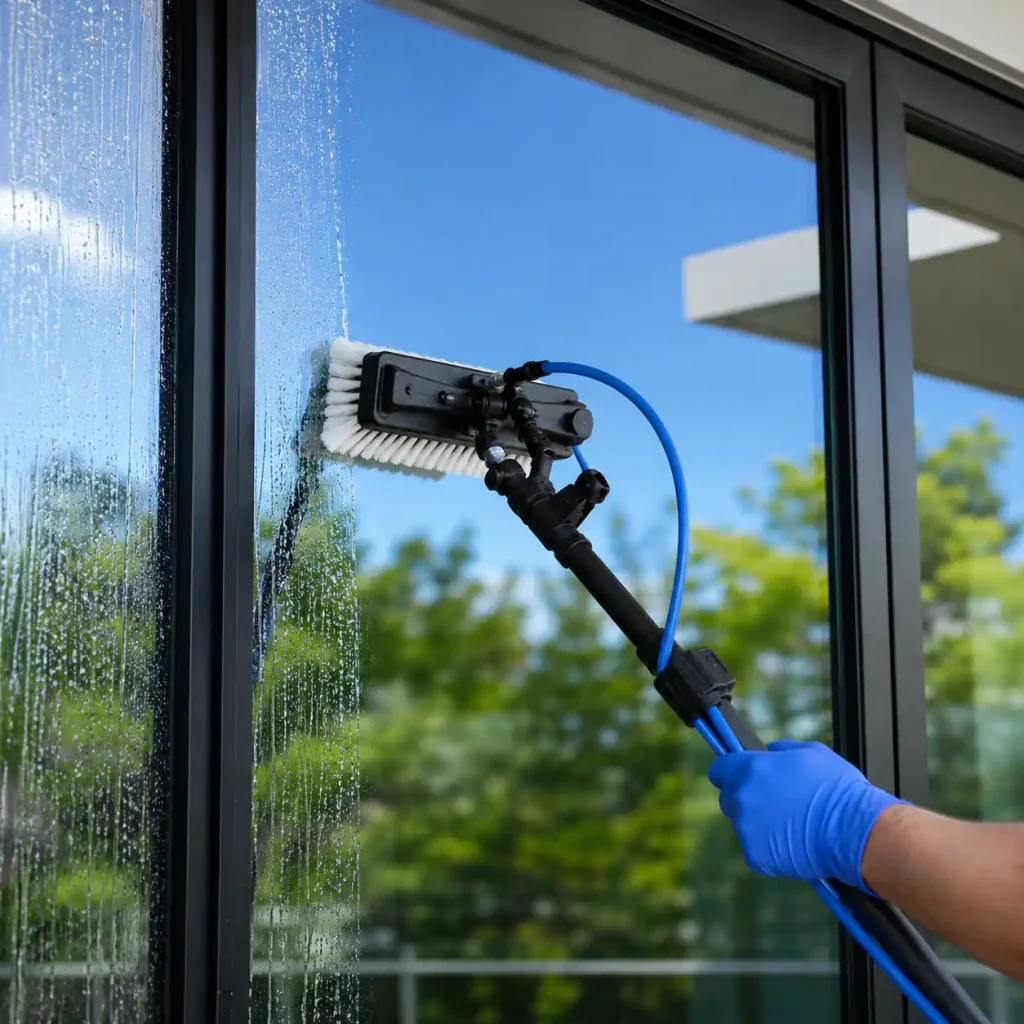
| Water-fed pole | Accessible external glass |
| Wet and dry vacuum | Water and heavy debris removal |
| Extension duster | High ledges and fixtures |
| Mobile cleaning trolley | Moving supplies between zones |
The equipment must suit the surface. High pressure can damage painted walls, grout, seals, and delicate exterior materials.
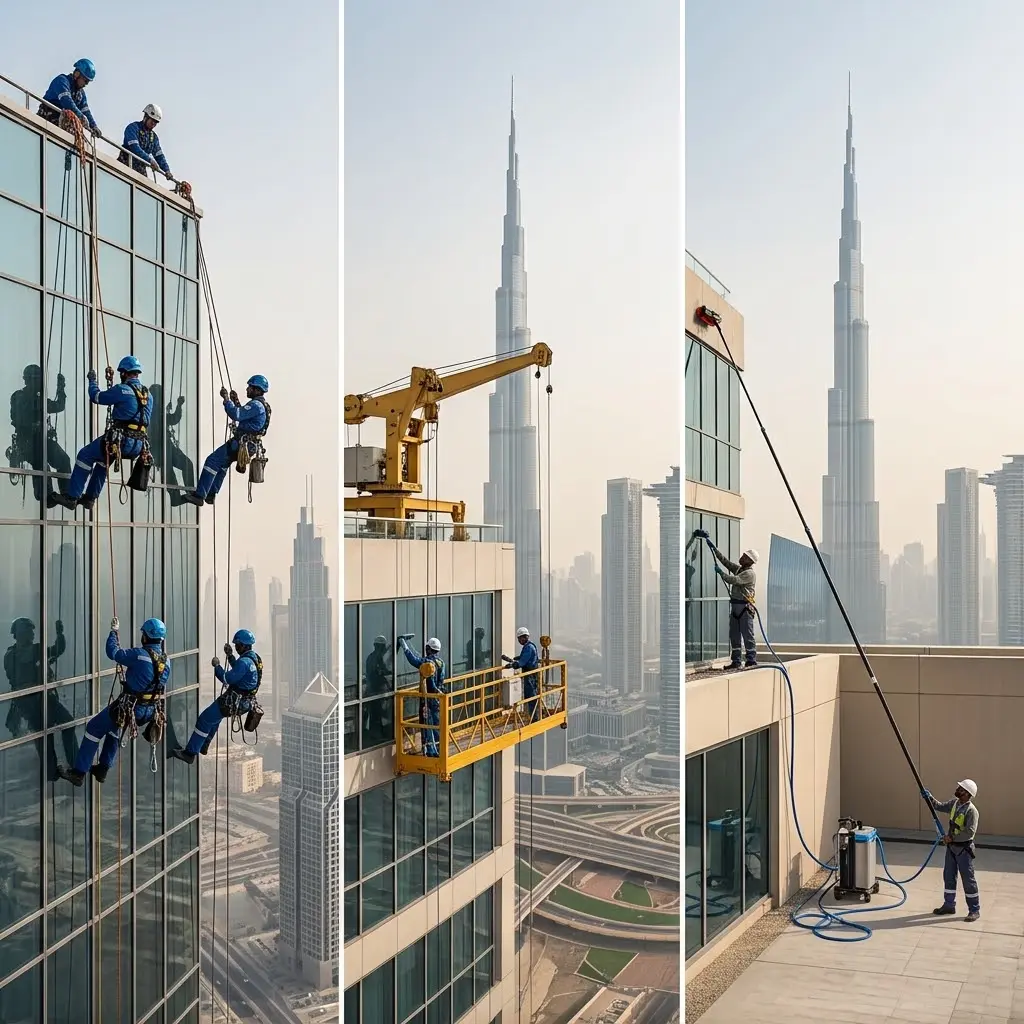
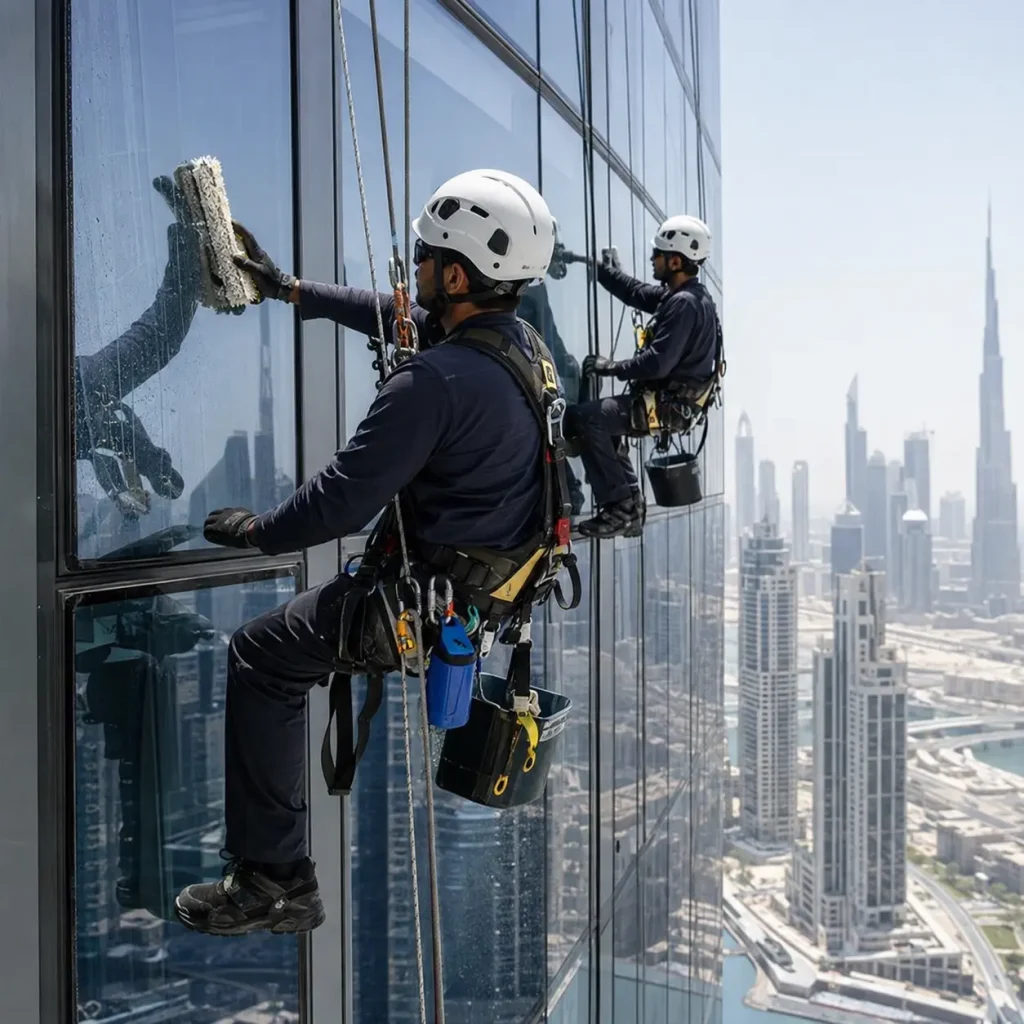
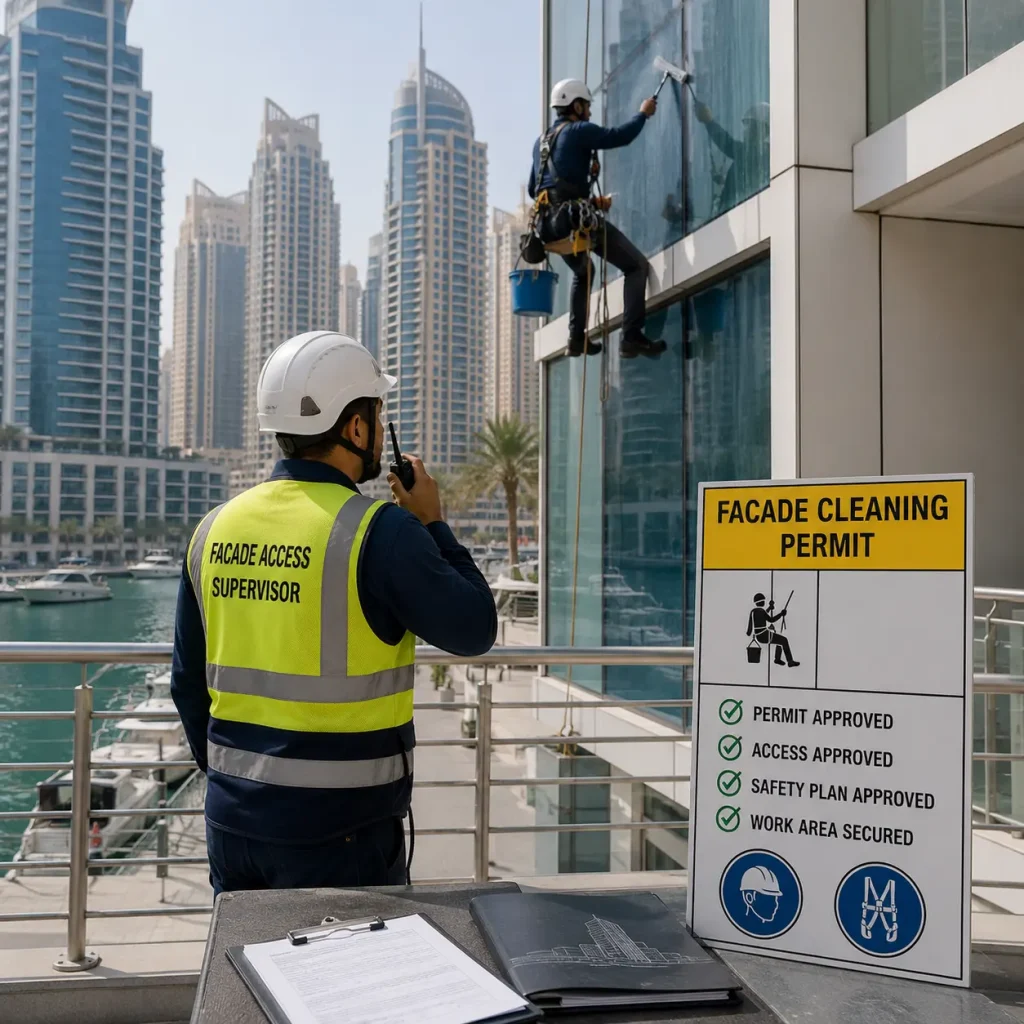
When cleaning tall glass windows, workers may need water-fed poles, mobile elevated platforms, scaffolding, or rope-access systems depending on the building height and design.
Clean During Low-Traffic Hours
Cleaning busy areas while people are using them creates delays and safety risks.
Where possible, schedule intensive cleaning:
- Before opening hours
- After business hours
- During weekends
- During shift changes
- Floor by floor
- In temporarily restricted zones
Use warning signs and barriers around wet floors, equipment, and active work areas.
Entrances, lift areas, and corridors may need to remain partially accessible, so these sections should be cleaned in smaller stages.
Quick Disinfection Hacks
Pre-Fold Microfibre Cloths
Fold each cloth into sections before cleaning. One cloth can then provide several clean surfaces without requiring frequent replacement.
Use Ready-to-Use Products
Pre-diluted disinfectants reduce mixing time and help avoid incorrect chemical concentrations.
Assign One Direction of Movement
Cleaners should move through each zone in one direction rather than walking back and forth.
Separate Dry and Wet Tasks
Complete dusting and vacuuming before beginning wet cleaning. This prevents dirt from turning into muddy residue.
Use Checklists
A checklist helps teams confirm that lifts, railings, glass, entrances, corners, and high-touch surfaces have been completed.
Position Supplies Strategically
Place temporary supply stations on different floors so workers do not need to travel long distances.
Common Time-Wasting Mistakes
Starting Without a Plan
Cleaners may duplicate work or overlook entire sections when zones are not assigned.
Using Too Much Disinfectant
Excess product wastes time, leaves residue, and may require additional wiping.
Mixing Cleaning Chemicals
Combining chemicals can create dangerous fumes and damage surfaces.
Using One Cloth Everywhere
This can spread dirt and microorganisms between areas.
Ignoring Product Contact Time
Disinfectant must remain wet for the duration stated by the manufacturer.
Moving Equipment Repeatedly
Large machines should be assigned to specific floors or zones whenever possible.
Skipping the Final Inspection
Missed areas often require the team to return later, increasing the total cleaning time.
Final Quality-Control Checklist
Before completing the service, inspect:
- Entrances and reception areas
- Lift doors and buttons
- Stair rails
- High-touch surfaces
- Glass and frames
- Floor edges and corners
- Exterior access areas
- Waste collection points
- Visible stains
- Wet or unsafe surfaces
A supervisor should record any areas that need additional attention before the team leaves.
Final Recommendation
Cleaning a large building efficiently requires planning rather than rushing. Divide the property into zones, organise tools before work starts, clean from top to bottom, and focus disinfection on high-touch surfaces. Use suitable commercial equipment and schedule demanding tasks during quieter hours. A final inspection ensures that faster cleaning does not result in missed areas or reduced hygiene standards.
Frequently Asked Questions
How can a large building be cleaned faster?
Divide the property into zones, assign tasks clearly, prepare supplies in advance, and use commercial equipment suited to each surface.
Should every surface be disinfected?
No. Routine disinfection should focus mainly on high-touch surfaces unless contamination or specific hygiene requirements justify broader treatment.
Is cleaning required before disinfection?
Yes. Dust, grease, and visible dirt should generally be removed before disinfectant is applied.
What equipment saves the most time?
Ride-on scrubbers, backpack vacuums, mobile cleaning trolleys, extension poles, and appropriate glass-cleaning equipment can significantly reduce cleaning time.
How should multi-storey buildings be organised?
Assign separate teams to floors or service zones and provide supplies on each level to minimise unnecessary movement.
Can cleaning chemicals be mixed to improve results?
No. Mixing chemicals can produce hazardous fumes, damage surfaces, and create serious health risks.