

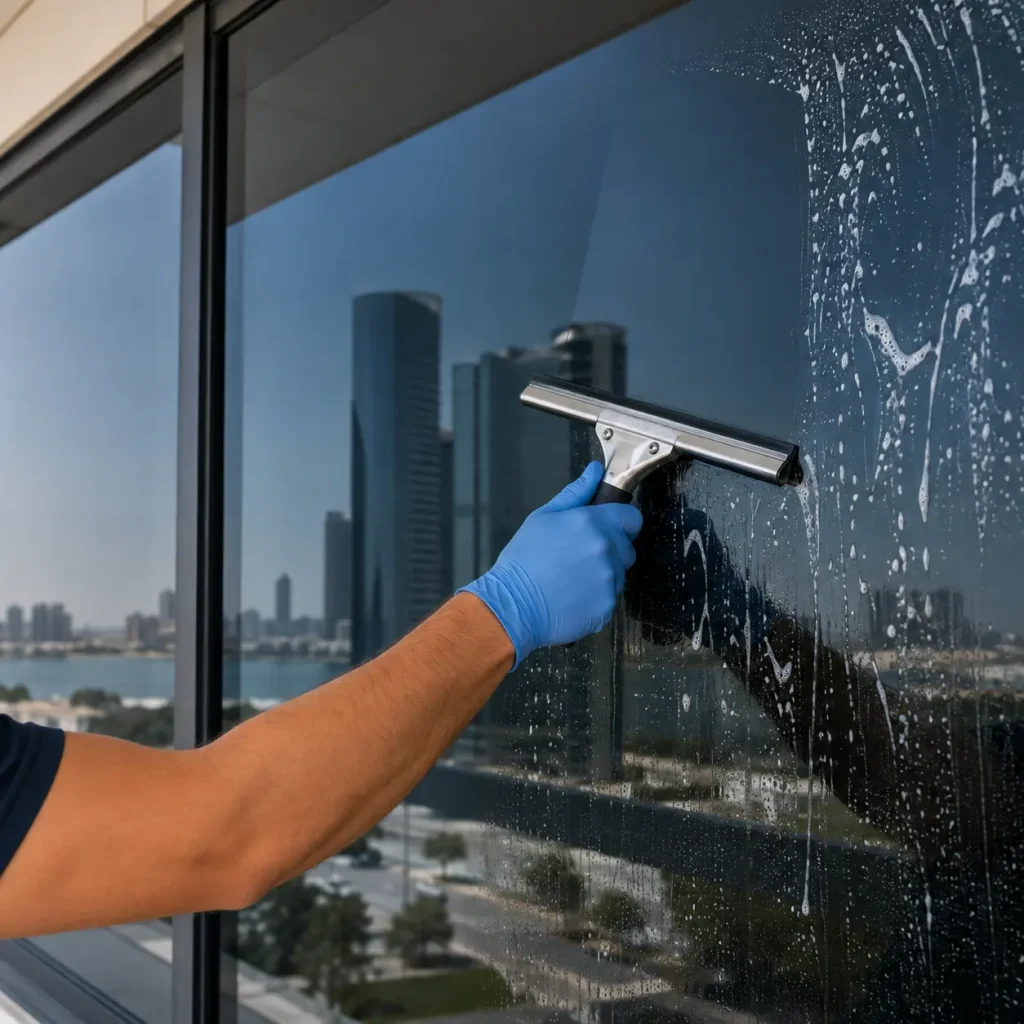
A client once handed me a bottle of ammonia-based glass cleaner and asked why the tint on her office windows had started bubbling at the edges. That bottle was the answer. Ammonia breaks down the adhesive that holds window film in place, and once it starts lifting, there’s no fixing it, only replacing the film entirely. That job is why I never treat tinted glass the same way as regular windows. If you’re wondering how to clean tinted windows without ruining them, the products and tools matter just as much as the technique, and getting either wrong can mean an expensive film replacement. This is a core part of professional window cleaning in Dubai, where tinted glass is common across both homes and commercial buildings.
Why Tinted and Filmed Glass Needs a Different Approach
Standard glass is a hard, non-porous surface that tolerates most cleaning products without issue. Window film is different. It’s a thin layer bonded to the glass using adhesive, and that adhesive, along with the film itself, can be damaged by the wrong chemicals, tools, or even aggressive scrubbing.
Once film is damaged, whether through bubbling, peeling, or scratching, it can’t be spot-repaired. The entire panel typically needs to be replaced, which makes prevention far more important than correction after the fact.
What Damages Window Tint During Cleaning
Ammonia-based cleaners. This is the most common cause of tint damage. Ammonia breaks down the adhesive bond between the film and the glass, leading to bubbling, peeling, or cloudy discoloration over time.
Abrasive tools. Scouring pads, steel wool, or rough scrub brushes can scratch the film’s surface, leaving permanent marks that no amount of cleaning will remove.
Razor blades and scrapers. Tools that are safe on bare glass, like a scraper used for cement or paint removal, will cut straight through window film if used the same way.
Excessive pressure. Aggressive scrubbing, even with a soft cloth, can stress the adhesive layer over time, especially on older film that’s already showing signs of wear.
How to Clean Tinted Glass Safely
Step 1: Choose an Ammonia-Free Cleaner
This is the single most important decision in the entire process. Look specifically for cleaning products labeled ammonia-free, or better yet, formulated specifically for tinted or filmed glass. A mild solution of water with a small amount of dish soap also works well for routine cleaning without any risk to the film.
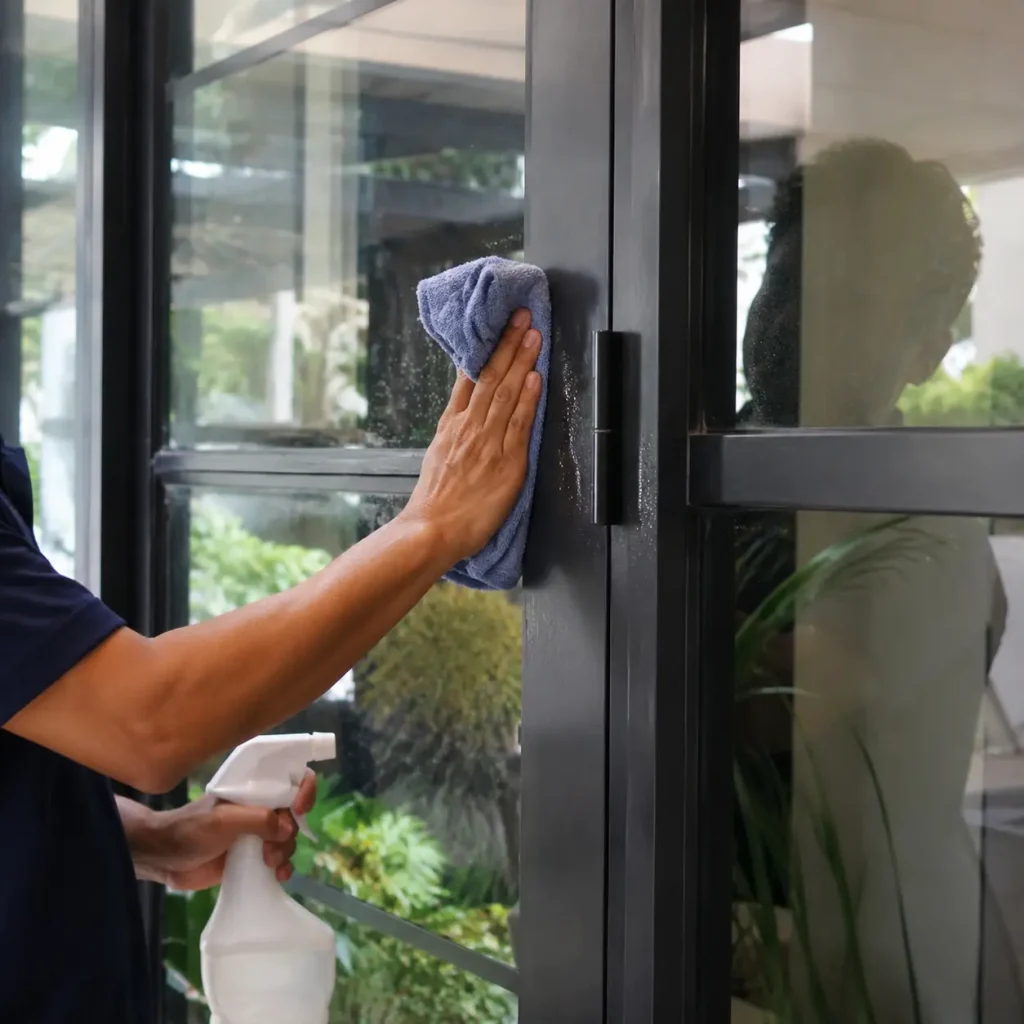
Step 2: Use a Soft Microfiber Cloth or Soft Sponge
Avoid anything abrasive. A microfiber cloth or a soft, non-scratch sponge lifts dirt effectively without putting the film’s surface at risk.
Step 3: Clean With Light, Even Pressure
Wipe in straight lines or gentle circular motions, without pressing hard. Window film doesn’t need aggressive scrubbing to come clean, and heavy pressure adds unnecessary risk for no real benefit.
Step 4: Dry With a Separate Soft Cloth
Rather than letting the cleaning solution air-dry, wipe it away with a dry, soft cloth immediately after cleaning. This helps prevent streaking and reduces the amount of time any cleaning solution sits on the film’s surface.
Step 5: Avoid Cleaning Newly Installed Film
Freshly applied window film needs time to fully cure, often several days to a couple of weeks depending on the product and climate. Cleaning too soon after installation can disrupt the curing process and affect how well the film adheres long term.
Cleaning Windows With Film vs Standard Glass: Key Differences
| Factor | Tinted or Filmed Glass | Standard Glass |
| Ammonia-based cleaners | Avoid entirely | Generally safe |
| Abrasive tools | Avoid | Can be used carefully |
| Razor blade scraping | Not recommended | Safe with proper technique |
| Pressure during cleaning | Light, even pressure | More tolerant of firm scrubbing |
| Best cleaning method | Ammonia-free solution, soft cloth | Wider range of safe options |
Why Pure Water Cleaning Works Well for Tinted Windows
One method that pairs particularly well with tinted and filmed glass is pure water cleaning, since it uses no chemicals at all, removing the risk of ammonia or harsh detergents affecting the film. Our guide on pure water window cleaning explains how this method works and why it leaves a streak-free finish without any risk to sensitive surfaces like window tint.
Window Film Maintenance Beyond Cleaning
Keeping tinted glass in good condition involves a bit more than just the cleaning process itself.
- Inspect film edges periodically for early signs of lifting or bubbling
- Avoid using adhesive tape or stickers directly on tinted windows, since removal can damage the film
- Keep sharp objects, tools, and even jewelry away from film surfaces during cleaning
- Address any visible damage early, since small issues tend to worsen rather than resolve on their own
Signs Your Window Film Needs Professional Attention
A few signs suggest it’s worth having a professional assess the film rather than continuing routine cleaning:
- Bubbling or air pockets forming under the film
- Peeling at the edges or corners
- Discoloration or a hazy, cloudy appearance
- Visible scratches affecting clarity
These issues typically point to film that’s reached the end of its lifespan or was damaged during cleaning or installation, and cleaning alone won’t resolve them.
Keep Your Tinted Windows Clear Without the Risk
Cleaning tinted and filmed glass safely comes down to using the right products, the right tools, and a gentler touch than standard glass requires. Get any of these wrong, and the fix is a full film replacement rather than a simple clean.
If you’d rather leave it to a team that handles tinted and filmed glass carefully every day, building cleaning services in Dubai uses ammonia-free methods safe for window film across residential and commercial properties. Get in touch to schedule a cleaning that keeps your tint looking clear for years to come
Frequently Asked Questions
How do I clean window tint without damaging it?
Use an ammonia-free cleaner, a soft microfiber cloth, and light pressure. Avoid abrasive tools and razor blades, and dry the surface with a separate soft cloth after cleaning.
Can I use regular glass cleaner on tinted windows?
Only if it’s specifically labeled ammonia-free. Many standard glass cleaners contain ammonia, which can damage the adhesive layer beneath window film over time.
What is the best way to clean tinted windows at home?
A mild solution of water and a small amount of dish soap, applied with a soft cloth and wiped dry, is a safe and effective method for routine home cleaning.
How soon after window film installation can I clean it?
Most film needs several days to a couple of weeks to fully cure before cleaning. Check with your installer for the exact timeframe recommended for your specific product.
Does cleaning frequency affect how long window film lasts?
Cleaning itself doesn’t shorten film life if done correctly. Using the wrong products or tools is what causes premature damage, not the frequency of cleaning.
Can scratched window film be repaired instead of replaced?
Generally no. Scratches and other surface damage to window film typically require full panel replacement, since spot repairs aren’t usually effective or long-lasting.