
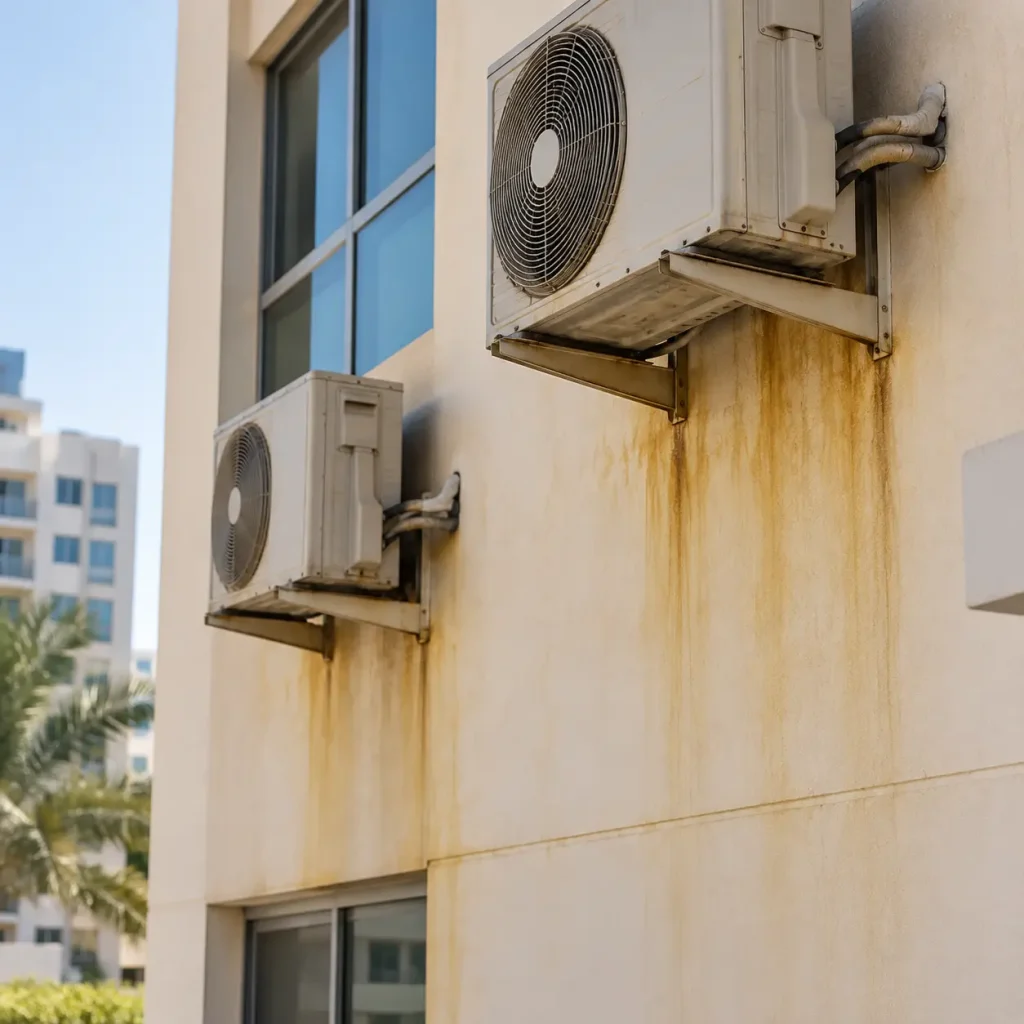
You washed the building six months ago. It looked sharp. Then, one morning, you park across the street, look up, and there they are again: those long yellow-brown tails running down the wall from every air conditioner.
Everywhere else, the paint still looks fine. Only the AC zones went bad.
That pattern is not random, and it is not a sign that the last clean was done badly. Something under those units is producing a stain faster than the rest of the wall can hold up. Once you know which one of the six causes you are dealing with, the fix is usually straightforward, and it is often cheaper than the repaint people jump to first.
We have surveyed and cleaned hundreds of stained AC zones across facade cleaning in Dubai and Sharjah, on towers, villas, warehouses, and older walk-ups. Here is what is actually happening on your wall.
The Short Answer
Yellow staining near AC units usually comes down to one of six causes:
- Condensate water mixing with desert dust and drying into a crust
- Rust bleeding from brackets, screws, grilles and cabinets
- Plasticiser bleed from the sealant around the pipe sleeve
- Algae and biofilm growing in the permanently damp strip
- Efflorescence salts pulled out of the render by moisture
- Heat-aged paint cooking behind a hot condenser
Most buildings have two or three of these at once. That is why a single pressure wash rarely holds.
What Is Actually Running Down Your Wall
Yellow stains below an AC unit are not always simple dirt. In Dubai and Sharjah, they can come from condensate, rust, sealants, biological growth, salts, or even heat-damaged paint. Here are the most common causes and how to tell them apart.
1. Condensate + Dust Creates a Yellow Crust
The water dripping from your AC is usually clear. The problem starts when it runs over dust collected on the wall.
Dubai and Sharjah’s airborne dust can contain fine mineral particles. As condensate carries this dust down the wall and evaporates in the heat, it leaves behind thin layers of residue. Over time, repeated dripping can turn this residue into a hard beige or yellow crust that normal washing cannot remove.
How to spot it: A gritty vertical streak that begins directly below the AC drain or drip point and gets wider further down.
2. Rust Bleeding From Brackets and Fixings
If the yellow mark starts from a screw, bracket, grille, or other metal fixing, rust may be the cause.
Humidity, coastal salt, and constant moisture from AC condensate can speed up corrosion, especially on low-quality or damaged metal hardware. Early rust often appears yellow-orange before becoming darker brown.
How to spot it: The stain starts at one small point and spreads downward in a teardrop shape. It usually looks more orange than beige.
3. Sealant Can Leave an Oily Stain
AC pipe penetrations are normally sealed with silicone or another sealant. Some low-quality sealants can release oily compounds as they age. These compounds can soak into porous paint or render and attract more dust.
This type of staining is recognised in the construction industry, including through ASTM C1248, which tests whether sealants can stain porous surfaces.
How to spot it: Look for a yellow or dirty-looking halo around the pipe opening rather than a long vertical streak. The area may feel slightly tacky, and pressure washing may have little effect.
4. Algae and Biofilm in Damp Areas
Constant moisture creates the right conditions for biological growth. The area below an AC unit can stay damp, especially when condensate combines with irrigation spray, shade, and trapped dust.
This can produce a dull yellow-green or mustard colour rather than a simple dust stain.
How to spot it: The mark looks patchy, has a greenish or mustard tone, and may feel slightly slimy when wet. It is often worse on shaded areas of the building.
5. Efflorescence and Salt Migration
Sometimes the problem is deeper than surface dirt. Water can enter cement render, dissolve soluble salts, and carry them toward the surface. When the water evaporates, the salts remain behind.
Efflorescence is usually white, but dust and minerals in the wall can make it appear yellow or beige.
How to spot it: The surface feels powdery or chalky. The stain may wipe away temporarily but returns later, often across a wider area rather than in one clear streak.
6. Heat-Aged or Discoloured Paint
Not every yellow mark can be cleaned. A condenser releases hot air, which can keep the nearby wall warmer than the surrounding surface. Long-term heat and UV exposure can cause some older paint systems to yellow or change colour.
How to spot it: The yellowing is flat and even, without a drip line or defined edges. Scrubbing does not remove it, and the colour stays almost the same when wet. In this case, repainting—not cleaning—is usually the solution.
The 60-Second Diagnosis Table
Before you call anyone, take two minutes with your phone camera. Zoom in on the stain and check it against this:
| What you see | What it feels like | Where it starts | Most likely cause |
| Long beige streak, widening downward | Gritty, hard | The drip point | Condensate + dust |
| Orange-yellow teardrop | Slightly rough | A screw, bracket or grille edge | Rust bleed |
| Soft ring or halo | Faintly tacky | The pipe sleeve | Sealant plasticiser bleed |
| Mustard or yellow-green patch | Slimy when wet | Damp shaded zone | Algae / biofilm |
| Chalky pale-yellow bloom | Powdery, dusty | Mid-wall, no drip line | Efflorescence |
| Flat even yellowing | Nothing lifts | Behind the condenser | Heat-aged paint |
Photograph each AC zone from the same spot every six months. That simple habit tells you whether a stain is growing, stable, or coming back faster than it should, and it makes any contractor quote far more accurate.
Is It Just Cosmetic, or a Warning Sign?
Most of it is cosmetic. Some of it is not.
Usually cosmetic: dust crusting, light biofilm, mild paint yellowing.
Worth acting on quickly:
- Efflorescence tells you water is entering the render. Left alone, saturated render loses adhesion and paint starts to blister and peel.
- Rust bleed means fixings are corroding. Those fixings hold a heavy condenser to a wall, often several floors up. That is a safety item, not a beauty item.
- A stain that keeps growing after cleaning usually means a blocked or missing condensate drain. That same blockage is what causes ceiling leaks and swollen gypsum inside the apartment.
We have opened up plenty of “just a yellow stain” jobs to find a drain pipe that was cut short at installation and had been discharging straight onto the render for years.
If your stain returns within weeks of a proper clean, stop paying for cleaning. Fix the source first.
Four Mistakes That Make It Worse
We get called to repair these more often than we get called to prevent them.
High-pressure washing on render. Blasting a wall at high pressure drives water into the substrate and straight through the sealed pipe penetration. You get a clean wall for a month and a damp problem for a year. Facades need controlled low-pressure soft washing, not car-park pressure.
Acid on the wrong substrate. Hydrochloric acid cleaners will strip a dust crust fast. They will also etch limestone, GRC panels, natural stone and aluminium trim permanently, and they can bleach paint into a patch that looks worse than the stain did.
Bleach on rust. Chlorine bleach does nothing useful to iron oxide and can set the stain deeper. Rust needs a targeted reducing or chelating treatment, applied carefully and rinsed properly.
Painting over it. Paint applied over active efflorescence, live rust bleed or a bleeding sealant fails. Sometimes within one season. The stain migrates back through the new coat, and now you have paid twice.
How Professionals Actually Remove Yellow AC Stains
A proper job is diagnostic first and chemical second.
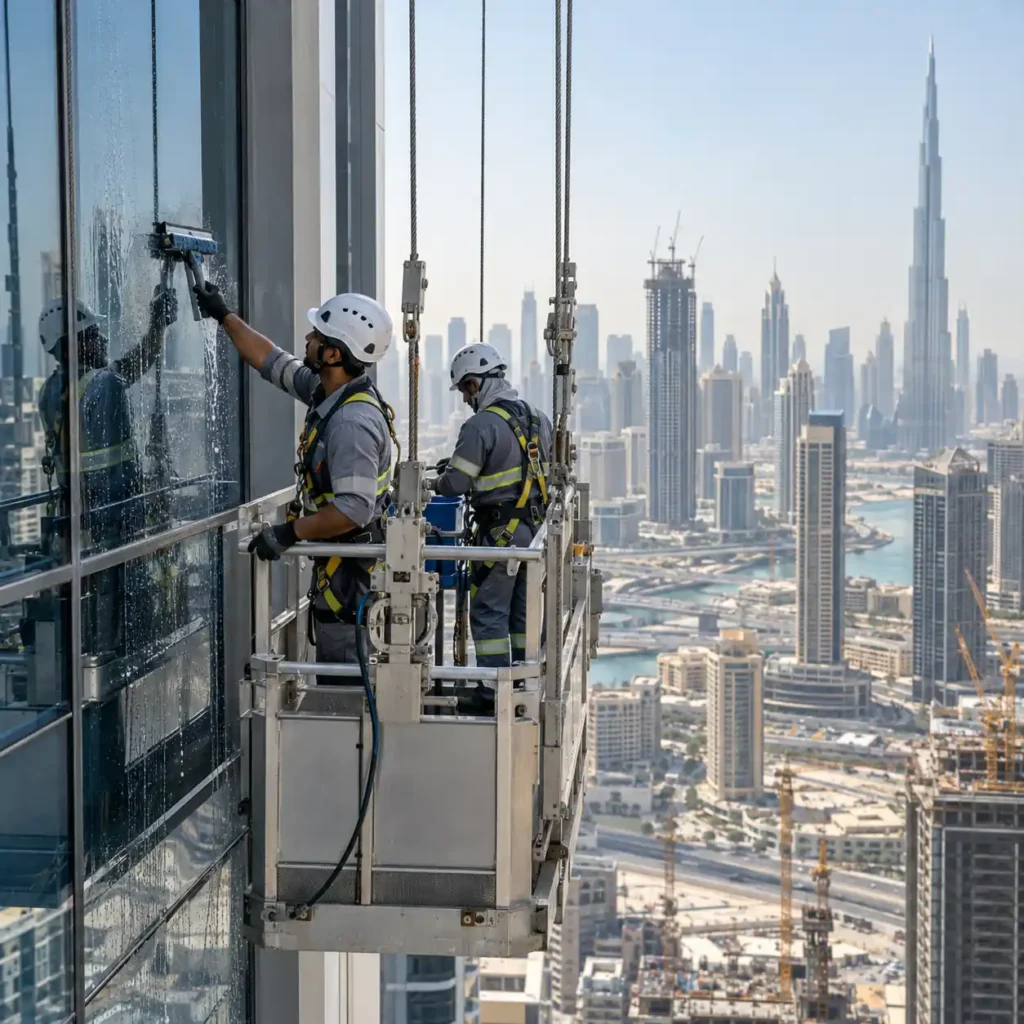
1. Close-up survey. Rope access or a cradle drop to inspect each AC zone at arm’s length. Photograph the drip points, fixings and sleeve seals.
2. Identify the cause per zone. Different units in the same building often have different problems. Treating them all the same is why results come out patchy.
3. Fix the source before cleaning. Reroute or clear the condensate drain. Replace corroded fixings. Cut out and reseal the sleeve with a non-staining sealant.
4. Test patch. Always. A small trial area on an inconspicuous elevation confirms the chemistry works and does not lift the coating.
5. Match the chemistry. Alkaline detergents for biofilm and organic soiling. Mild acidic or chelating treatments for mineral crust and rust pH-matched to the substrate. Solvent-based poultice for sealant bleed. Never one product for all six causes.
6. Dwell, agitate, rinse. Let the chemical do the work, agitate with soft brushes, then rinse at low pressure from top to bottom.
7. Protect and document. Reseal penetrations, note the condition of every AC bracket, and hand over a report the building can act on.
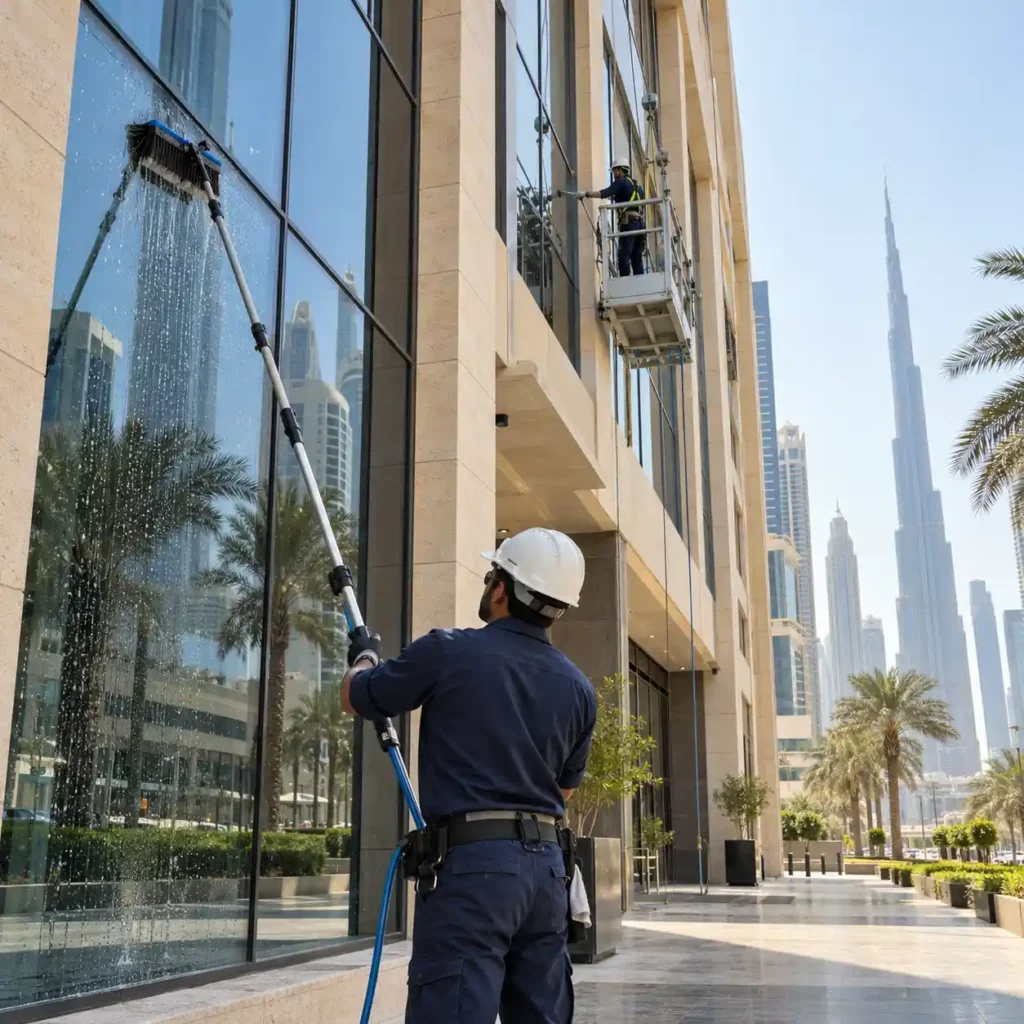
All work above ground level should be carried out by trained rope access or cradle operatives with valid third-party certification and proper permits. In Dubai and Sharjah, this is not optional.
How to Stop It Coming Back
- Route condensate to a drain. This is the single highest-impact fix. A drain line that discharges into a proper drainage point instead of onto the render eliminates the number one cause outright.
- Fit drip trays and drip edges. Where rerouting is not possible, a simple drip edge throws water clear of the wall face.
- Upgrade to stainless or hot-dip galvanised fixings. Especially within a few kilometres of the coast.
- Specify non-staining sealant at the pipe sleeve. Ask for the ASTM C1248 test data. Any serious supplier has it.
- Trim landscaping and redirect irrigation away from the wall base at villas.
- Clean on a schedule, not on a complaint. Removing dust before it cements takes a fraction of the effort of removing it afterwards. Our guide on how often facade cleaning should be done in the UAE breaks down realistic intervals by building type and location.
Scheduled cleaning is also cheaper per visit than reactive deep restoration, because the work is lighter and faster. If you are budgeting for the year, our breakdown of facade cleaning costs shows how costs vary with building height, access method, and soiling level.
Why This Is Worse in Dubai and Sharjah
Four local factors stack up here in a way they do not in most cities:
Humidity. Coastal UAE summers are genuinely humid. High dew points mean AC units run long hours and produce a lot of condensate for months, not weeks.
Dust. Shamal winds carry fine mineral dust across the Emirates for much of the year. There is always a fresh layer for condensate to mobilise.
Salt. Buildings within a few kilometres of the Gulf coast sit in salt-laden air, which accelerates corrosion of every exposed fixing.
Run time. In much of the world, AC runs three months a year. Here, many units run in some form for eight or nine. The staining cycle simply gets more repetitions.
None of that makes yellow staining inevitable. It just means the source fixes matter more here than they would elsewhere.
The Takeaway
Yellow staining near AC units is often a source problem, not just a cleaning issue. Cleaning may remove the stain temporarily, but fixing the cause—such as condensate drainage, corroded fixings, or damaged sealant—helps prevent it from returning.
Shafaf surveys each AC zone, identifies the cause, and uses the right cleaning method for your facade. With years of experience providing Building Cleaning Services in Dubai and Sharjah, we can help identify and resolve AC-related facade staining.
Send us three photos of your worst AC zone and we will tell you what is causing it at no charge, no obligation. Request your facade survey today.
Frequently Asked Questions
Why is the yellow stain only under my AC?
Because condensate repeatedly runs over the same area, carrying dust and leaving a concentrated yellow deposit as it evaporates.
Can I remove AC stains myself?
Light stains on ground-floor walls can be cleaned with a soft brush and mild detergent. Avoid acid, bleach, and high-pressure washing. Stains involving rust, sealant, or dampness need professional treatment.
Will repainting solve the problem?
Not unless you fix the cause first. Active leaks, rust, or failing sealant can make the stain return through new paint.
How long will the stain stay away after cleaning?
If the source is fixed, the facade should remain clean through normal dust buildup. If the stain returns within weeks, the underlying issue likely remains.
Are yellow AC stains harmful?
The stain itself is usually harmless, but persistent dampness can encourage microbial growth and damage render. Corroded AC brackets can also become a safety concern.
Does hard water cause AC stains?
Usually not. AC condensate contains very few minerals, but irrigation, window cleaning, or cooling-tower water can leave additional mineral deposits.
Is AC staining normal on a three-year-old building?
It can happen, but early staining may indicate poor drainage, corroding fixings, or low-quality sealant. Fixing the source early can prevent repeated cleaning and repairs.