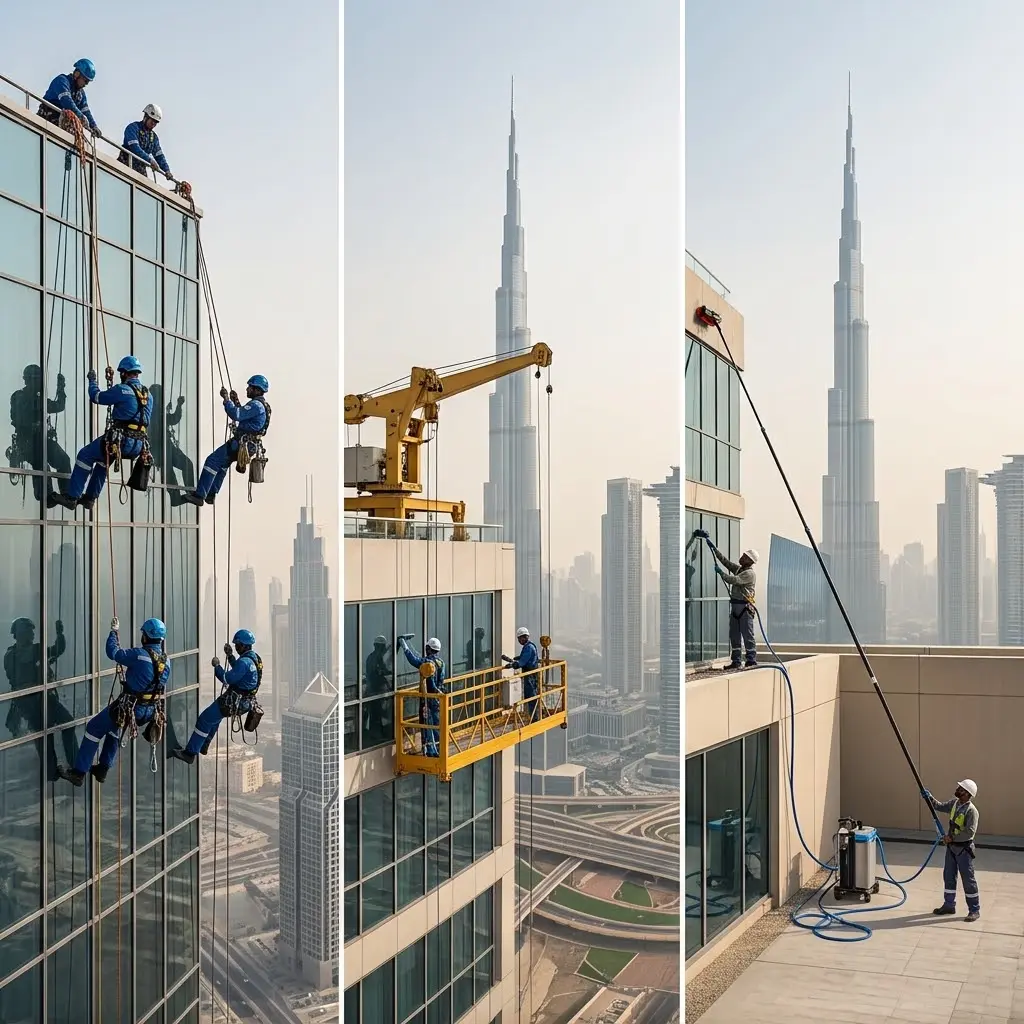
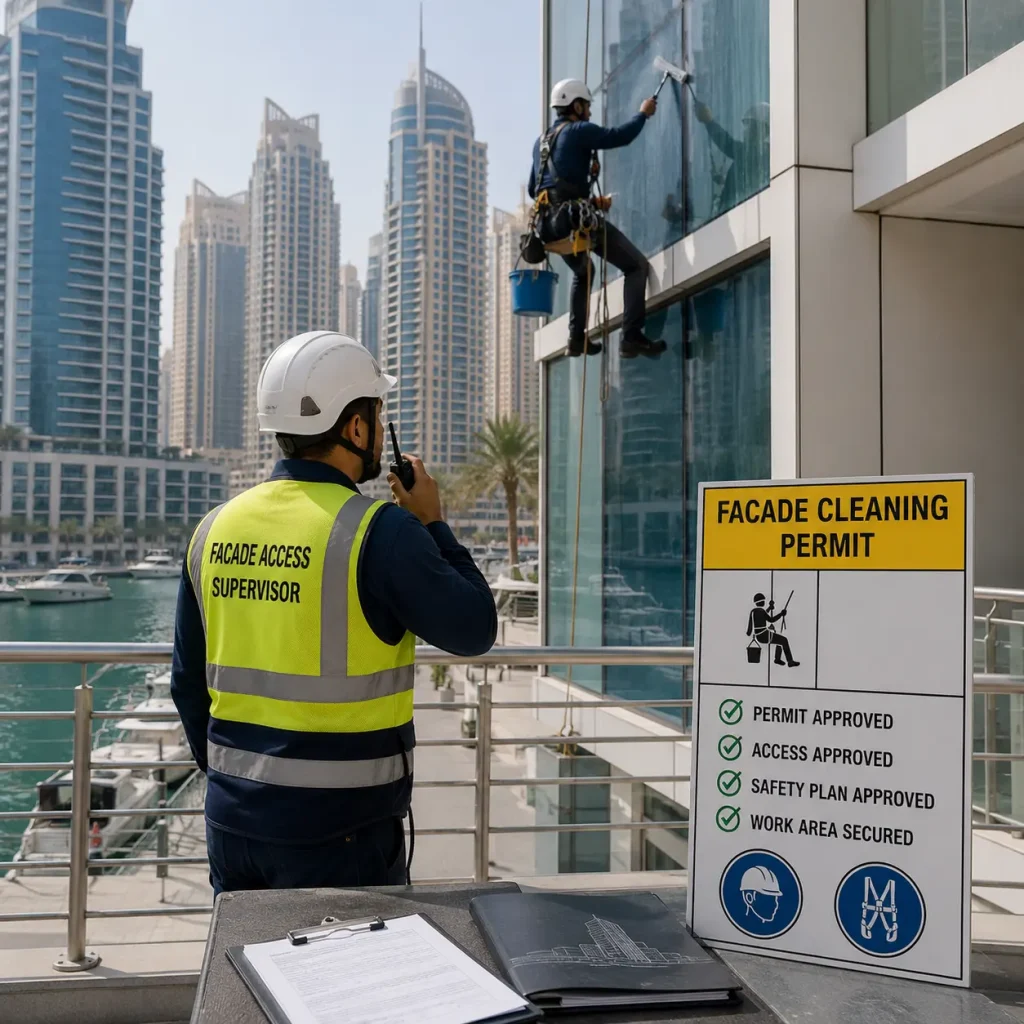
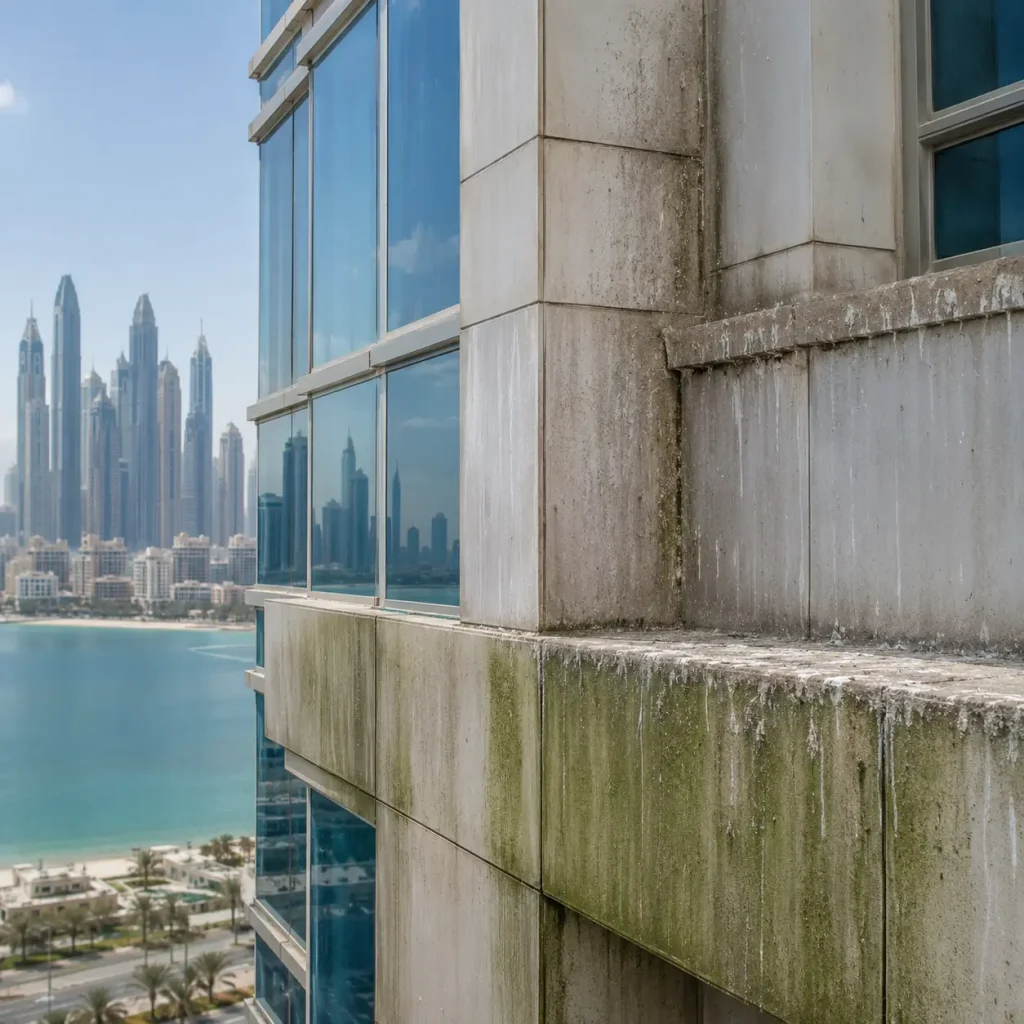
Facade cleaning involves work at height, specialist access equipment, workers operating around occupied buildings, and sometimes pedestrians or vehicles below. That combination creates risks that building managers should address before a cleaning project begins—not after an accident, damaged facade element, or dropped object occurs. From a contractor-management perspective, insurance is only one part of the process; the company’s licensing, work-at-height procedures, trained personnel, equipment controls, and responsibility for third-party or property damage should also be verified. This guide explains the key facade cleaning insurance and liability considerations in the UAE and the practical documents and safety measures property and facility managers should review before appointing a contractor.
Why Insurance Matters More for Facade Cleaning
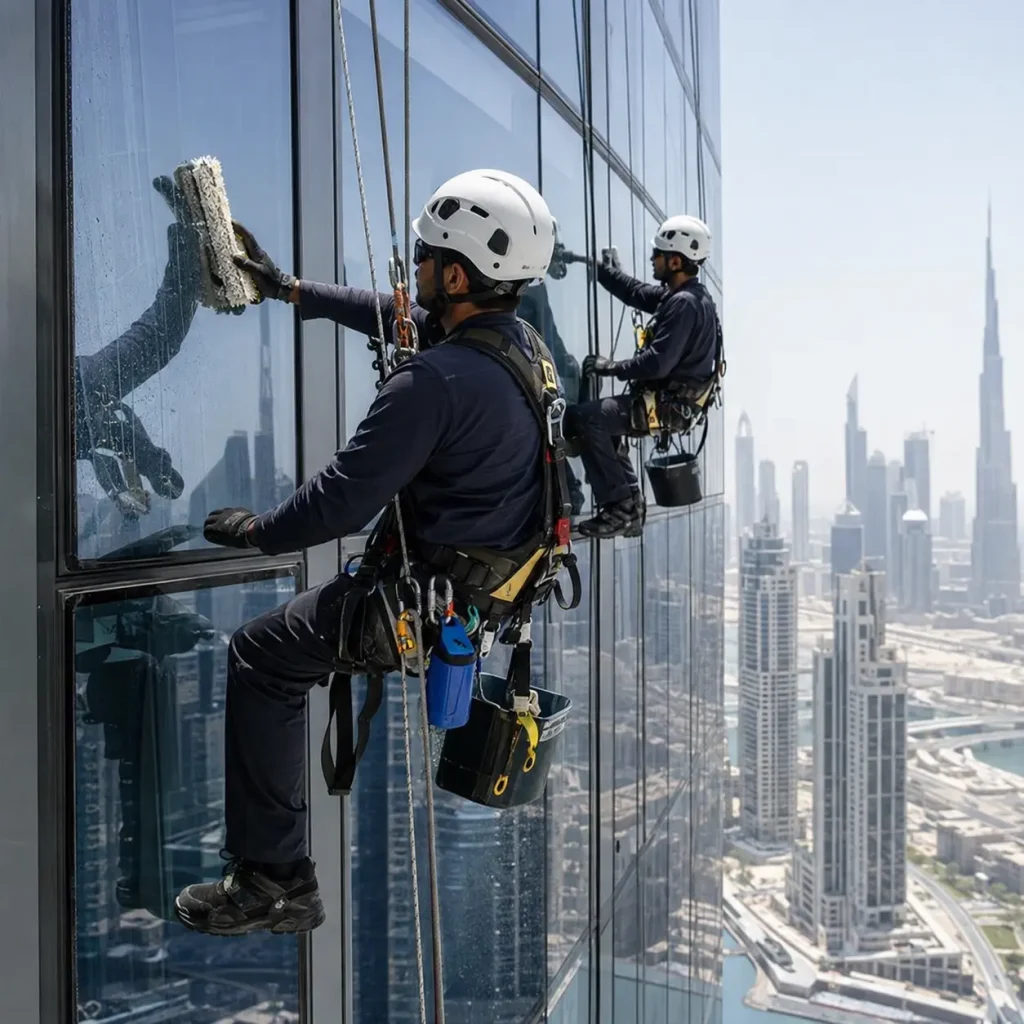
Facade cleaning, especially on high-rise buildings using rope access or cradle systems, carries more risk than general cleaning work. This is particularly important for facade cleaning in Sharjah, where work may take place above pedestrian areas and around glass, balconies, and shared building infrastructure. Proper insurance helps protect both the building and the contractor if something goes wrong during the job.
This is particularly relevant for taller buildings, where the process itself takes longer and involves more equipment. Our guide on how long facade cleaning takes on a 40-floor tower covers how extended, multi-day jobs at height add to the overall risk profile that insurance needs to account for.
Types of Coverage to Look For
Public Liability Insurance
This covers damage or injury to third parties, pedestrians, nearby property, or building occupants, caused during the cleaning work. It’s one of the most important coverages to confirm before any high-rise job begins.
Employer’s Liability Insurance
This protects the contractor’s own workers in the event of an accident or injury on the job, which is especially relevant for rope access and height-based work.
Equipment and Property Damage Coverage
This covers damage to the building itself, windows, facade materials, or fixtures, that might occur during the cleaning process, whether from equipment malfunction or human error.
What Building Management Should Verify Before Hiring
- Valid public liability insurance, with coverage limits appropriate for the building’s size and location
- Proof of certified rope access or high-rise cleaning training for technicians
- Employer’s liability coverage for the contractor’s staff
- A written agreement outlining responsibility in the event of damage or incident
Asking for documentation upfront, rather than taking a contractor’s word for it, is standard practice for commercial buildings and worth applying to residential properties as well.
How This Connects to Access and Permits
Insurance requirements often overlap with the permit process, particularly for buildings in busy or high-traffic areas. Waterfront and marina-facing towers, for example, typically require both permits and confirmed liability coverage before work can proceed. Our overview of facade cleaning in Dubai Marina permits and access covers how these requirements come together for buildings in that specific area.
What Happens If a Contractor Isn’t Properly Insured
Hiring an uninsured or under-insured contractor shifts risk directly onto the building owner or management company. If an incident occurs, damage costs, medical expenses, or legal liability can fall on the property rather than the contractor, which is a significant financial exposure for what’s often a routine maintenance task.
Questions to Ask Before Signing a Contract
- What is your public liability coverage limit?
- Can you provide proof of insurance before work begins?
- Are your technicians certified for rope access or high-rise work?
- Who is responsible for damage to windows, fixtures, or nearby property during the job?
- Does your coverage extend to third-party pedestrians below the work area?
A contractor confident in their insurance and safety standards should be able to answer these clearly and provide documentation without hesitation.
The Bottom Line
Facade cleaning insurance and liability coverage protect both the building and the contractor during work that carries real risk, especially on high-rise properties using rope access. Verifying coverage before hiring, rather than after an incident, is the difference between a routine maintenance job and a costly liability issue.
If you’re evaluating a facade cleaning contractor, our facade cleaning services team in Sharjah can provide full documentation of our coverage and certifications before any work begins. For other building maintenance needs, Building Cleaning Services in Sharjah is also available. Get in touch to discuss your property’s requirements.
Frequently Asked Questions
Is facade cleaning insurance legally required in the UAE?
Requirements can vary depending on the emirate and building type, but reputable contractors carry public liability and employer’s liability insurance as standard practice, regardless of specific legal mandates.
What happens if a facade cleaning company damages a window during work?
With proper insurance in place, the contractor’s coverage typically handles repair costs. Without it, the building owner may be left covering the expense.
Does insurance cover pedestrians injured by falling debris or equipment?
Public liability insurance is specifically designed to cover this kind of third-party incident, which is why it’s one of the most important coverages to confirm.
How can I verify a contractor’s insurance before hiring them?
Ask for documentation directly, a current certificate of insurance, showing coverage type and limits, before signing any contract.
Does insurance cost get passed on to the building owner through pricing?
Generally, yes, properly insured contractors factor coverage costs into their pricing, which is part of why a lower quote from an uninsured contractor can carry hidden risk.