





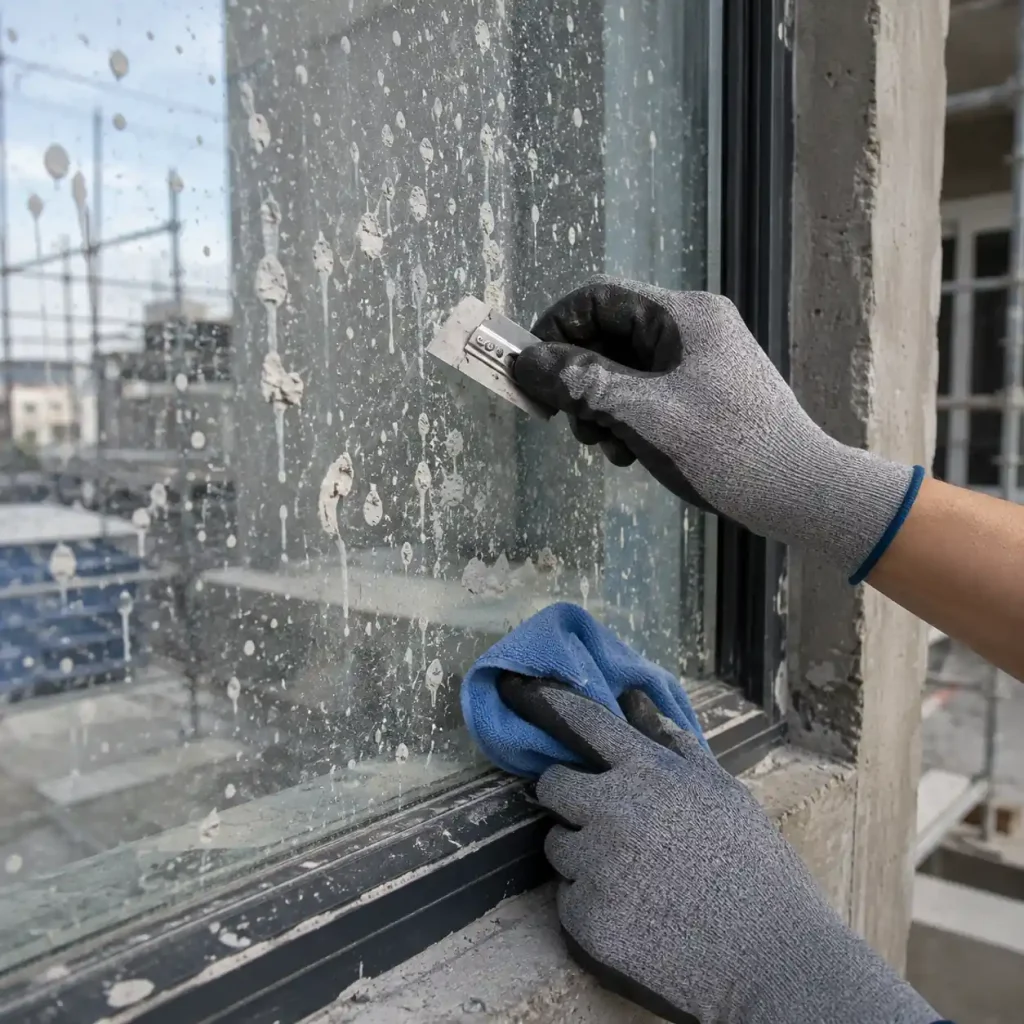
The first time I scratched a window trying to remove cement splatter, I was using the wrong blade angle and rushing the job. That mistake taught me something every post-construction cleaning job since has confirmed: cement stain removal from glass is less about elbow grease and more about technique. Get the angle or the timing wrong, and you turn a cleaning job into a window replacement.
This guide covers exactly how to remove cement splatter from glass safely, based on real post-construction jobs, not a generic list of household hacks. If you’re dealing with a full site handover, our window cleaning in Dubai service handles this exact scenario regularly, and the steps below reflect what actually works.
Why Cement Splatter Is Different from Regular Window Grime
Cement, mortar, and plaster splatter behave nothing like dust or dirt. Once cement dries on glass, it bonds through a chemical curing process, not just physical residue sitting on the surface. That means soap and water alone won’t touch it, no matter how hard you scrub.
The longer cement sits on glass, especially in Dubai’s heat, the harder and more tightly bonded it becomes. Fresh splatter from the same day is far easier to remove than splatter that’s cured for a week or more under direct sun.
The Risk Most People Miss: Etching
Here’s what separates a good cement removal job from a costly mistake. Cement is alkaline, and if left in contact with glass for extended periods, especially combined with moisture, it can chemically etch the surface. Etching isn’t a stain you can clean off. It’s permanent surface damage that shows up as a cloudy, dull patch, even after the cement itself is gone.
This is why speed matters. Removing cement splatter as soon as construction work finishes reduces the risk of etching significantly compared to leaving it for weeks after handover.
Step-by-Step: How to Remove Cement Splatter from Windows
Step 1: Soften the Cement First
Never attempt to scrape dry, hardened cement directly. Spray the affected area generously with water and let it sit for 10 to 15 minutes. This softens the outer layer of the cement without fully dissolving it, making the next step much safer for the glass.
For particularly stubborn, aged splatter, a mild vinegar and water solution can help break down the bond further, though it should be tested on a small area first.
Step 2: Use a Proper Glass Scraper, Not a Regular Blade
This is the step most DIY attempts get wrong. A dedicated glass scraper, with a fresh, sharp blade held at a low angle, roughly 5 to 10 degrees from the glass surface, lifts cement without gouging the surface underneath.
Holding the blade too steeply or using a dull or damaged blade is what causes scratches. Always keep the glass wet during scraping, since a dry blade dragging across dry glass is the fastest way to cause visible marks.
Step 3: Work in Small Sections
Rather than trying to clear a whole window at once, work in small, manageable sections. This keeps the glass wet throughout the process and gives you better control over blade angle and pressure.
Step 4: Rinse and Inspect Between Passes
After scraping a section, rinse thoroughly and inspect closely before moving on. This catches any remaining residue early, rather than assuming a section is clean and moving on prematurely.
Step 5: Final Clean with a Standard Glass Cleaner
Once all cement residue is removed, a standard streak-free glass cleaning pass finishes the job, removing any leftover haze from the scraping process and leaving the window genuinely clear rather than just cement-free.
What Not to Do
A few common mistakes make the job harder or risk permanent damage:
- Never use metal tools other than a proper glass scraper with a fresh blade
- Don’t scrape dry glass; always keep the surface wet
- Avoid abrasive pads or steel wool, which scratch glass even on gentle pressure
- Don’t leave cement splatter untreated for weeks; waiting increases both difficulty and etching risk
- Never use strong acidic cleaners without testing on a small area first, since some can damage window seals or frames
When to Call a Professional Instead
Small, fresh splatter on a ground-floor window is manageable for most homeowners with the right tools and patience. However, post-construction cleanup across an entire property—or cleaning windows on a high-rise building—requires more time, experience, and the right equipment.
For multi-story properties, professional post-construction window cleaning allows trained cleaners to remove cement and construction residue while working safely at height. If the property is particularly tall or difficult to access, understanding the right techniques becomes even more important. Our guide to high-rise window cleaning in Dubai explains the methods commonly used to clean windows safely and effectively on taller buildings.
For homeowners and property managers deciding whether professional help is worthwhile, professional window cleaning vs diy can also be a practical option when the property has numerous windows, stubborn construction residue, or difficult-to-reach areas.
How to Prevent Cement Splatter on Windows During Construction
Prevention is far cheaper than removal. A few steps during the build phase avoid this problem almost entirely:
- Apply protective film or plastic sheeting over glass before plastering, rendering, or cement work begins
- Use masking tape along window edges and frames during nearby construction
- Clean any accidental splatter the same day it happens, before it has time to cure
- Communicate with contractors about protecting finished glass installations before starting adjacent work
Teams that plan for this upfront spend far less time and money on post-construction cleanup than those addressing it after the fact.
Get It Handled Before It Sets Permanently
The longer cement sits on glass, the harder and riskier it becomes to remove. If your property has just come out of construction and needs a proper cleanup, Shafaf Cleaning Services can assess the windows and remove cement splatter safely, without risking scratches or etching. For any other exterior or interior cleaning needs across the region, Building Cleaning Services in Sharjah is also available. Get in touch today to schedule your post-construction window cleaning.
Frequently Asked Questions
Can cement stains be removed from glass without scratching it?
Yes, with the right technique. Softening the cement with water first and using a fresh, sharp glass scraper at a low angle removes cement without damaging the surface underneath.
How long does cement take to bond permanently to glass?
Cement begins curing within hours, but it typically takes a few days to fully harden. Removing splatter as soon as possible after it happens significantly reduces removal difficulty and etching risk.
Is vinegar safe for removing cement from windows?
A diluted vinegar and water solution can help soften stubborn residue, but it should always be tested on a small area first, since it may affect certain window coatings or seals.
Does cement splatter damage glass permanently?
Not usually, if removed properly and promptly. The main risk is etching from prolonged exposure, which is why timing matters more than most people expect.
Should I hire a professional for post-construction window cleaning?
For a few small splatters on ground-floor windows, DIY is often manageable. For full properties, high-rise buildings, or extensive construction residue, professional cleaning is generally faster, safer, and reduces the risk of damage.