Every high-rise job starts with the same decision: which method actually fits this building. Rope access works well on some towers and poorly on others, and the same goes for cradle systems and water-fed poles. Picking the wrong one wastes time and money, and I’ve seen it happen more than once before a building switches to what actually works for their layout.
Here’s how the main methods used in window cleaning in Dubai compare, based on what actually determines which one fits a given building.
Rope Access
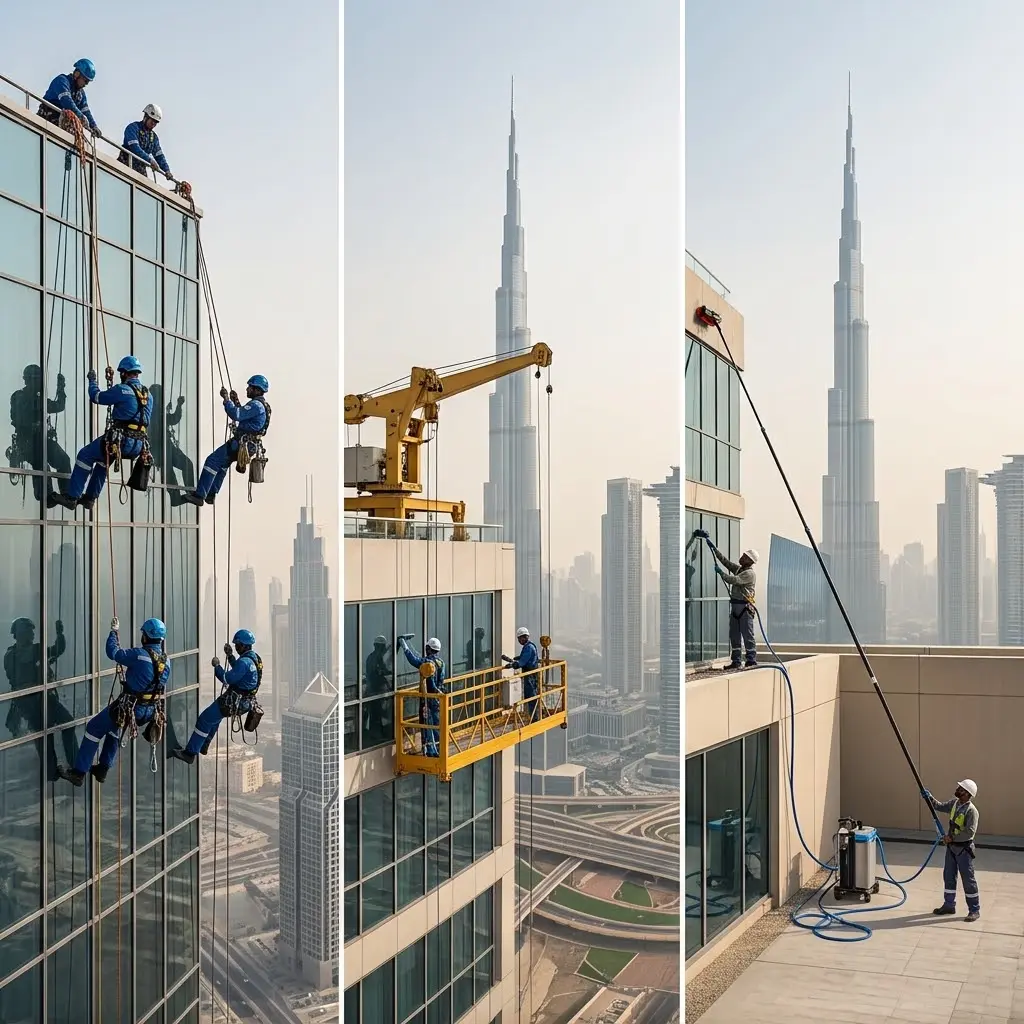
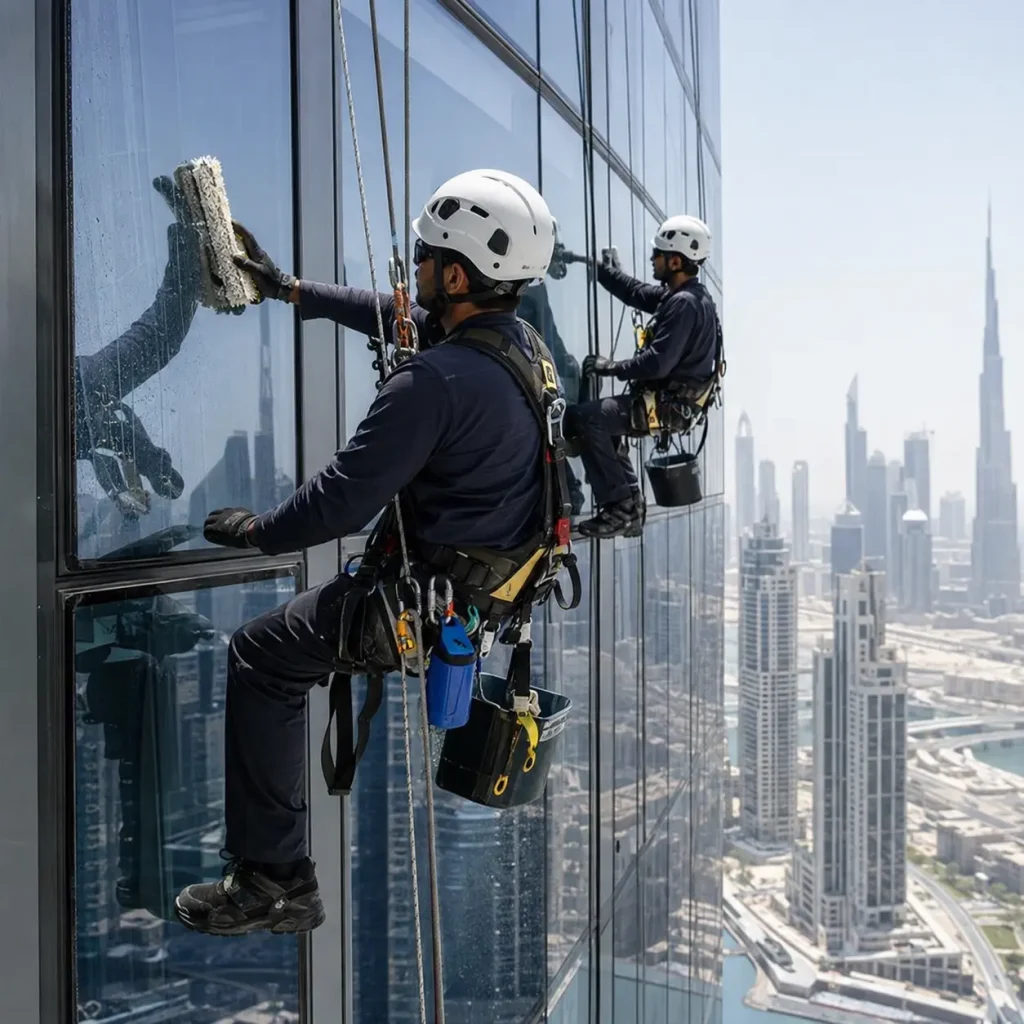
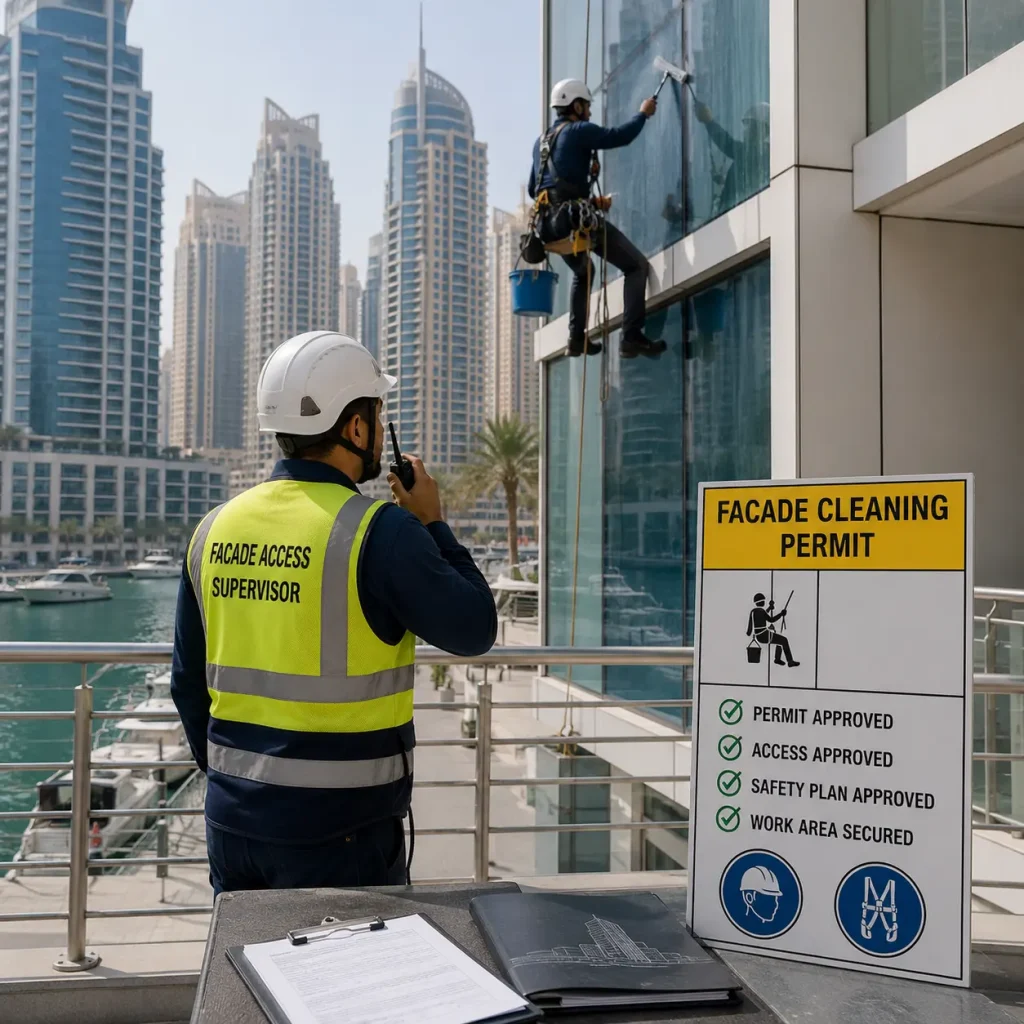
Rope access is the most common method for high-rise window cleaning in Dubai, and for good reason. Technicians descend the building’s facade using ropes and harnesses, reaching windows section by section.
Best suited for: Buildings with straightforward facades, standard glass panels without excessive obstructions, and anchor points already installed on the roof.
Advantages: Faster setup than cradle systems, lower equipment cost, and flexibility to reach nearly any part of a facade, including corners and recessed sections that cradles can’t always access.
Limitations: Requires certified technicians and is more weather-dependent, since high wind halts work for safety reasons.
Cradle Systems
Cradle systems, also called building maintenance units, are mechanical platforms that move along the facade, usually attached to a track system built into the building during construction.
Best suited for: Very tall towers, buildings with complex facade designs, or properties that clean windows frequently enough to justify a permanent system.
Advantages: More stable platform for technicians, useful for buildings requiring frequent, scheduled cleaning, and can carry more equipment per session than rope access.
Limitations: Only available on buildings with the system already installed, since retrofitting one is a major construction project on its own. Also generally slower to reposition than rope access.
Water-Fed Pole Systems
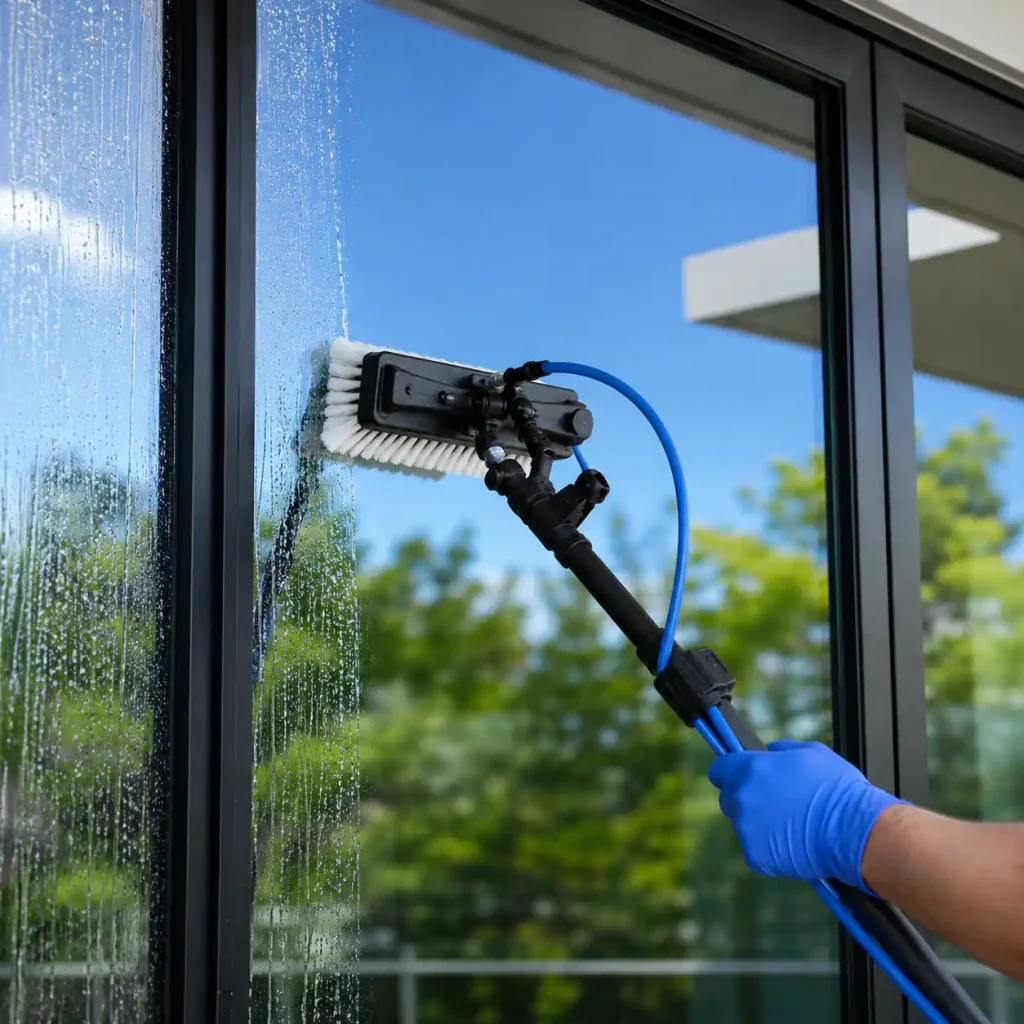
Water-fed poles use extendable poles with brushes and purified water to clean windows from the ground or a lower floor, without needing height access equipment at all.
Best suited for: Lower and mid-rise buildings, typically up to around 6 to 8 floors, where poles can reach the highest windows safely from ground level.
Advantages: No need for rope access certification or cradle systems, generally faster for smaller buildings, and no streaking since purified water dries without leaving residue.
Limitations: Height-limited, and not a practical option for true high-rise towers.
Comparing the Methods
| Method | Best For | Typical Speed | Weather Sensitivity |
| Rope access | Most high-rises, flexible facades | Moderate | High |
| Cradle systems | Very tall towers, frequent cleaning | Slower setup, faster per session | Moderate |
| Water-fed poles | Low to mid-rise buildings | Fast | Low |
How to Choose the Right Method for Your Building
A few factors usually decide which method makes sense:
Building height. Anything above 8 to 10 floors generally rules out water-fed poles, leaving rope access or cradle systems as the realistic options.
Existing infrastructure. If a cradle system is already installed, it’s often the more efficient choice. If not, retrofitting one just for window cleaning rarely makes financial sense compared to rope access.
Facade complexity. Buildings with balconies, recesses, or irregular shapes often favor rope access, since technicians can maneuver around obstacles more easily than a fixed cradle track allows.
Cleaning frequency. Buildings needing frequent cleaning, monthly or more, sometimes justify the cost of a cradle system over time, while less frequent cleaning usually favors rope access.
Why Method Choice Affects Cost and Timeline
Choosing the right method from the start avoids wasted setup time and unnecessary equipment costs. A building with an installed cradle system paying for rope access setup each visit, or a low-rise property investing in rope access certification it doesn’t need, both end up spending more than necessary for the same result.
If you’re weighing professional service against handling it yourself for lower floors, our comparison of professional window cleaning versus DIY breaks down where each approach realistically holds up.
The Bottom Line
Rope access, cradle systems, and water-fed poles each suit different buildings, and the right choice depends on height, existing infrastructure, and how often the windows need cleaning. Matching the method to the building avoids unnecessary cost and keeps the job running efficiently.
If you’re not sure which method fits your building, Building Cleaning Services in Dubai and Sharjah can assess your property and recommend the right approach based on its height and facade design. Get in touch to schedule an assessment.
Frequently Asked Questions
Is rope access safe for window cleaning on tall buildings?
Yes, when performed by certified technicians following proper safety protocols, rope access is a well-established and widely used method for high-rise window cleaning in Dubai.
How often should high-rise windows be cleaned in Dubai? Most towers benefit from cleaning every 2 to 3 months, though buildings in dusty or coastal areas may need it more frequently.
Can water-fed poles be used on buildings taller than 8 floors?
Generally no. Pole length and water pressure limitations make this method impractical much above that height, which is why taller buildings rely on rope access or cradle systems instead.
Does weather affect high-rise window cleaning schedules?
Yes, particularly for rope access and cradle work, which pause during high winds for safety. Water-fed pole cleaning is less affected by wind since it’s done at lower heights.
Is cradle system cleaning always cheaper than rope access for tall buildings?
Not necessarily. Cradle systems have lower per-session labor needs once installed, but the infrastructure itself is a significant upfront investment, so cost comparisons depend on cleaning frequency over time.