
Does your warehouse exterior look dirtier than the day-to-day operations inside it? Oil stains around loading bays, tire marks across the yard, rust streaks on metal cladding, and layers of Dubai dust can quickly make an industrial property look neglected.
But cleaning a warehouse isn’t as simple as pressure-washing the walls and calling it a day. Heavy machinery, truck movement, sensitive surfaces, loading schedules, and built-up grime all require a different approach. After working across Dubai’s industrial areas, we’ve seen firsthand why warehouse exterior cleaning needs to be planned around the site, not treated like a standard commercial wash.
In this guide, we’ll break down what it takes to clean warehouse exteriors properly—from metal cladding and roofs to loading yards and hard-to-remove stains—and how the right cleaning approach can keep your industrial property looking safer, cleaner, and more professional. For businesses operating across the UAE, Building Cleaning Services in Sharjah can also help maintain commercial and industrial properties.
Why Warehouse Exteriors Need a Different Approach
Office towers and residential buildings deal mostly with dust, pollution, and occasional weather staining. Warehouses deal with all of that, plus the byproducts of the operations happening around them. Heavy vehicle traffic tracks oil and grime across yards and loading areas. Metal cladding and roofing corrode faster in coastal or humid pockets of the city. Dust from nearby industrial activity settles thicker and faster than it does in residential districts.
This combination means warehouse exteriors accumulate grime differently, and cleaning them requires equipment and techniques suited to industrial surfaces, not the glass-and-stone methods used on office facades.
Common Problems Found on Dubai Warehouse Exteriors
Metal Cladding and Roofing Corrosion
Corrugated metal cladding and roofing are standard on most warehouse structures, and they’re prone to rust streaking, especially where water pools or drainage isn’t perfectly graded. Left untreated, surface rust can spread and eventually affect the metal’s structural coating, shortening the lifespan of the cladding itself.
Oil, Grease, and Tire Marks on Yards and Loading Areas
Forklifts, delivery trucks, and heavy machinery all leave marks behind. Oil drips, grease buildup near loading docks, and tire marks across concrete yards are some of the most common issues on industrial sites, and they require degreasing treatment rather than a standard pressure wash to fully remove.
Dust and Particulate Buildup
Industrial zones generate more airborne dust than residential or commercial districts, from nearby construction, vehicle traffic, and the warehouse’s own operations. This dust settles into cladding seams, window frames, and roofing, building up faster than in other property types.
Loading Dock and Entry Point Grime
High-traffic entry points accumulate a mix of dirt, oil, and general grime faster than the rest of the building. These areas often need more frequent attention than the broader exterior, simply due to how much activity passes through them daily.
Cleaning Methods That Actually Work for Industrial Exteriors
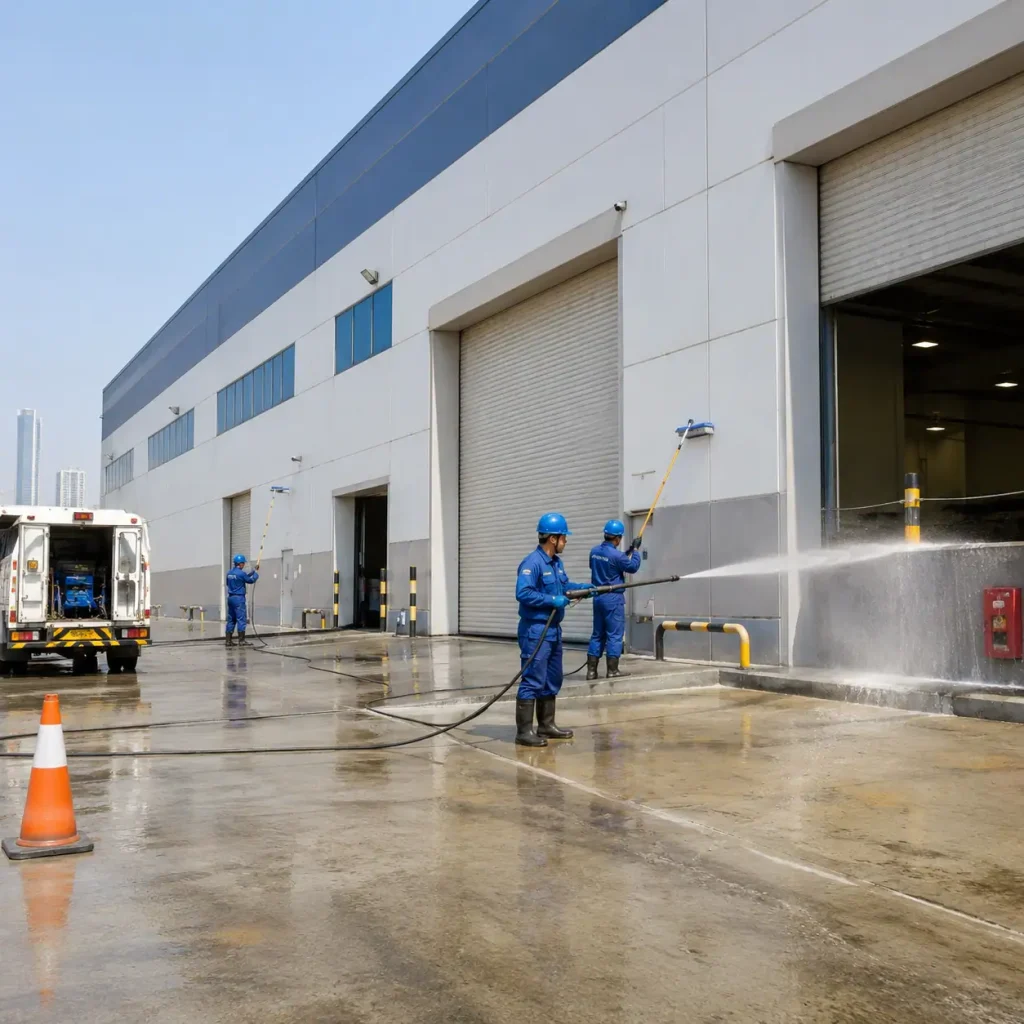
Pressure washing for yards and hard surfaces. Concrete yards and loading areas generally respond well to pressure washing, though oil and grease stains often need a degreasing pre-treatment before washing to lift the stain fully rather than just spreading it.
Soft washing for cladding and roofing. Metal cladding can be damaged by excessive pressure, so a lower-pressure approach combined with the right cleaning solution is usually safer for removing dust and light corrosion without affecting the coating underneath.
Rust treatment for early corrosion. Catching rust streaking early, before it spreads, is far more manageable than trying to remove established corrosion later. Regular inspection during cleaning visits helps catch this before it becomes a bigger maintenance issue.
Targeted degreasing for high-traffic zones. Loading docks and yard areas with consistent vehicle activity benefit from a dedicated degreasing treatment as part of the regular cleaning schedule, rather than relying on a general wash to handle it.
Safety and Access Considerations on Industrial Sites
Warehouse sites often have their own safety protocols, active vehicle traffic, forklift movement, and operational schedules that cleaning crews need to work around. This makes coordination with facility management an important part of planning the job, not just an afterthought.
The same safety standards that apply to high-rise and commercial exterior cleaning apply here too, particularly around equipment use and technician certification. Our guide on the safety measures used in facade cleaning covers the certification and protocol standards that reputable cleaning teams follow, which apply just as much to industrial sites as to commercial towers.
How Often Should Warehouse Exteriors Be Cleaned?
Most warehouse exteriors benefit from cleaning every 2 to 3 months, though sites with heavy vehicle traffic, nearby construction, or coastal exposure may need more frequent attention, particularly for loading areas and metal cladding.
Building a consistent schedule, rather than reacting once buildup becomes obvious, keeps each cleaning visit shorter and prevents issues like rust or embedded oil stains from becoming harder to remove over time. Our general building cleaning checklist is a useful starting point for structuring a maintenance routine, even though warehouse sites need some industrial-specific additions beyond what a standard commercial checklist covers.
What to Look for in a Warehouse Cleaning Provider
Not every commercial cleaning company is equipped for industrial sites. A few things worth confirming before hiring:
- Experience specifically with warehouse or industrial exteriors, not just office buildings
- Equipment suited for degreasing and rust treatment, not just standard pressure washing
- Familiarity with coordinating around active site operations and vehicle traffic
- Proper safety certification for technicians working near operational machinery
A provider without industrial experience may still get the surface clean, but miss the specific treatment oil stains, rust, or heavy dust buildup actually need to be removed properly rather than just masked temporarily.
Ready to Book Professional Warehouse Exterior Cleaning?
Warehouse cleaning in Dubai’s industrial areas requires more than a standard building wash. From metal cladding and oil-stained yards to heavy dust buildup and active loading zones, every site needs the right equipment, cleaning methods, and schedule.
Book our external building cleaning services in Dubai today and let our experienced team handle your warehouse exterior safely and professionally. Contact us to arrange a site assessment and get your cleaning plan started.
Frequently Asked Questions
How is warehouse exterior cleaning different from office building cleaning?
Warehouses deal with oil, grease, tire marks, and metal cladding corrosion that office buildings rarely encounter, requiring different equipment and treatment methods beyond standard glass and facade cleaning.
How often should warehouse cladding be cleaned to prevent rust?
Every 2 to 3 months is a reasonable baseline, with more frequent inspection in humid or coastal areas where corrosion develops faster.
Can pressure washing remove oil stains from a warehouse yard?
Pressure washing helps, but oil and grease stains typically need a degreasing treatment first to fully lift the residue rather than just spreading it across the surface.
Does warehouse cleaning need to work around active operations?
Yes, most industrial sites have ongoing vehicle traffic and operational schedules, so cleaning crews typically coordinate timing with facility management to avoid disruption.
Is metal cladding damaged by pressure washing?
It can be, if the pressure is too high. Soft washing at a lower pressure is generally safer for cladding and roofing to avoid affecting the protective coating underneath.
