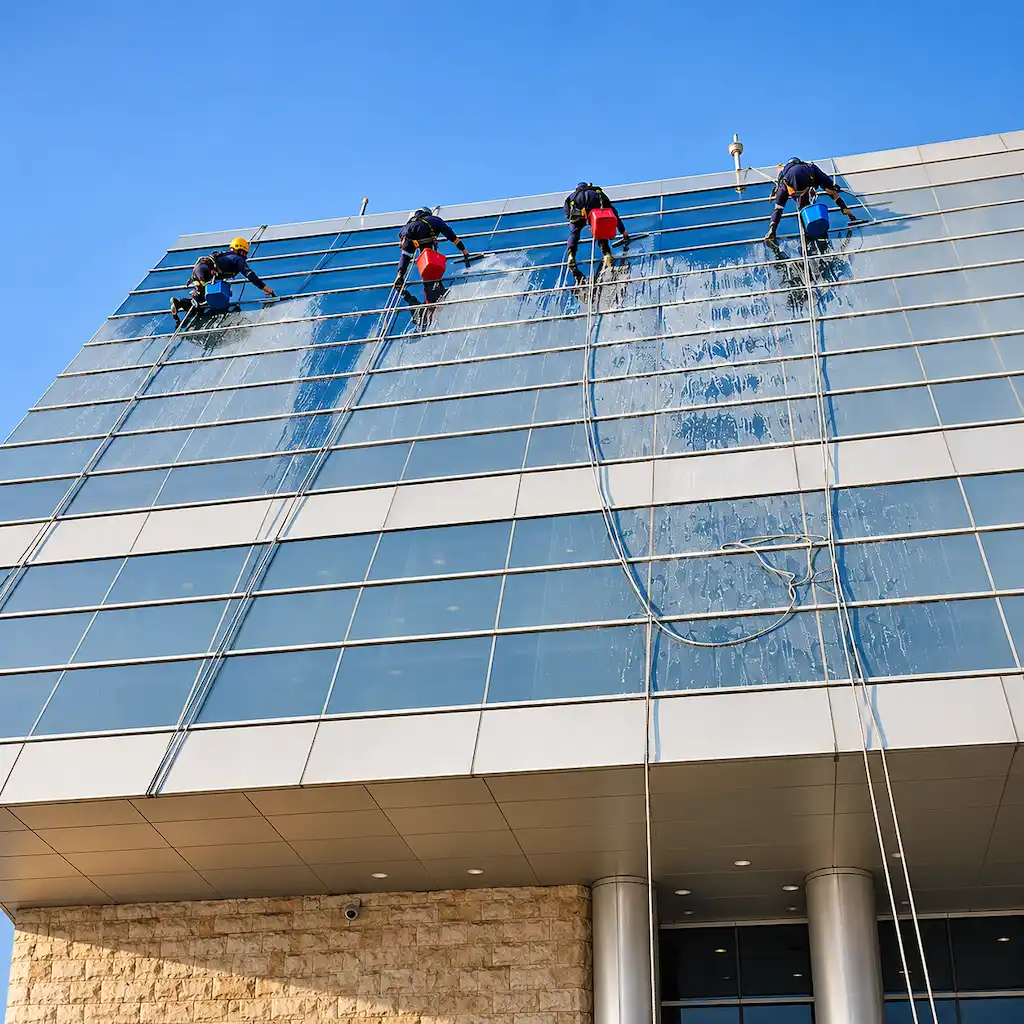
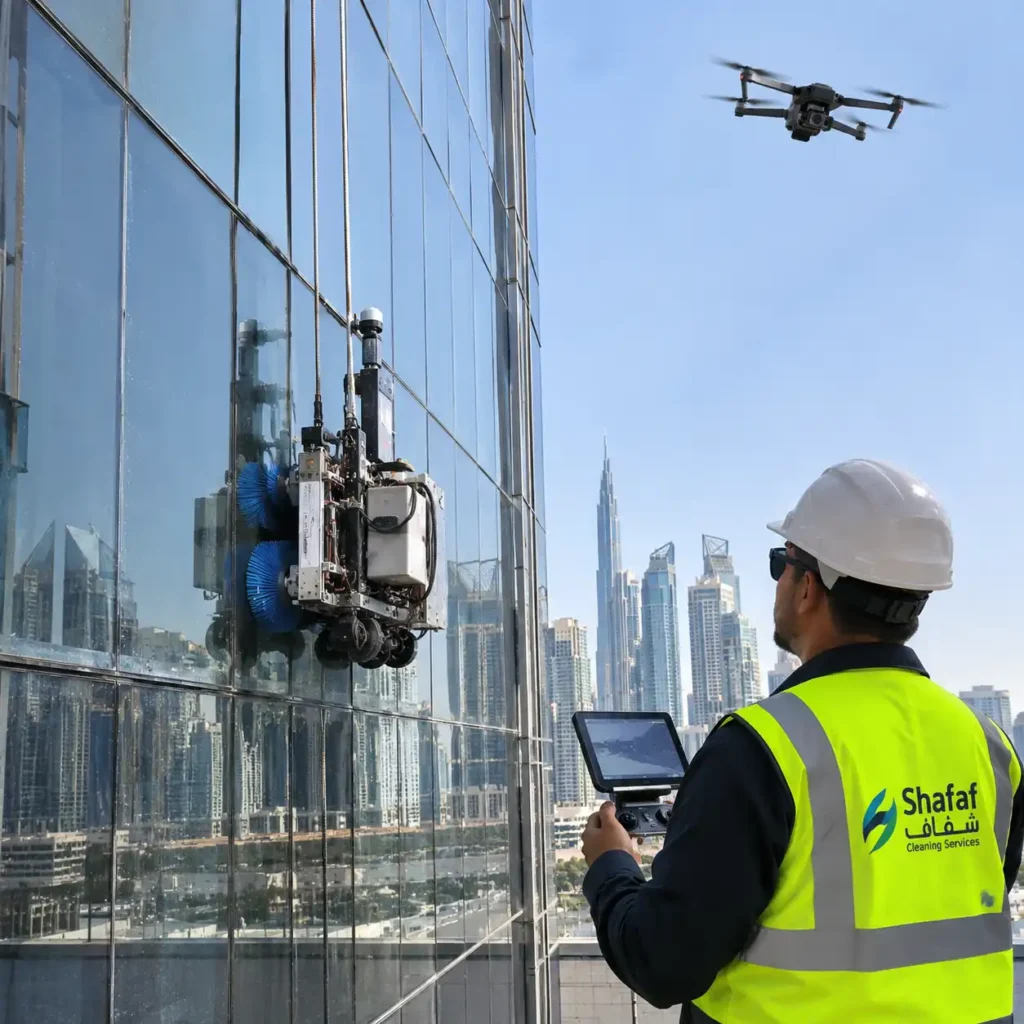
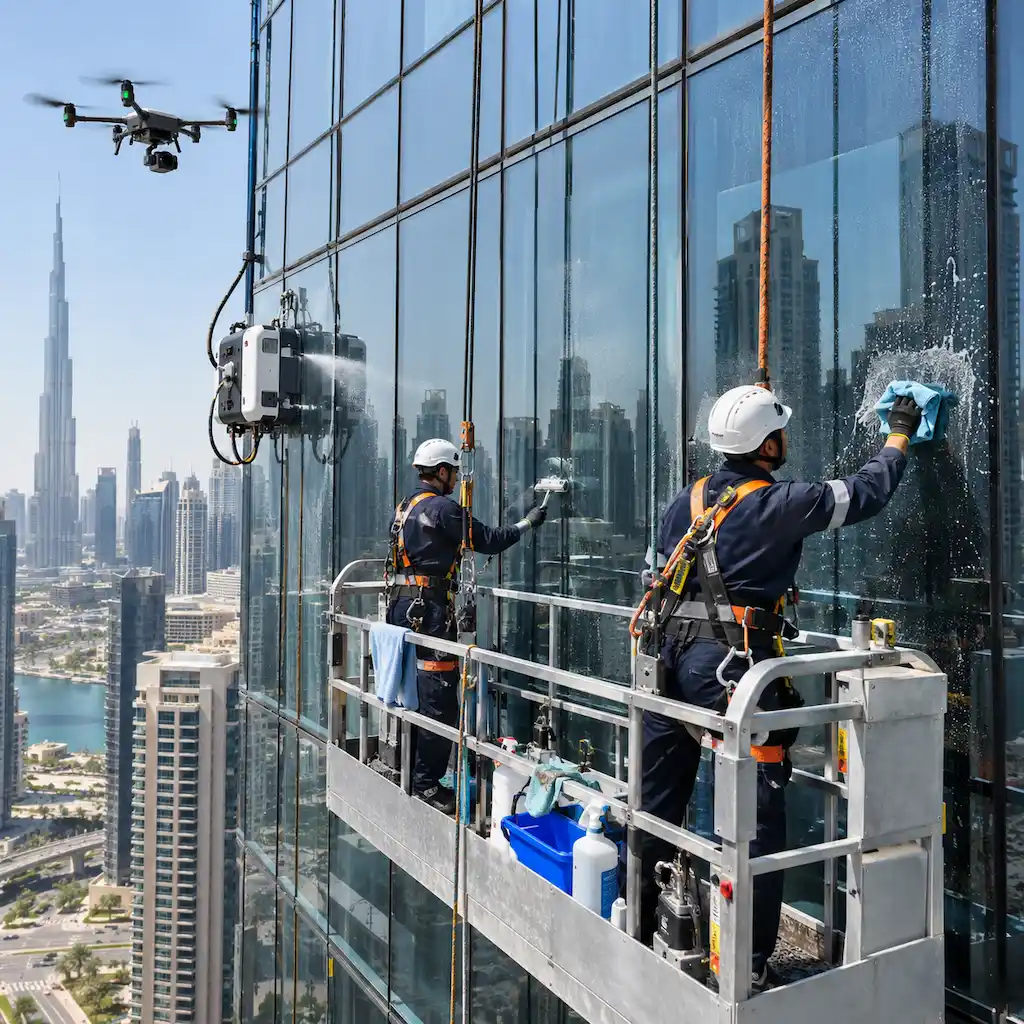
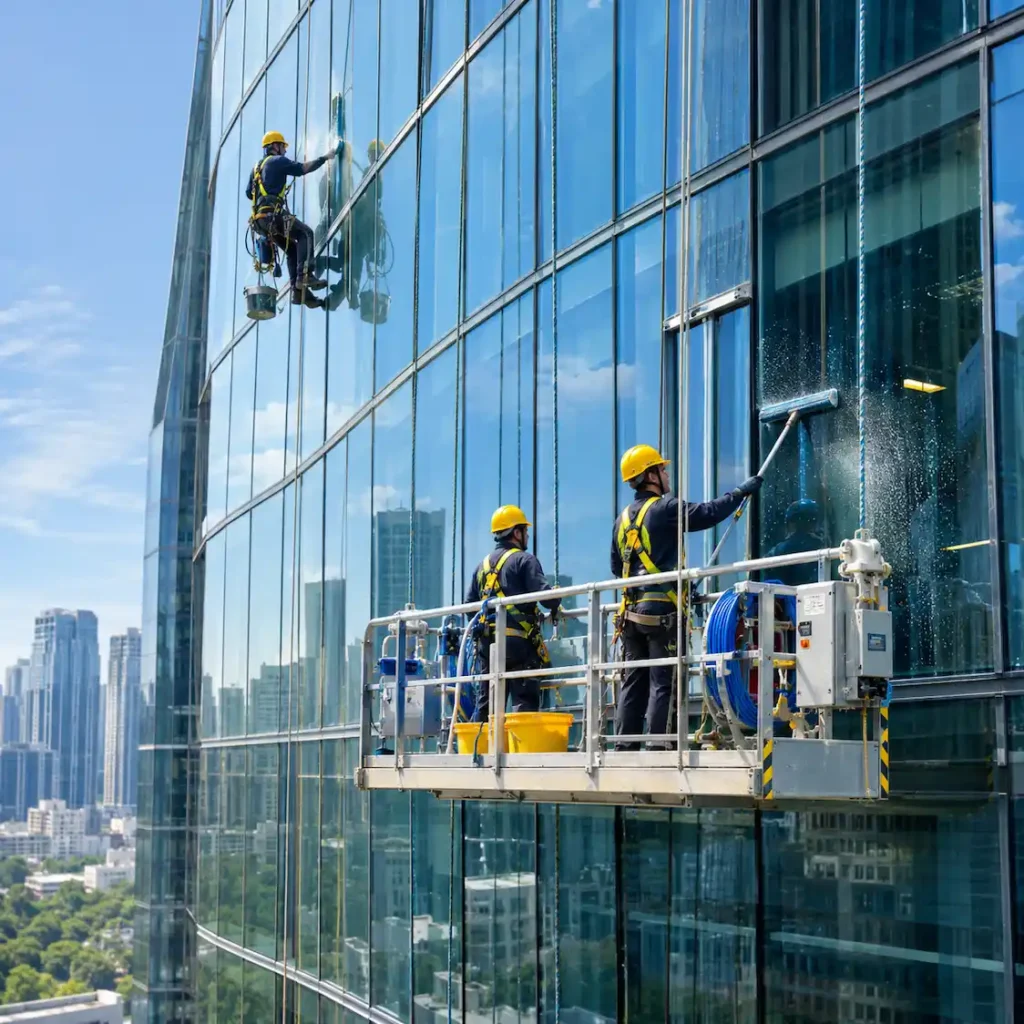
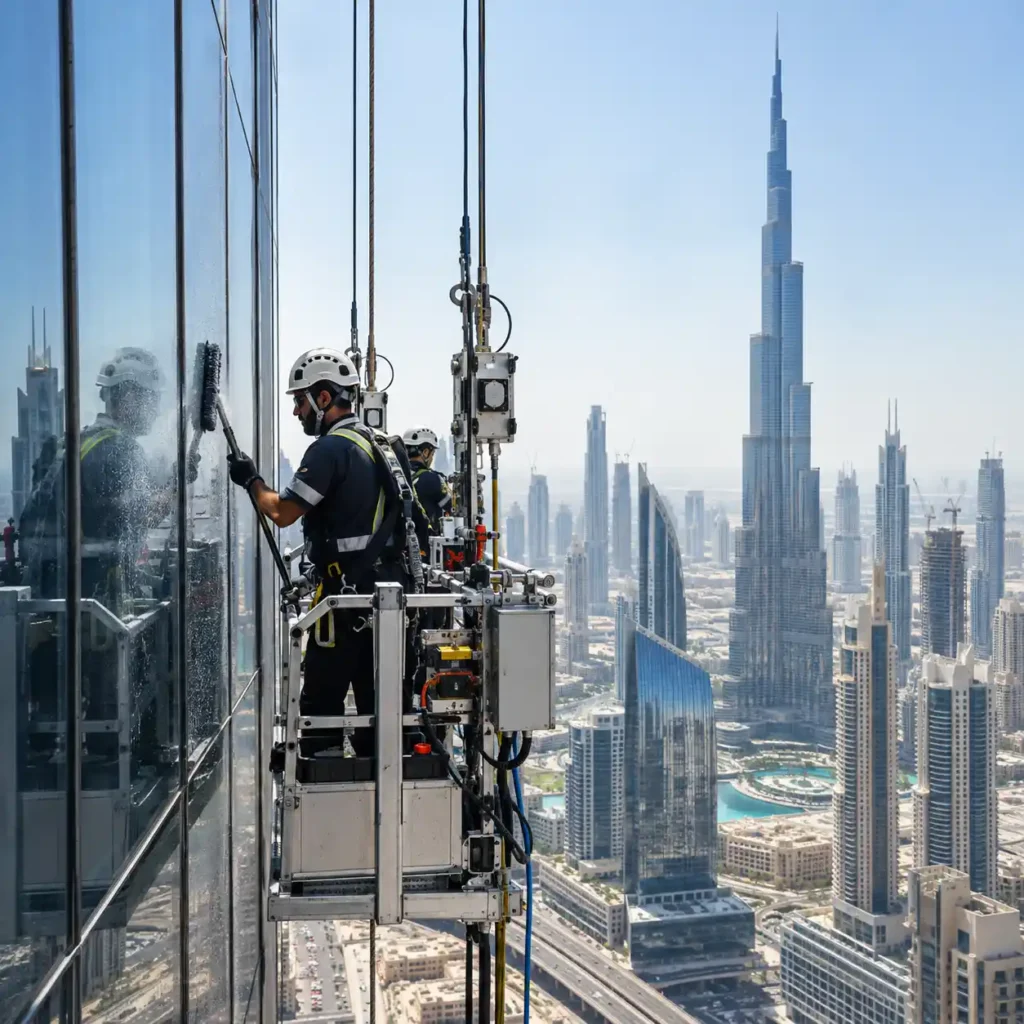
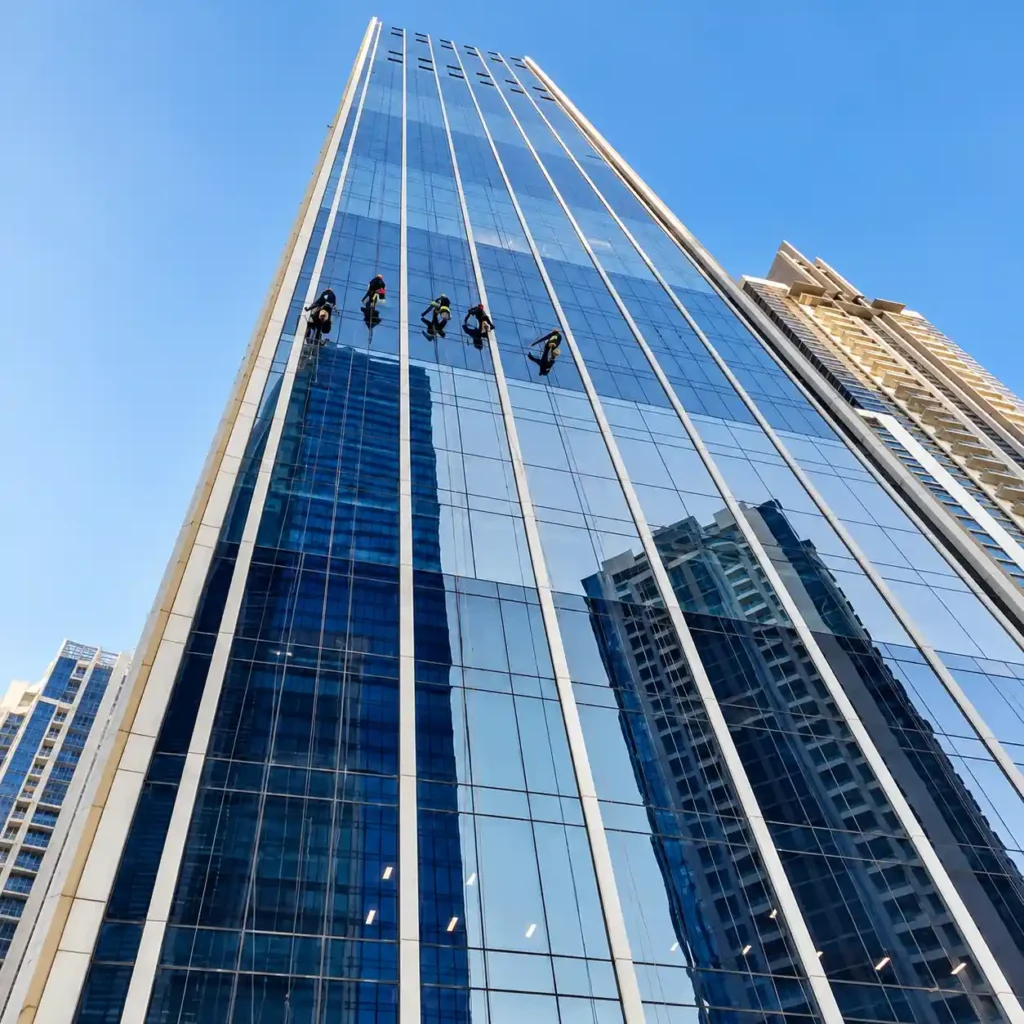
A rope access contractor says its technicians are certified. That is a good starting point, but certification alone does not establish whether a cleaning operation will be carried out safely.
Are the technicians qualified for the proposed work? Have the anchor points been assessed? Is there a suitable rescue plan if something goes wrong?
Understanding rope access safety standards in the UAE helps property managers and building owners evaluate contractors beyond general safety claims.
Professional rope access cleaning requires coordinated planning, competent technicians, suitable equipment, effective supervision and emergency preparedness. Here is what to verify before approving work.
What Do IRATA Rope Access Standards Actually Require?
The Industrial Rope Access Trade Association (IRATA) provides an internationally recognised framework for rope access training, assessment and operational practices.
Its International Code of Practice (ICOP) addresses key safety considerations, including work planning, personnel competence, equipment selection, supervision, risk assessment and rescue procedures.
IRATA technician qualifications are divided into three levels.
| Certification level | General responsibilities |
| Level 1 | Performs specified rope access tasks under appropriate supervision |
| Level 2 | Demonstrates more advanced rope access skills, including rigging and rescue techniques |
| Level 3 | Demonstrates advanced technical and supervisory competence, including rope access safety supervision |
Under IRATA’s operational framework, rope access teams should have at least two technicians, including a Level 3 rope access safety supervisor. More personnel may be required depending on the work and foreseeable rescue scenarios.
Important: IRATA certification demonstrates rope access competence, not automatic qualification for every specialist task. Structural inspections, electrical work and complex facade repairs may require additional professional skills and authorisations.
Why Is Technician Certification Only One Safety Requirement?
Even experienced technicians can face serious risks when access arrangements are poorly planned.
Before work begins, contractors must assess the building’s height, facade geometry, rooftop access, anchor arrangements and surrounding environment.
For building cleaning in Dubai, these assessments may also need to consider occupied entrances, pedestrian walkways, nearby vehicles, falling-object risks and changing weather conditions.
The proposed access method must suit the actual building rather than being selected solely because technicians are trained to use it.
What Safety Documentation Should You Request?
A reliable contractor should be able to provide relevant safety documentation before starting work.
1. Site-Specific Risk Assessment and Method Statement
A risk assessment identifies potential hazards, evaluates their significance and outlines appropriate control measures.
The method statement explains how technicians will perform the work safely, including the proposed access system, work sequence and responsibilities.
These documents should reflect the building’s actual conditions rather than relying entirely on generic procedures.
2. Anchor Points and Equipment Inspection Records
Rope access systems rely on suitable anchors, ropes, harnesses, connectors and backup equipment.
Before approving work, verify that:
- Anchor arrangements are appropriate for the intended loads and application.
- Equipment inspection and examination records are available where required.
- Ropes, harnesses and connectors are suitable for their intended use.
- Damaged or unsuitable equipment is removed from service.
An existing rooftop fixture should never be assumed suitable for rope access without appropriate verification.
3. A Site-Specific Rope Access Rescue Plan
A rope access rescue plan should explain how the team will respond if a technician becomes incapacitated or cannot return independently.
It should identify rescue personnel, equipment, communication arrangements and procedures suited to the building.
Simply stating that emergency services will be contacted is not an adequate substitute for a workable on-site rescue strategy.
How Should Professional Rope Access Cleaning Be Supervised?
Effective supervision is essential when technicians are working at height.
The appointed supervisor must understand the access arrangements, operational risks, work methods and rescue procedures.
Supervision should also include:
- Clear communication between team members.
- Suitable exclusion zones to protect people below.
- Monitoring of weather and changing site conditions.
- Procedures for inspecting equipment before use.
- Authority to suspend work when conditions become unsafe.
For rope access cleaning in Dubai and Sharjah, building managers should confirm that the proposed supervision and safety arrangements match the building’s height, access restrictions and cleaning scope.
The purpose of supervision is not simply to confirm that work has started. It is to ensure the planned safety controls remain effective throughout the operation.
What About Insurance and UAE Contractor Requirements?
International rope access standards provide an important technical framework, but they should not be treated as a complete statement of UAE legal requirements.
Applicable regulations, contractor permissions, building-management approvals and insurance obligations can depend on the emirate, site and proposed work.
Before appointing a contractor, property managers should verify relevant documentation and clarify responsibility for potential incidents or property damage.
Shafaf’s article on facade cleaning insurance and liability in the UAE explains important insurance considerations, including third-party liability and contractor responsibilities.
For facade cleaning services, the safety assessment should also consider cleaning materials, equipment handling, runoff management and protection of people occupying nearby areas.
Rope Access Safety Checklist Before Hiring a Contractor
Before approving a rope access cleaning project, use this practical checklist.
| Verification item | What to check |
| Technician competence | Relevant training, certification and task-specific experience |
| Supervision | Appropriate supervisory qualifications and responsibilities |
| Risk assessment | Site-specific hazards and control measures |
| Method statement | Proposed access method and working procedures |
| Anchor arrangements | Suitability and supporting inspection or verification records |
| Equipment | Inspection, examination and maintenance documentation |
| Rescue plan | Suitable personnel, equipment and recovery procedures |
| Insurance and approvals | Applicable coverage, permissions and site requirements |
| Emergency communication | Reliable communication and work-stoppage procedures |
A contractor should be able to explain how these arrangements apply to the actual building, not merely provide documents without context.
These checks also support a wider approach to safety-focused high-rise maintenance, where suitable access methods, planning and documented responsibilities contribute to more effective long-term building care.
Final Thoughts
Understanding rope access safety standards in the UAE helps building managers make informed decisions when selecting cleaning contractors.
IRATA qualifications are important, but they are only one part of a safe working system. Site-specific risk assessments, verified anchor arrangements, suitable equipment, competent supervision, rescue planning and applicable insurance requirements all deserve attention.
Before authorising rope access cleaning, ask for documented evidence and clear explanations of how the proposed procedures will protect technicians, building occupants and surrounding areas.
A professional contractor should be able to demonstrate how safety will be managed throughout the project, not simply claim that its team is certified.
Frequently Asked Questions
Is IRATA certification mandatory for rope access cleaning in Dubai?
IRATA is a widely recognised international certification framework, but it should not automatically be assumed to be legally mandatory for every rope access project in Dubai. Building managers should confirm the applicable local regulations, contractual requirements and site-specific conditions.
Does IRATA certification guarantee safe rope access cleaning?
No. Certification establishes defined competencies, but safe operations also depend on appropriate planning, suitable equipment, supervision, site conditions and emergency preparedness.
Should building managers request a rope access rescue plan?
Yes. A suitable rescue plan is a fundamental part of rope access safety. It should address foreseeable emergencies and demonstrate that trained personnel and appropriate equipment are available.
How can I verify a rope access technician’s qualifications?
Request current certification details and check them through the relevant certification body’s verification process. Also confirm that the technician’s qualification level and experience are suitable for the assigned task.