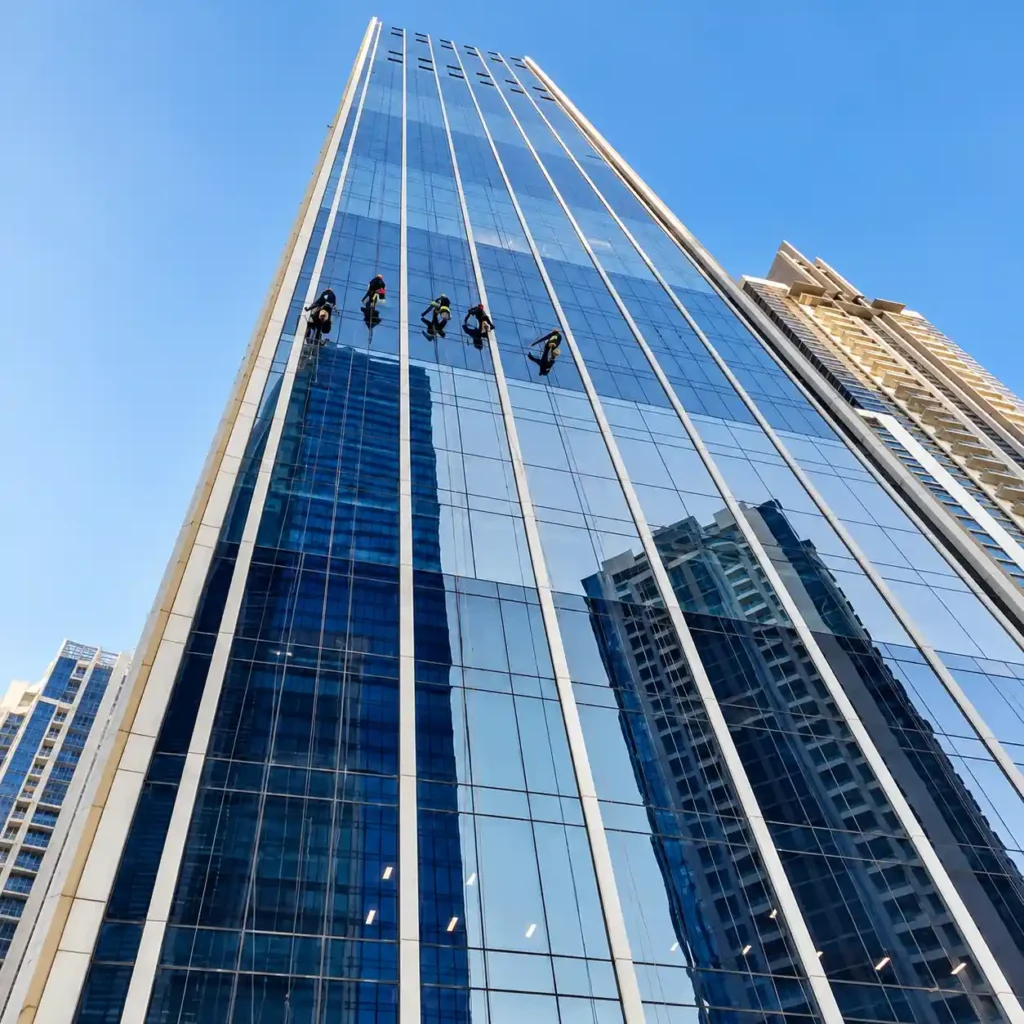
The same stain returns beneath a tower’s window after every cleaning cycle. Another wash may improve its appearance temporarily, but the recurring mark raises a question: is it a removable deposit, or does it need further investigation?
For property managers arranging building cleaning in Dubai, this distinction affects the scope, budget and next maintenance decision. A tower exterior combines glass, metal, stone, coatings and joints with different care requirements.
The future of high-rise building maintenance depends on connecting those requirements with better records, suitable access and carefully selected technology. Drones, digital reporting and automated equipment can support the work, but their value comes from solving a defined building problem.
This guide focuses on exterior maintenance and facade care. Structural inspections, fire safety and mechanical systems require their own specialist programmes.
From Reactive Cleaning to Planned Facade Maintenance
Visible dirt is a reason to arrange cleaning. It should not be the only information used to set the next appointment.
A planned programme records the building’s surfaces, previous treatments, access constraints and recurring concerns. Each visit then contributes information that can improve the next scope.
For example, a mark that returns in the same location deserves a different follow-up from ordinary dust affecting an entire elevation. Recording the difference helps management decide whether to repeat cleaning, review the method or request specialist assessment.
Create a Baseline for Each Elevation
A useful starting record identifies:
- Facade materials and finishes, where known.
- Existing stains, damage and areas of concern.
- Available access points and restrictions.
- Previous cleaning methods and results.
- Areas requiring further assessment.
For a scheduling framework, see our guide to building appearance management.
Choose Access Methods Around the Building
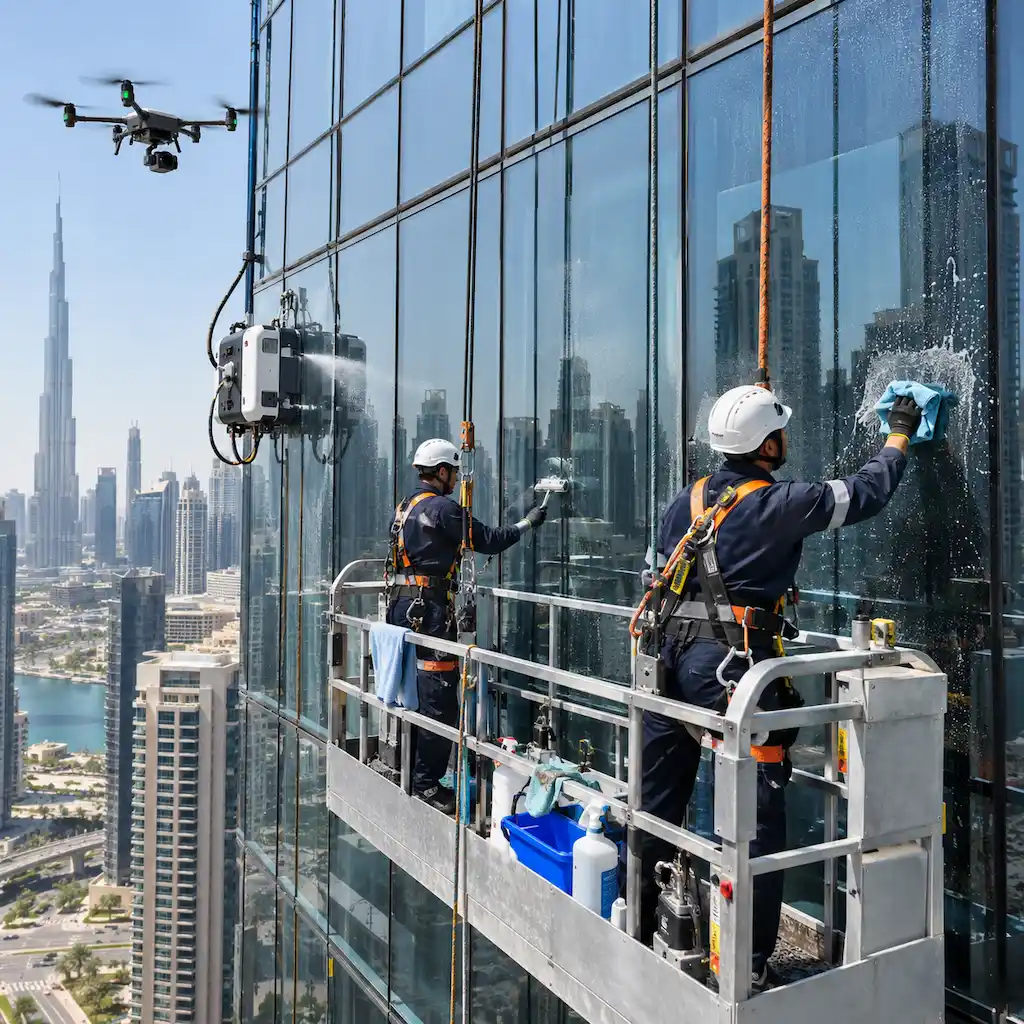
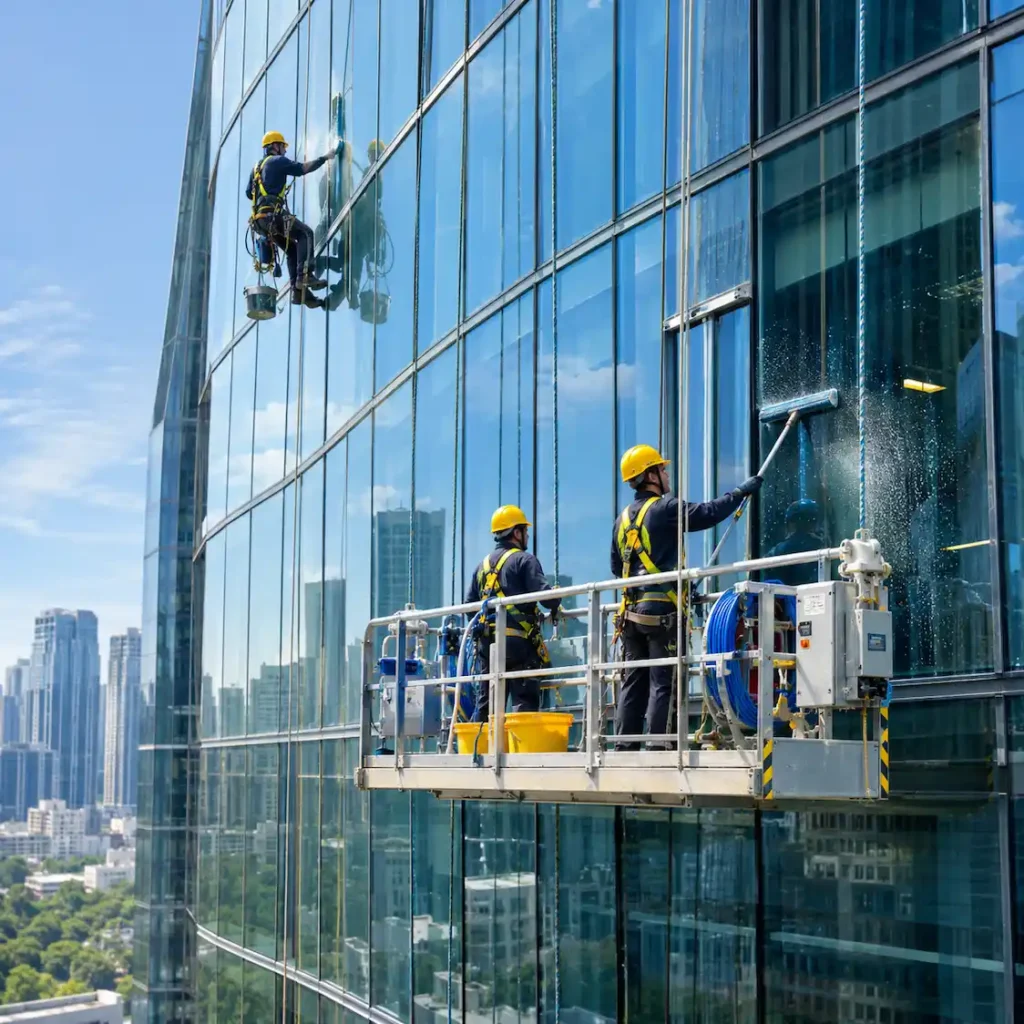
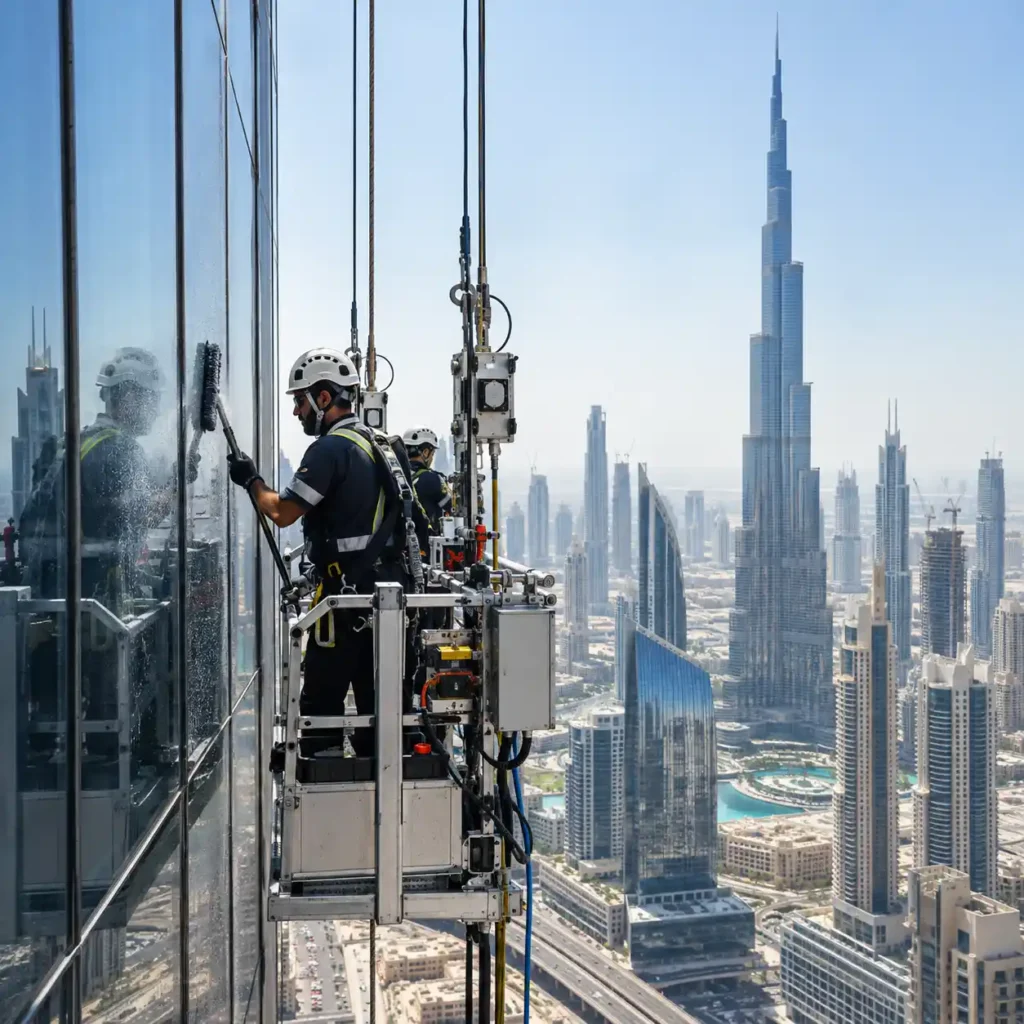
Overhangs, recessed glazing, fins and roof restrictions can change how an elevation is reached. A method suitable for one facade zone may be unsuitable for another.
Access planning should establish where the work happens, which infrastructure is available and what limitations affect the proposed method.
The comparison of high-rise window cleaning methods explains how common approaches differ.
Consider the Complete Working Route
Reaching the surface is only one part of the task. Planning also needs to account for equipment movement, building entrances, pedestrian areas and the return from the work position.
Installed access equipment should be assessed against the actual scope. Its presence does not establish that every area can be reached.
Our discussion of rope access in high-rise maintenance explores how building design influences the usefulness of this approach.
Match Cleaning Methods to Facade Materials
A tower should not receive one treatment simply because its exterior appears uniform from the ground.
Coated glazing, metal panels, painted surfaces and stone can require different care. The proposed treatment should reflect the installed material, available manufacturer guidance and the deposit being addressed.
When comparing facade cleaning services, ask how the contractor identifies surfaces and selects compatible methods before work begins.
Use Test Areas Where Results Are Uncertain
A controlled test area can help evaluate a proposed treatment before it is applied more widely.
Record the starting condition, method and observed result. If the test leaves staining or reveals a concern, review the approach before extending the work.
A successful test on one material does not establish compatibility with every neighbouring finish.
Our guide to specialist facade cleaning equipment explains how tools should support material requirements. The broader infrastructure is covered in skyscraper exterior cleaning technology.
Make Safety Planning Specific to the Site
New equipment does not remove the need to plan work at height.
Building management should receive an explanation of the proposed access arrangements, supervision, equipment checks and controls around the work area.
The plan should also identify who reassesses the work when weather, access or site conditions change. Accepting a quotation should not mean continuing with the original method regardless of what happens afterwards.
Review Rescue and Interruption Arrangements
Rescue planning must reflect the actual working position and available resources. A generic document cannot explain every building’s recovery constraints.
Ask how communication, access and emergency arrangements relate to the proposed work. The same discussion should establish when activities pause and how the site is left during an interruption.
Our guide to rope access cleaning safety explains the questions property managers can raise before scheduling.
Turn Digital Records Into Useful Decisions
Digital reporting becomes valuable when someone can locate, compare and act on the information.
Photographs should identify the elevation and location. Consistent viewpoints make it easier to compare a recurring concern across visits.
Written observations should distinguish what was seen from what has been professionally diagnosed. A cleaning report can record that staining remains after treatment; it should not declare a failed building component without an appropriate assessment.
Separate Completed Work From Unresolved Concerns
A useful handover distinguishes between:
- Areas cleaned to the agreed standard.
- Inaccessible or excluded areas.
- Deposits requiring a different proposed treatment.
- Observations referred for specialist assessment.
- Follow-up actions and responsibilities.
This prevents an unresolved maintenance concern from disappearing into a general “job completed” statement.
It also gives the next contractor or building manager a clearer starting point.
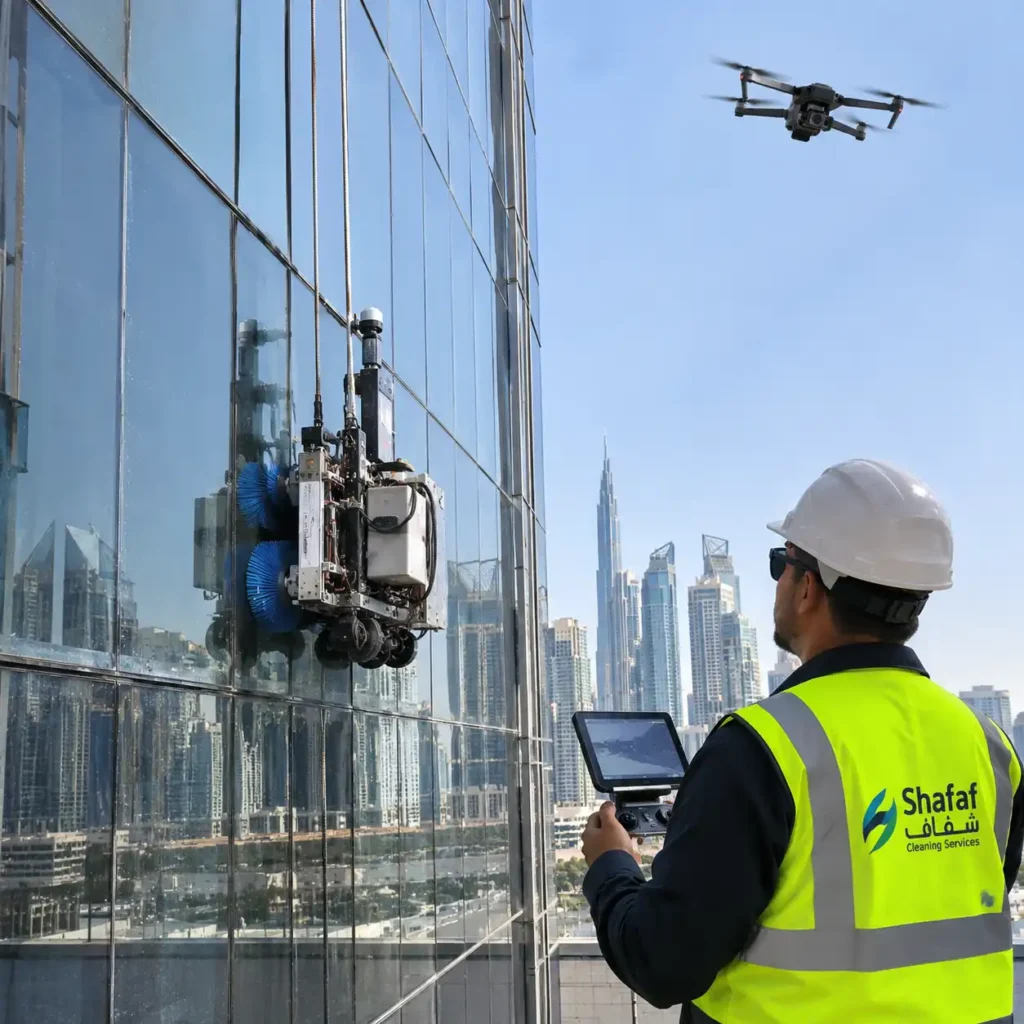
Assess Drones and Robotics Against a Defined Task
Emerging tools should be evaluated through the work they can perform on the actual building.
Visual inspection, close condition assessment and cleaning are different activities. Equipment suitable for one should not be presented as proof that it can perform the others.
Drones Can Support Selected Visual Inspections
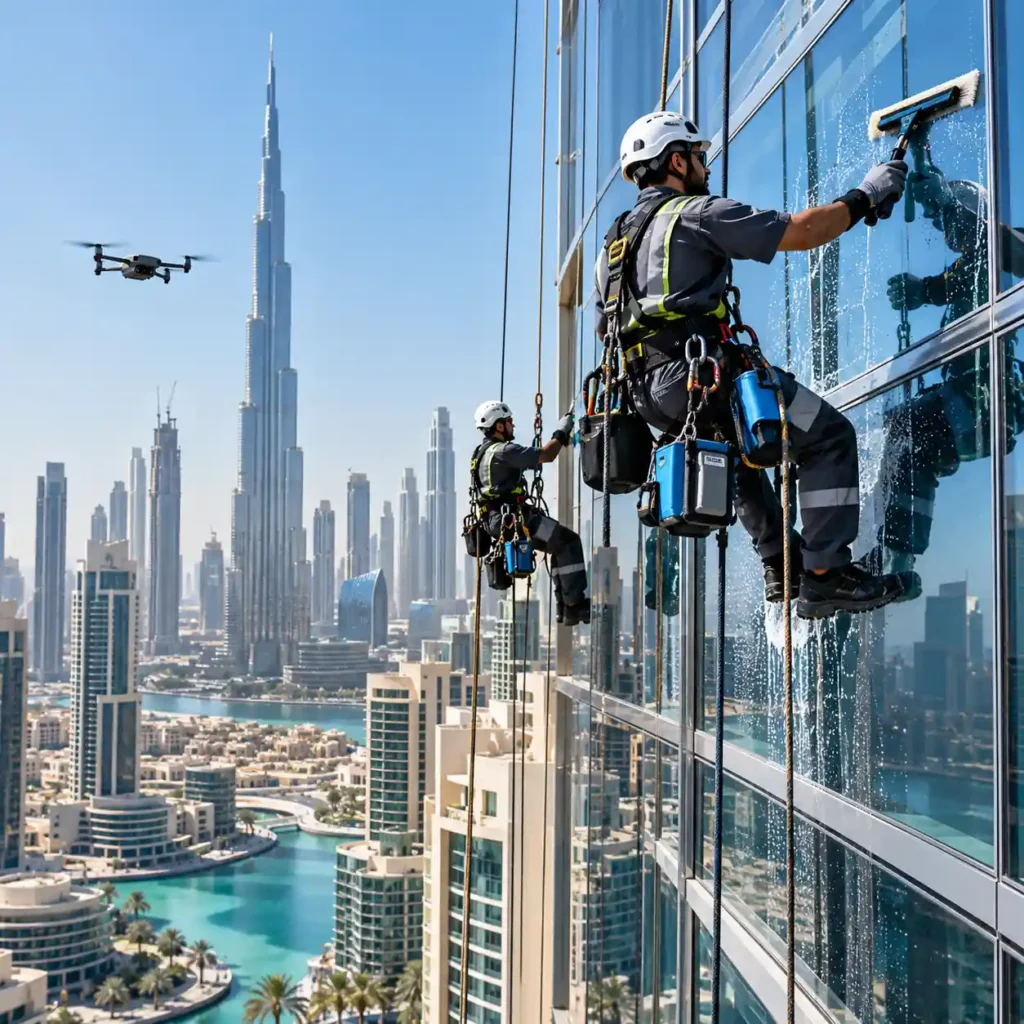
Where permissions and site conditions allow, aerial imagery may help document difficult-to-view elevations.
Images still need interpretation. They may not answer questions requiring close examination, physical testing or specialist assessment.
Before including drone work in a maintenance scope, establish the applicable authorisations and operating permissions with the relevant authorities.
Our article on drones and robotics in building maintenance examines these applications and their limitations.
Robotic Cleaning Needs a Practical Trial
A robotic proposal should explain how the equipment handles the intended surface, obstacles, edges and changes in geometry.
Property managers should also ask how cleaning quality is assessed, how runoff is controlled and how equipment is recovered after a fault.
Claims about lower costs or reduced water use need comparable evidence. A trial should address the same scope and finish standard as the alternative being considered.
Keep Human Judgement Central to Automation
Automation can change how work is performed, but people remain responsible for important decisions.
Those decisions include interpreting observations, assessing material compatibility, supervising operations and recognising when conditions require a different approach.
Training should therefore cover the equipment and the judgement surrounding its use.
Our discussion of human skills and automation in high-rise cleaning explains how these responsibilities fit together.
Compare Maintenance Proposals Through Clear Deliverables
A modern proposal should be specific enough to assess before work and review afterwards.
| Decision | What the proposal should explain |
| Scope | Included elevations, materials and exclusions |
| Access | Proposed methods and building-specific constraints |
| Treatment | Products, tools and compatibility checks |
| Safety | Supervision, controls and rescue arrangements |
| Technology | Intended task, limitations and recovery plan |
| Handover | Completion evidence and unresolved observations |
| Follow-up | Who reviews findings and approves further action |
Price becomes easier to evaluate when these elements are clear. Two quotations may appear comparable while covering different elevations, treatments or reporting requirements.
The full sequence is explained in our guide to facade cleaning project planning.
Build the Next Maintenance Cycle Around Better Information
Each visit should leave management with a clearer understanding of what was cleaned, what remains unresolved and what should change next time.
When discussing Shafaf’s rope access cleaning services, share the building’s materials, access constraints and previous maintenance records.
A suitable proposal should connect those details with an appropriate method, defined limitations and a useful handover.
Frequently Asked Questions
Will robots replace high-rise cleaning teams?
Not across every building and task. Suitability depends on the facade, equipment and operating conditions. Planning, supervision, interpretation and recovery arrangements still require competent oversight.
Is rope access always the best cleaning method?
No. Building geometry, available infrastructure, reach and the proposed work determine suitability. Different facade zones may require different approaches.
Can drone photographs replace a facade condition survey?
Not automatically. Photographs can support documentation, but some concerns require closer examination, testing or specialist interpretation.
How often should a high-rise facade be cleaned?
There is no single interval for every tower. Materials, deposits, exposure, access and previous results should inform the initial schedule and later reviews.
How can property managers assess environmental claims?
Ask for evidence relating to the proposed work. Water use, product consumption and repeat visits should be considered alongside the cleaning result. A general label does not provide enough information to compare methods.