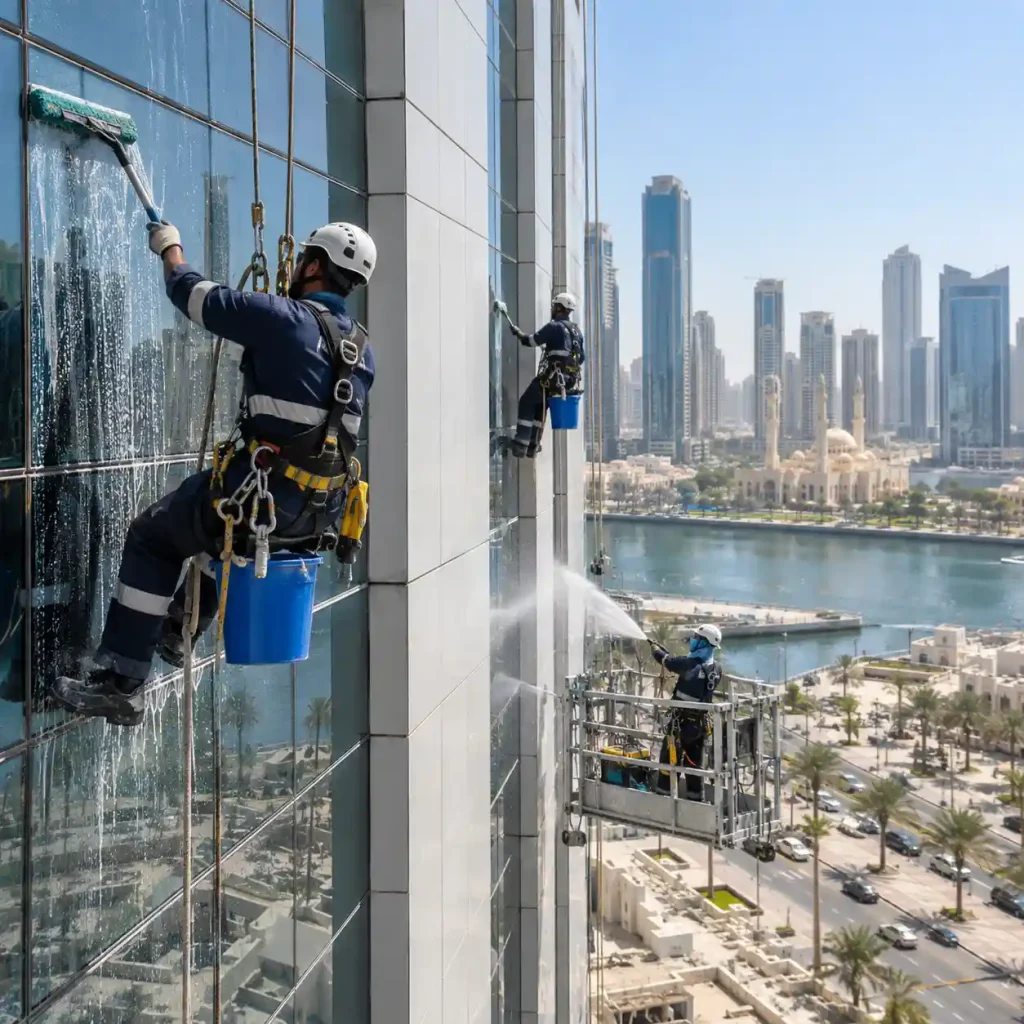
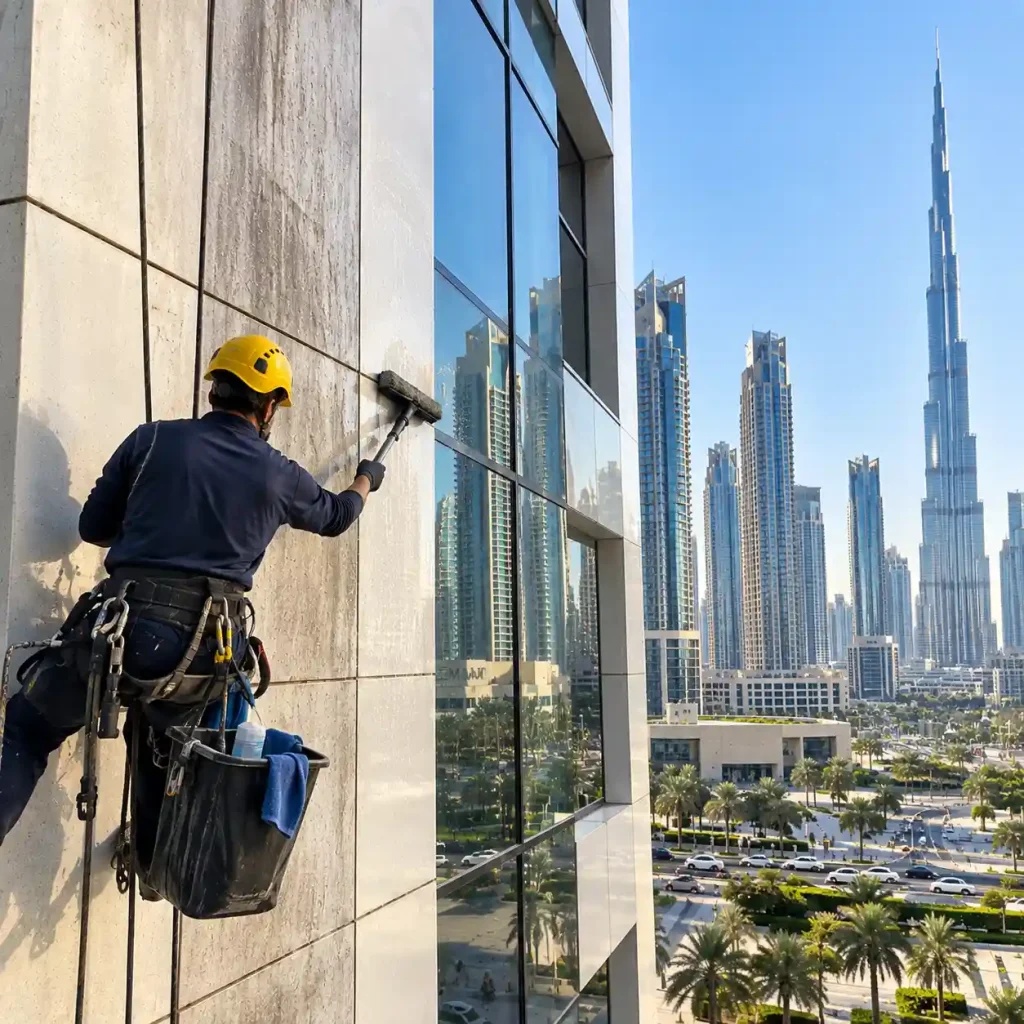
Many building owners believe cleaning is simply about making a building look better. A team comes in, washes the exterior, and the job is complete. However, building appearance and exterior cleanliness involve more than visual appeal and can also affect how well exterior materials hold up over time
In the UAE, exterior building materials face constant environmental challenges. Strong UV rays, dust, salt air, and hard water do more than make surfaces look dirty. They can affect coatings, damage surfaces, and weaken important exterior elements over time.
Whether these issues cause long-term damage or can be controlled depends on the cleaning method used and how regularly the building is maintained.
Understanding how professional cleaning preserves exterior materials is important for property owners and facility managers in Dubai and Sharjah. Choosing the right cleaning process before signing a maintenance contract can help protect the building’s appearance and lifespan.
What the UAE Climate Actually Does to Building Materials
Buildings in Dubai and Sharjah experience harsh outdoor conditions throughout the year. Many exterior materials are designed based on European or North American climates, which are different from the UAE environment.
The main factors affecting building materials include:
- UV intensity: Dubai receives thousands of hours of sunlight every year. Strong UV exposure can break down coatings on ACP panels, damage silicone sealants, and cause painted surfaces to fade faster.
- Silica dust: UAE dust contains fine silica particles that can act like a mild abrasive. When dust is wiped from surfaces using dry methods or poor-quality equipment, it can create tiny scratches on coatings and glass.
- Hard water: UAE water contains high levels of minerals. When water dries on glass or stone surfaces, it leaves calcium and magnesium deposits that can become difficult to remove and may damage the surface over time.
- Salt air: Coastal areas such as Dubai Marina, Jumeirah, and Sharjah waterfront experience regular exposure to salt particles. Salt can increase corrosion on metal parts, affect sealant joints, and damage aluminium surfaces.
- Thermal cycling: Buildings expand during hot days and contract when temperatures drop. These movements can create small gaps where dirt and contaminants collect, allowing damage to develop over time.
A professional cleaning programme addresses these challenges by using the correct cleaning products and techniques for each material. A basic cleaning approach may remove surface dirt but can increase damage if unsuitable methods are used.
ACP Panels: The Most Common Cladding in the UAE
Aluminium composite panels (ACP) are one of the most widely used exterior cladding materials on commercial buildings across Dubai and Sharjah. They appear strong and durable, but their protection depends on a thin factory-applied surface coating.
This coating is usually made from polyester or PVDF (polyvinylidene fluoride). It protects the aluminium underneath from environmental damage.
Each coating has specific limits when it comes to cleaning chemicals. PVDF coatings generally perform well within a pH range of around 5 to 9. Polyester coatings have similar requirements but are slightly more sensitive. Using chemicals outside these limits can damage the coating instead of removing contamination.
What Goes Wrong Without the Right Approach
- Chalking: When ACP is cleaned repeatedly with incompatible products or left without cleaning in high UV conditions, the coating oxidises. The surface starts transferring colour as a powdery residue. At this stage, the coating has failed — restoration is required, not cleaning.
- Micro-scratching: abrasive pads, dry wiping on a dusty surface, or high-pressure water on an unsoftened surface create microscopic scratches. These are invisible at first but make the surface far more adhesive to future contamination and accelerate UV degradation of the exposed polymer.
- Edge delamination: high-pressure water directed at panel edges forces water behind the aluminium skin and into the bond between the skin and the polyethylene core. Over time, the bond breaks down. You see it as bubbling or lifted panel edges — structural damage that requires panel replacement, not cleaning.
The correct professional approach uses pH-neutral, surfactant-based detergent applied with soft brushes, the surface pre-wetted to lift silica particles before any contact, and deionised water as the final rinse to prevent mineral spot formation.
Glass: Where the UAE Environment Causes Its Most Subtle Damage
Glass may look like one of the strongest building materials. It does not rust, it does not support biological growth like porous surfaces, and it does not lose colour like painted materials.
However, glass has one major weakness in the UAE environment: mineral damage caused by hard water.
When UAE tap water dries on glass, it leaves behind calcium and magnesium deposits. At first, these deposits are only on the surface and can be removed with proper cleaning methods.
If they remain for months under high temperatures, the minerals can bond with the glass surface. This changes the problem from surface dirt to permanent surface damage.
The Progression Building Owners Need to Know
| Time Since Last Clean | Deposit Status | What It Takes to Remove |
|---|---|---|
| 1 to 2 weeks | Surface only, not bonded | Deionised water and mild cleaning solution |
| 1 to 3 months | Early chemical bonding | Mild acidic chemistry and professional technique |
| 3 to 6 months | Silicate bonding progressing | Specialist restoration chemistry required |
| 6 months or more | Etching of glass surface | Restoration may not fully recover the glass |
Professional window cleaning using deionised water helps prevent this damage. Deionised water removes minerals from the water itself, so it does not leave additional deposits when it dries.
Shafaf Cleaning provides window cleaning in Dubai and Sharjah using deionised water systems for commercial and residential buildings at different heights.
Natural Stone and GRC: The Acid Problem
Natural stone materials like marble, limestone, travertine, and sandstone are commonly used on building entrances, podiums, and feature walls across Dubai and Sharjah. GRC is also widely used for decorative facade elements.
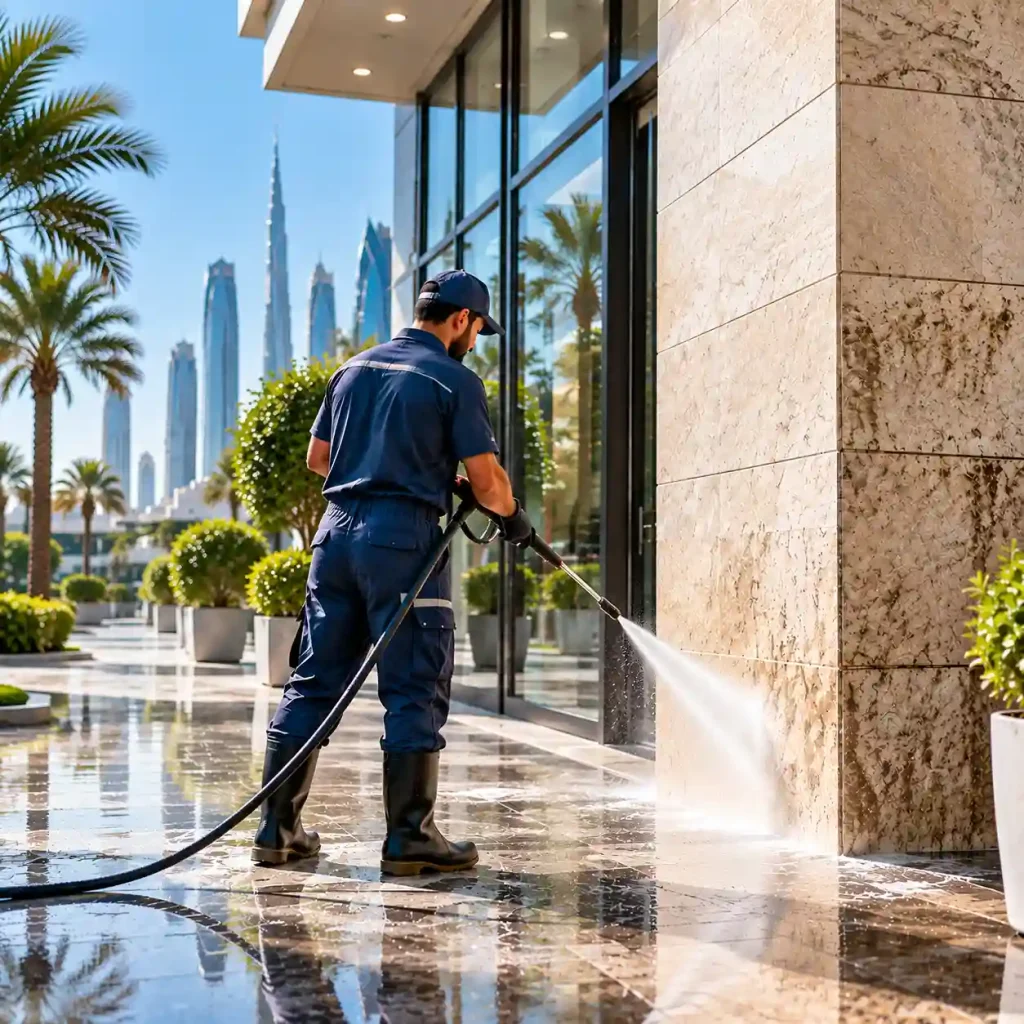
Both materials contain calcium carbonate, which reacts badly with acidic cleaning products. When acid-based glass cleaners come into contact with nearby stone surfaces, they can permanently damage the finish, causing dull or frosted patches that cannot be removed through normal cleaning.
The correct approach uses pH-neutral or material-specific cleaning solutions designed for stone and GRC surfaces. For algae or lichen growth, proper treatment should be applied before cleaning to protect the surface and prevent further damage.
Render and Painted Surfaces
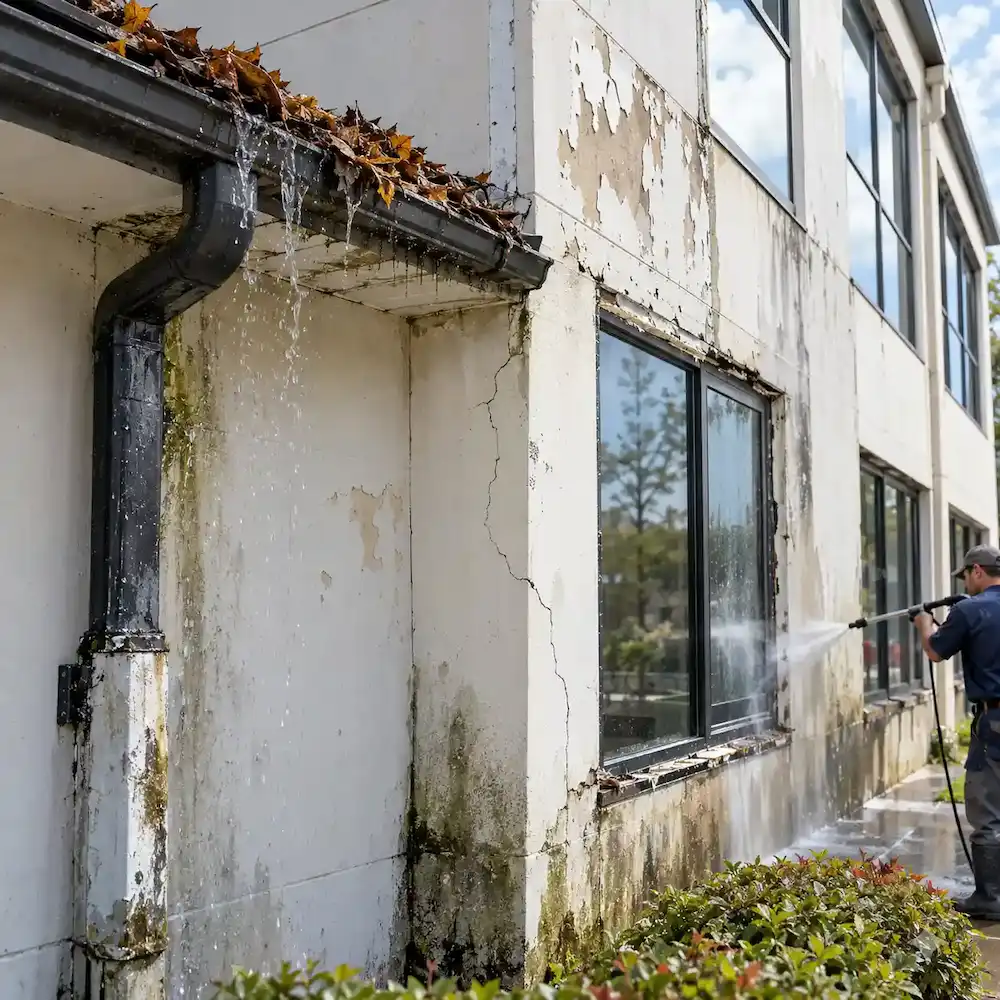
Render is a porous material, which makes it sensitive to incorrect cleaning methods, especially high-pressure washing.
High-pressure water can force moisture into the surface layers, causing issues like mould growth, bubbling, and paint failure over time.
The safer approach is soft washing, which uses low-pressure water with suitable cleaning solutions. This removes dirt effectively without damaging the surface.
Sealant Joints: The Part Everyone Forgets
Sealant joints around cladding panels, windows, and building connections help prevent water from entering the structure.
Incorrect cleaning chemicals can weaken sealants:
- Strong alkaline cleaners can damage silicone.
- Solvents can reduce sealant flexibility.
- Bleach-based products can affect sealant strength.
Professional cleaning teams check sealant conditions and choose suitable products for each surface. Early identification of damaged joints can prevent expensive water-related repairs.
For villa cleaning in Dubai and Sharjah, the same inspection approach applies around windows, entrances, and external wall openings.
Why Material Knowledge Is Not Optional
Modern buildings use different exterior materials, including ACP panels, glass, natural stone, render, and sealants. Each material requires a different cleaning method.
Using the same product and technique for every surface can cause damage, including:
- Damaged ACP coatings
- Etched stone surfaces
- Weak sealant joints
- Facade deterioration
The common facade maintenance mistakes caused by incorrect cleaning methods can usually be avoided with proper material knowledge and professional maintenance. Regular maintenance also plays an important role in protecting building materials. Planned exterior cleaning schedules help remove dirt and contaminants before they become harder and more expensive to treat.
Facade cleaning services in Dubai and Sharjah by Shafaf Cleaning use material-specific methods for commercial and residential buildings, with attention to glass, cladding, and sealants during each cleaning visit. Their building cleaning services are tailored to the materials, condition, and maintenance needs of each property.
Frequently Asked Questions
Q: Can the wrong cleaning product permanently damage a building facade?
Yes. Acid-based products can etch marble and limestone, while harsh chemicals may damage ACP coatings. High-pressure water can also cause ACP delamination. Professional cleaners should always use material-appropriate products and pressure levels.
Q: What is deionised water and why is it used for glass cleaning?
Deionised water has its mineral content removed, so it leaves little to no residue when it dries. This makes it effective for glass cleaning in the UAE, where hard water can leave calcium and magnesium deposits on glass surfaces.
Q: How often should different exterior materials be cleaned in Dubai?
Cleaning frequency depends on the material, location, and exposure. Ground-level glass may need cleaning every 2 to 4 weeks, while mid-rise glazing and ACP may need cleaning every 6 to 10 weeks. Coastal properties and buildings exposed to sandstorms may require more frequent cleaning.
Q: Is ACP cleaning different for PVDF and polyester coatings?
Both PVDF and polyester-coated ACP should be cleaned with pH-neutral products and non-abrasive materials. PVDF generally offers greater resistance to UV and chemical exposure, while polyester coatings require more careful handling.