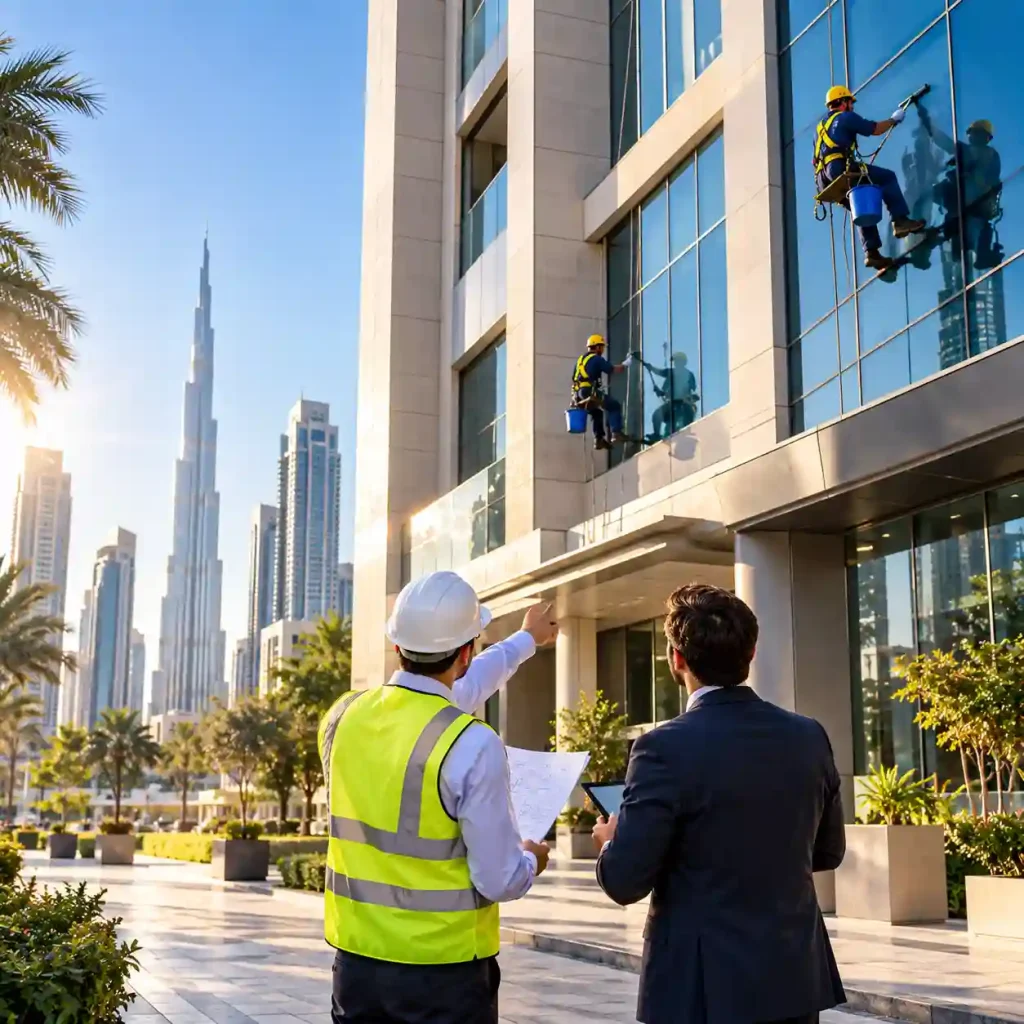
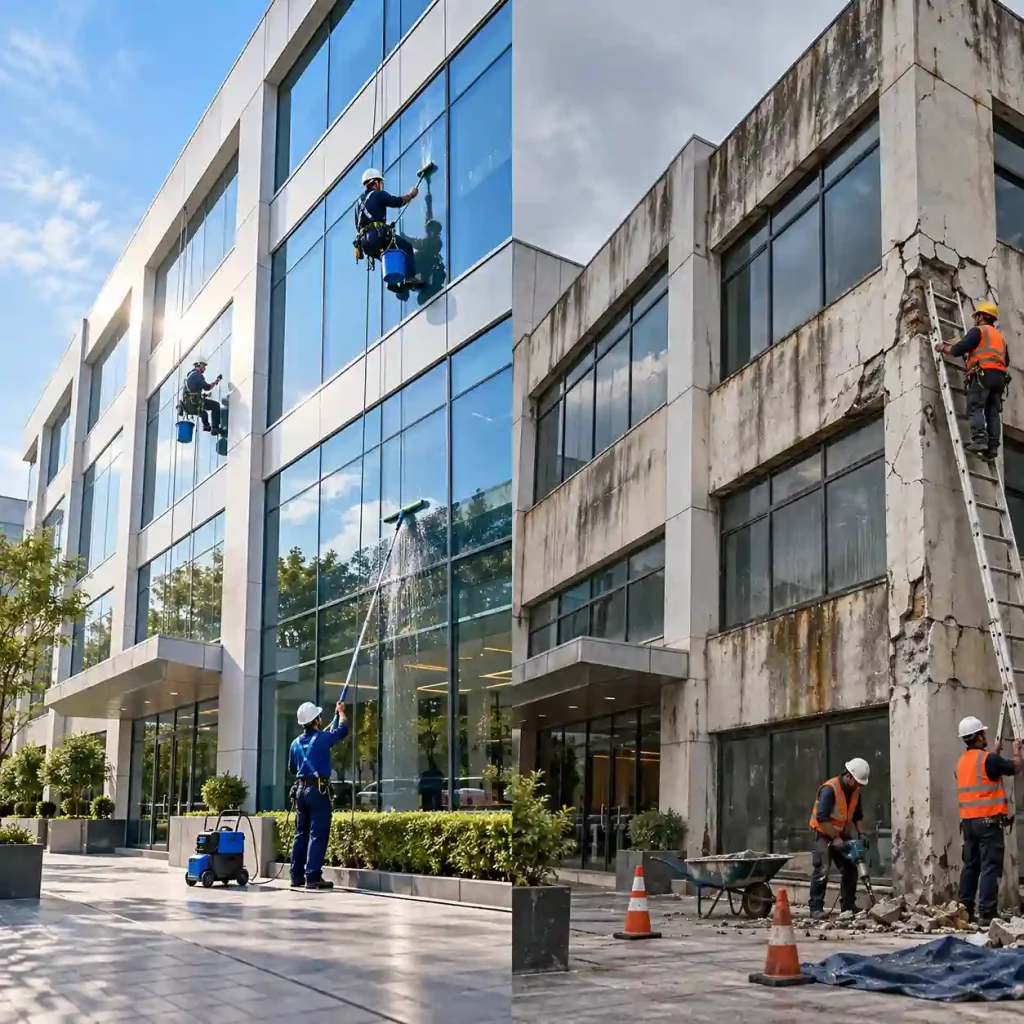
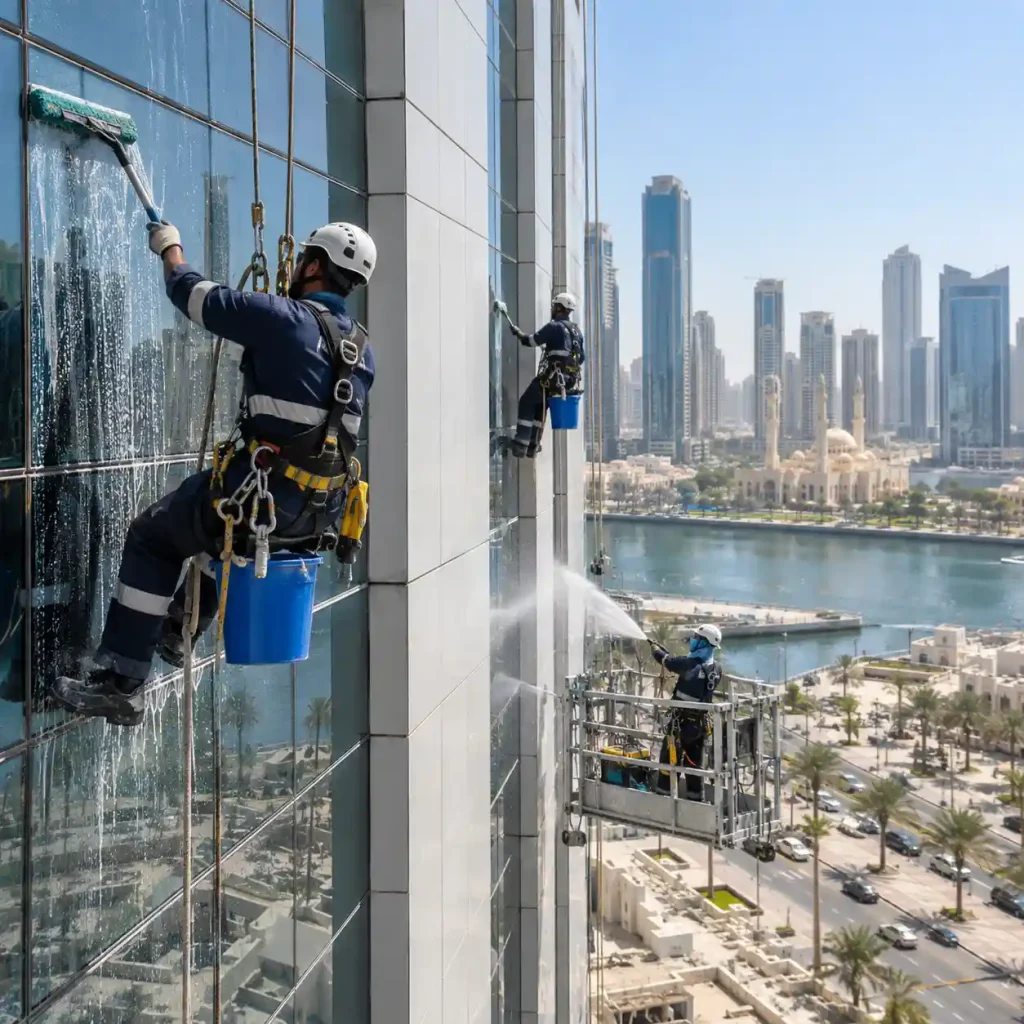
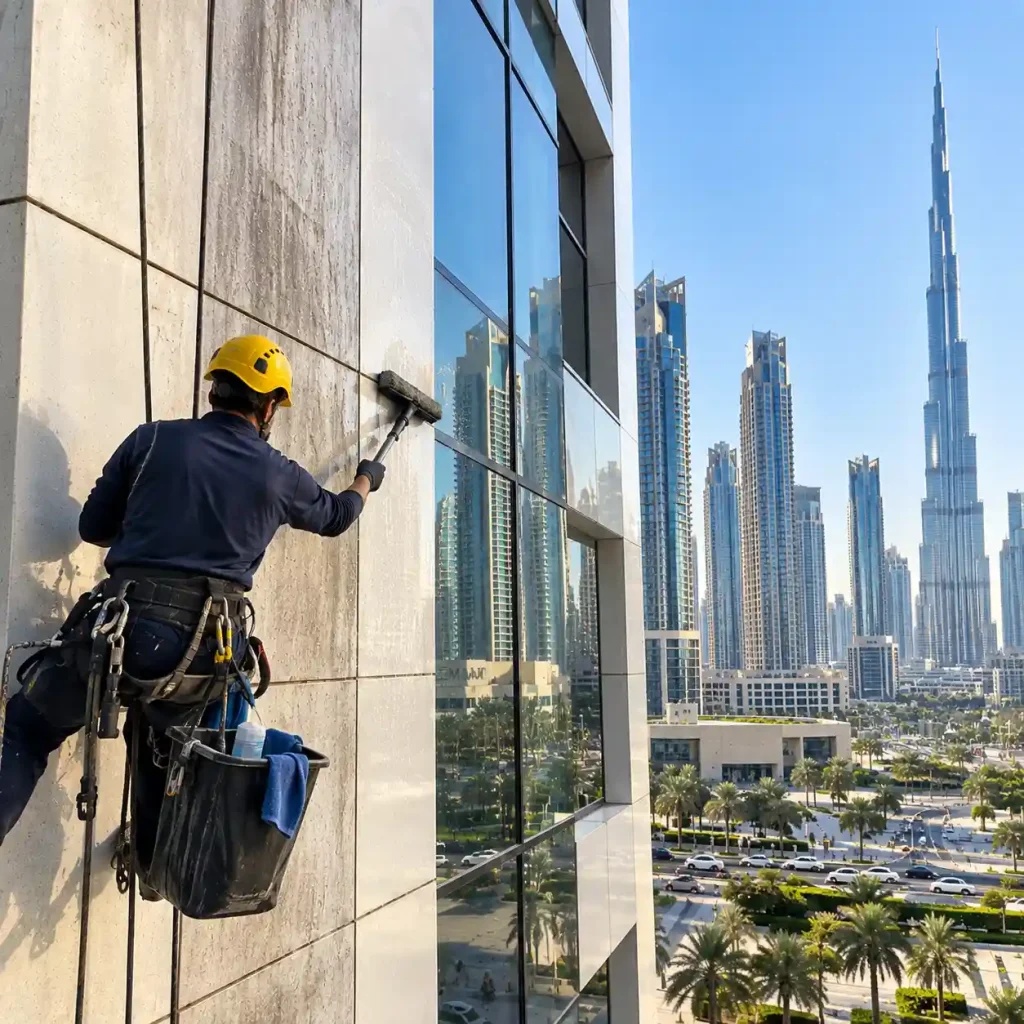
Maintaining a building’s exterior is not simply a matter of arranging cleaning when surfaces begin to look dirty. For commercial and residential properties in Dubai and Sharjah, a more structured approach is to define how the building should look, understand the materials that make up its exterior, establish appropriate maintenance standards, and document changes in condition over time.
A well-managed exterior also supports the connection between building appearance and property value, including visual perception, brand image, and long-term material condition.
Building appearance management brings cleaning, inspection, documentation, and maintenance planning into one coordinated system to keep the property consistently aligned with a defined standard.
What Is Building Appearance Management?
Building appearance management is a planned method of controlling and monitoring the exterior condition of a property.
It establishes clear standards for how different areas of the building should look and creates a process for maintaining those standards over time.
A typical programme considers:
- Exterior materials
- Building elevations and zones
- Cleaning requirements
- Access methods
- Visual appearance standards
- Inspection procedures
- Condition documentation
- Maintenance responsibilities
This makes the exterior of the building something that can be managed systematically rather than assessed only when a problem becomes noticeable.
Why Reactive Maintenance Always Falls Short
The reactive cycle for commercial building maintenance follows a consistent pattern across Dubai and Sharjah. The building is cleaned when someone notices it looks bad. It improves. Everyone moves on. After a few months, the same process repeats.
The problem with this pattern is structural, not incidental:
- No defined standard: “better than it was” is not a benchmark. Without a defined standard, there is no way to assess whether maintenance is adequate, whether the frequency is right, or whether the service provider is delivering what the building needs.
- Escalating costs: as contamination accumulates between reactive interventions, the chemistry and effort required to shift it increases. The reactive clean at month 12 requires more aggressive products and more labour than the scheduled clean at month three would have. The annual cost of reactive maintenance is typically higher than the annual cost of scheduled maintenance.
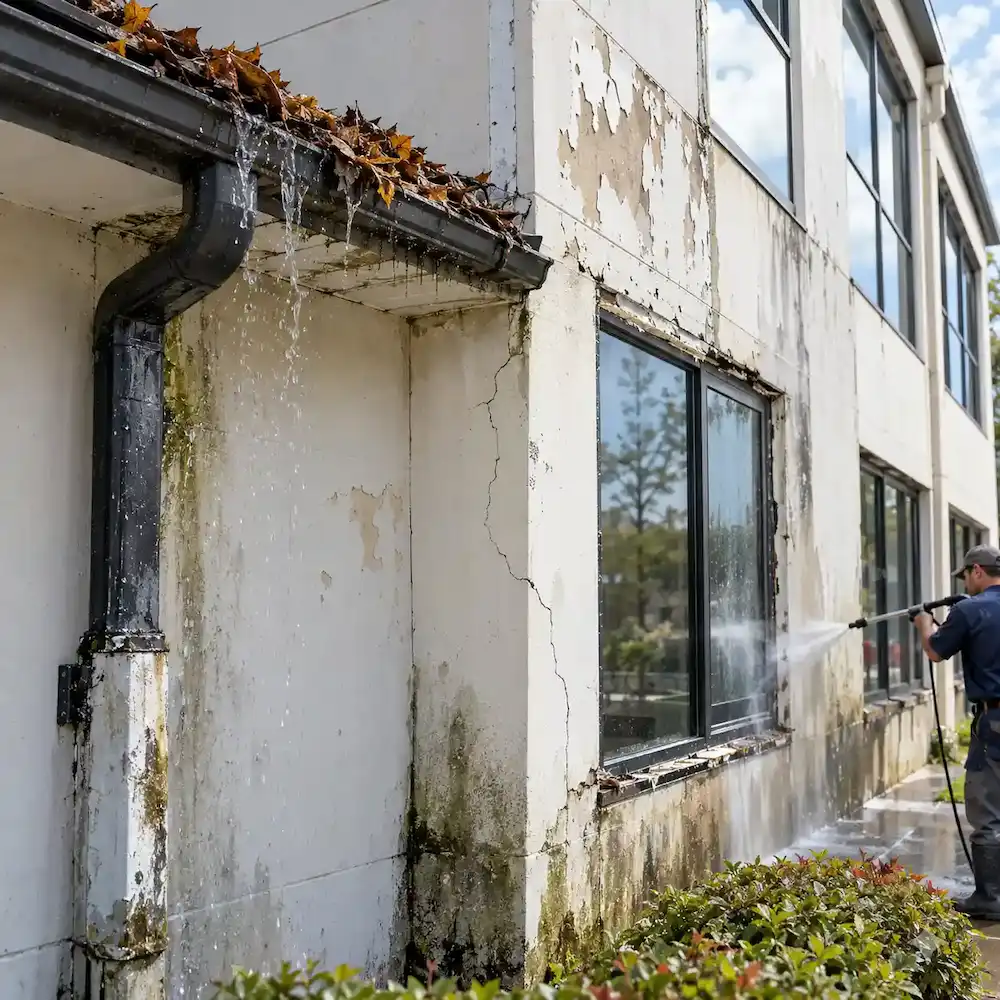
- Missed inspection value: every cleaning visit is an opportunity to have trained operatives close to every surface of the building. Reactive visits that focus only on cleaning miss the developing sealant failure, the early delamination at a panel edge, the biological growth establishing behind a drainage pipe. These findings at maintenance cost become restoration projects when identified later.
- Tenant relationship damage: tenants observe the cycle of deterioration and intervention. The building declining visibly between cleans is not neutral — it is an active signal of management quality that affects lease renewal decisions in ways that are difficult to reverse.
The preventive exterior building cleaning maintenance planning that replaces this cycle is not just about cleaning more frequently. It is about building a system that maintains a defined standard consistently, rather than recovering from deterioration repeatedly.
The Four Components of a Building Appearance Management Plan
Component 1: Set a Defined Appearance Standard
The starting point is a written definition of what the building should look like — by zone, by material, and by the observation point that matters most for each. This is specific, not vague.
For a commercial building in Dubai or Sharjah, this typically means:
- Entrance zone: glass, framing, entrance cladding, and canopy must be at a specific standard at all times — no visible dust accumulation, no contamination on glass, no staining on cladding above the door
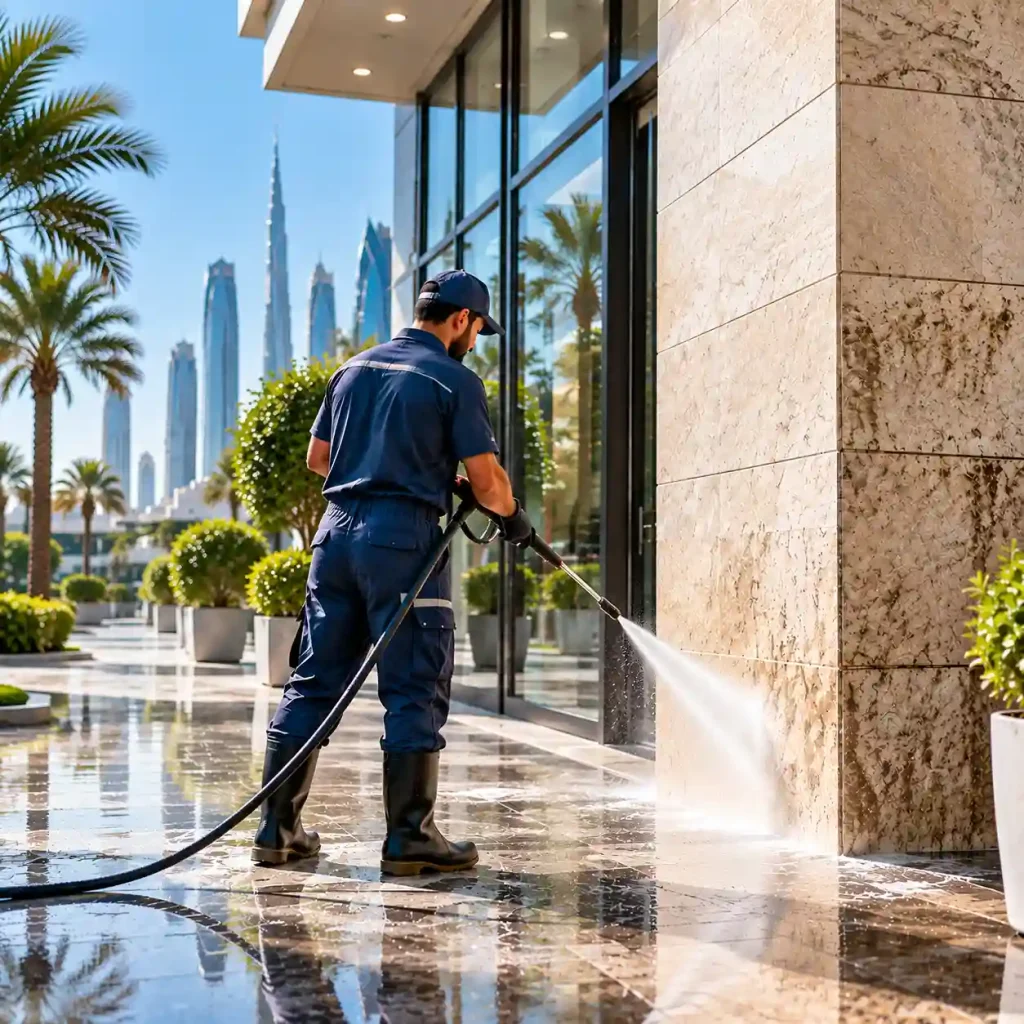
- Podium facade: natural stone or render at podium level must not show biological staining or significant surface contamination at street level
- Tower cladding: ACP panels must retain their colour and surface appearance without visible streaking, chalking, or AC condensation runs
- High-rise glazing: glass must not show mineral spot formation visible from the street
These standards do two things. They give the maintenance team a clear deliverable. And they create a measurable basis for evaluating whether the maintenance programme is working.
Component 2: Conduct a Material Inventory
Before a cleaning schedule can be designed, the building manager needs a clear picture of what the building exterior is actually made of — and what each material requires.
A basic material inventory covers:
- Cladding types by elevation: ACP (and coating specification where available), glazing (type and any coatings), natural stone types, render and paint specification, GRC locations
- Sealant joint types and approximate condition: silicone, polyurethane, or modified silicone; visible signs of aging or distress
- High-risk zones: AC unit discharge points, drainage channels running across the facade, shaded zones where biological growth is likely, any areas with previous damage or repair
- Access requirements by zone: what equipment is needed to reach each part of the building safely and completely
This inventory is the foundation for a cleaning specification. Without it, chemistry and technique choices are guesswork. For buildings with extensive exterior surfaces, the maintenance specification may also include professional facade cleaning based on the facade material, building height, and access requirements.
Component 3: Build a Maintenance Schedule Around the Materials
The schedule determines what is cleaned, how often, with what, and how. It is not one-size-fits-all across the building — different zones have different frequencies based on visibility, contamination rate, and material sensitivity.
| Zone | Recommended Frequency | Access Method |
|---|---|---|
| Entrance glass and ground-level glazing | Every 2 to 4 weeks | Ground-level with extension equipment |
| Ground-floor and podium cladding | Every 4 to 8 weeks | Ground-level; low-rise platforms |
| Mid-level glazing and ACP (levels 2–10) | Every 6 to 10 weeks | Mobile elevated work platform |
| High-rise curtain walling (above level 10) | Every 8 to 12 weeks | IRATA rope access or installed cradle |
| Natural stone and render podium | Every 8 to 12 weeks with biocide | Ground-level; low-rise platforms |
| Roof parapet and plant room surrounds | Quarterly | Roof-level access |
After a significant sandstorm, glass and ACP surfaces should receive an unscheduled clean within 48 to 72 hours regardless of the regular programme. Sandstorm silica bonds to surfaces rapidly in UAE heat and becomes progressively harder to remove without risk of micro-scratching after 72 hours.
Component 4: Inspection, Documentation, and Early Intervention
This is the component that separates an appearance management programme from an ad hoc cleaning contract. Every cleaning visit should produce:
- Photographic record: before-and-after photographs of each elevation from consistent positions, creating a visual condition history for the building.
- Observations report: written notes on any surface conditions of concern — developing sealant distress, cladding anomalies, biological growth in new locations, evidence of water ingress staining or drainage blockage.
- Maintenance recommendations: specific items identified during the visit that should be addressed before the next clean — whether by the cleaning team, a specialist contractor, or the building management team.
- Completion record: confirmation that the specified scope was completed in full, including any areas that could not be accessed and why.
This documentation serves multiple functions simultaneously. It provides the building owner with a condition history relevant to insurance, valuation, and lease negotiations. It creates the early warning system that identifies a cracking sealant joint at maintenance cost rather than at water-damage-remediation cost. And it provides the accountability record that makes it possible to have a meaningful conversation with the service provider about performance.
How Building Appearance Management Affects Property Value
Properties managed to a defined exterior standard consistently outperform reactively maintained properties on the metrics that matter most to commercial property investors: vacancy rate, achievable rent, tenant retention, and capital value.
The reason is straightforward. A building managed to a standard sends consistent quality signals to every stakeholder who interacts with it — prospective tenants during shortlisting, existing tenants throughout their lease, investors during due diligence, and valuers during condition assessments.
The evidence connecting exterior condition to rent premiums, valuation mechanics, and transaction pricing is set out in the article on maintaining long-term property value through consistent exterior maintenance.
What the Initial Audit Should Produce
A useful initial audit should result in more than a general inspection.
It can be used to develop several practical documents for the property.
1. Material Inventory
A record of the major exterior materials used across each elevation and building zone.
2. Exterior Zone Map
A breakdown of the areas that require separate maintenance or inspection approaches.
3. Condition Baseline
Photographic documentation showing the current state of the building exterior.
4. Cleaning Specification
A defined approach for cleaning the different materials present.
5. Access Plan
A record of the equipment or specialist access methods required for each area.
6. Maintenance Schedule
A structured programme defining when different zones should be reviewed and maintained.
7. Reporting Process
A consistent method for recording completed work, observations and follow-up recommendations.
Together, these documents form the core of a building appearance management programme. For a deeper technical discussion of facade materials, see our guide to professional exterior cleaning practices.
Building Appearance Management Services in Dubai and Sharjah
Shafaf Cleaning provides building cleaning services in Dubai and Sharjah for properties requiring structured exterior maintenance.
A building appearance programme can be developed around the property’s:
- Exterior materials
- Architecture
- Building height
- Access requirements
- Current condition
- Management priorities
For properties with extensive glazing, window cleaning in Dubai and Sharjah can also form part of the overall exterior maintenance programme.
An initial site assessment can be used to establish the building’s current condition and determine the most appropriate maintenance specification.
Frequently Asked Questions
What is building appearance management?
Building appearance management is a structured system for defining, maintaining and documenting the exterior appearance of a property. It combines appearance standards, material information, cleaning specifications, inspection procedures and condition reporting.
How is building appearance management different from a cleaning contract?
A standard cleaning contract primarily defines the cleaning work to be completed. An appearance management programme also establishes visual standards, building zones, material requirements, inspection procedures, documentation and a process for dealing with maintenance findings.
What should a building appearance plan include?
A complete plan may include a material inventory, exterior zone map, appearance standards, cleaning specifications, access requirements, inspection procedures, photographic records and post-maintenance reporting.
Does every building need the same appearance management plan?
No. The programme should be designed around the individual property. Building height, facade materials, architecture, exposure and access requirements can all affect how the plan is structured.
Why is a condition audit important?
The initial audit establishes the current condition of the property. It provides a baseline against which future inspections and maintenance visits can be compared.
Who should review maintenance inspection findings?
The cleaning contractor can document visible issues encountered during the visit, while the facilities manager or property management team should review the findings and determine whether specialist investigation or repair is required.
Can window cleaning be included in a building appearance programme?
Yes. Window cleaning can be included alongside cladding, stone and other exterior maintenance requirements, with the cleaning method and frequency determined according to the building’s glazing and access requirements.