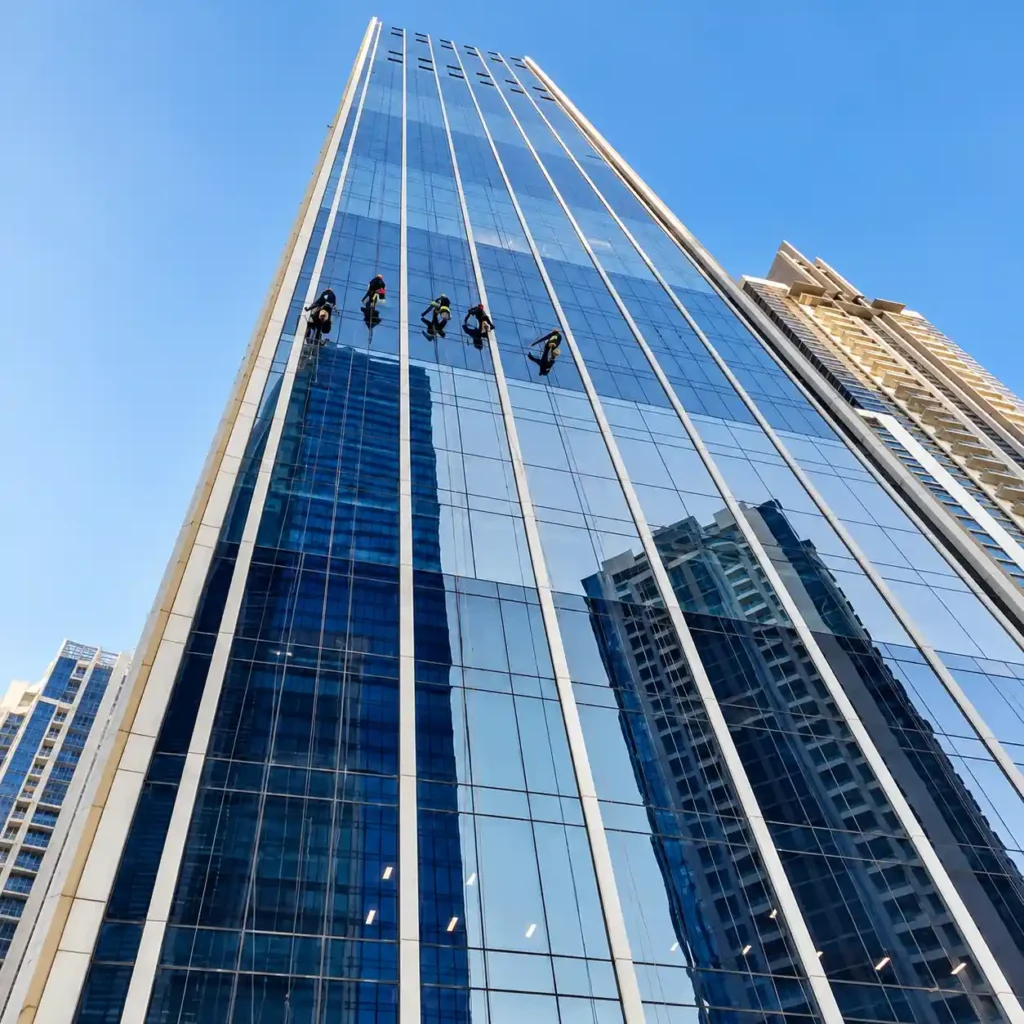
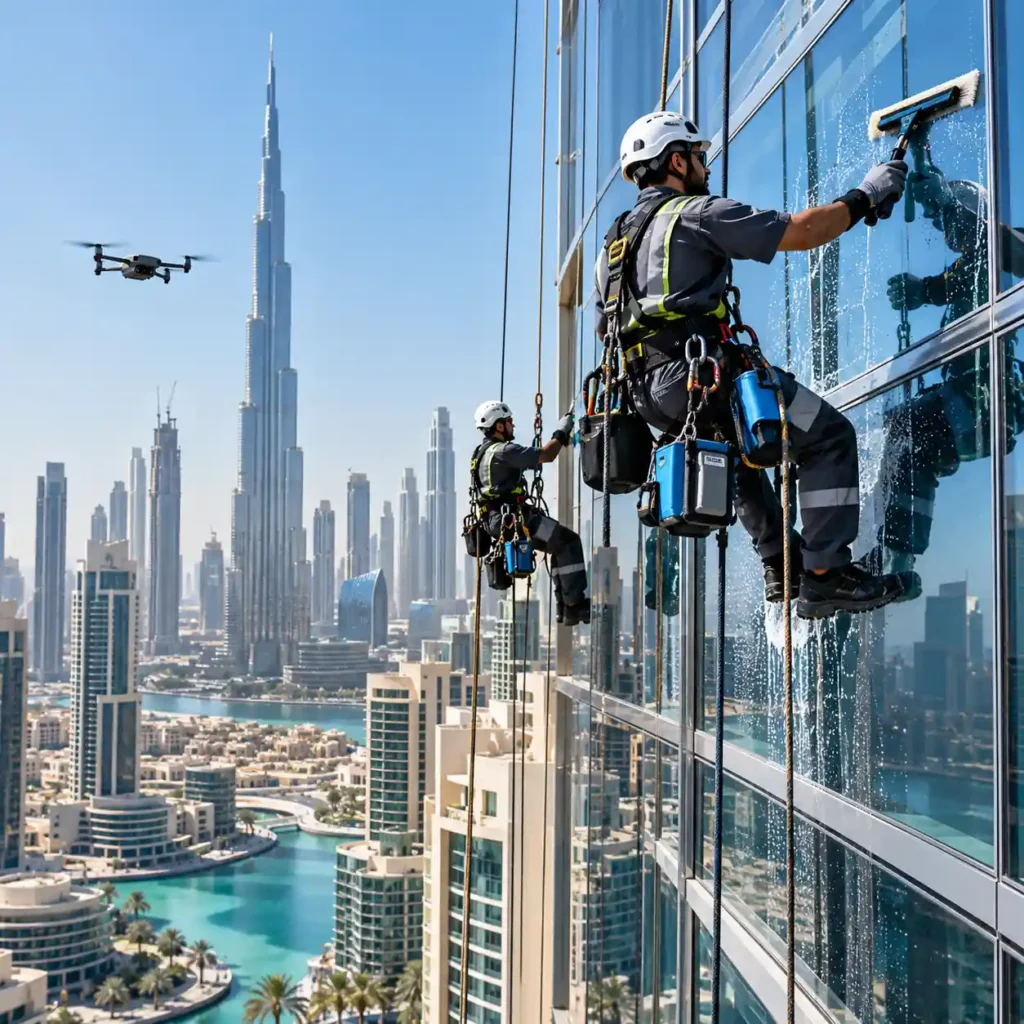
Maintaining a tower exterior is not simply a matter of reaching the highest floor. Technicians must also reach recessed windows, narrow facade sections and surfaces above entrances without unnecessarily disrupting the building below.
Rope access gives maintenance teams another way to approach these areas. Instead of constructing temporary scaffolding across large sections of a building, trained technicians can use purpose-designed rope systems to reach suitable work positions.
For property managers arranging building cleaning in Dubai, this has changed how certain exterior maintenance tasks can be planned and delivered.
How High-Rise Access Methods Have Evolved
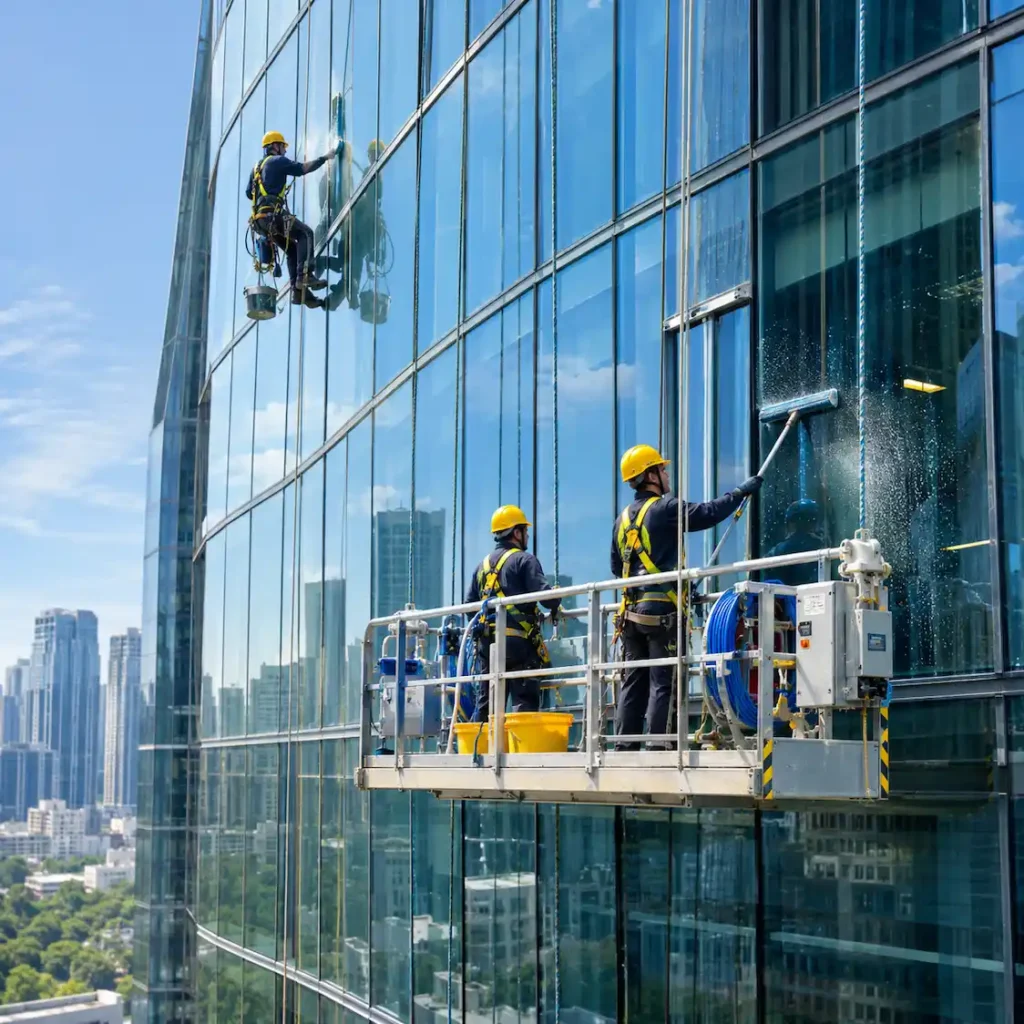
Traditional access methods remain important. Scaffolding provides working platforms for extended tasks, while suspended cradles and building maintenance units can support repeated work across large elevations.
Rope access offers a different approach.
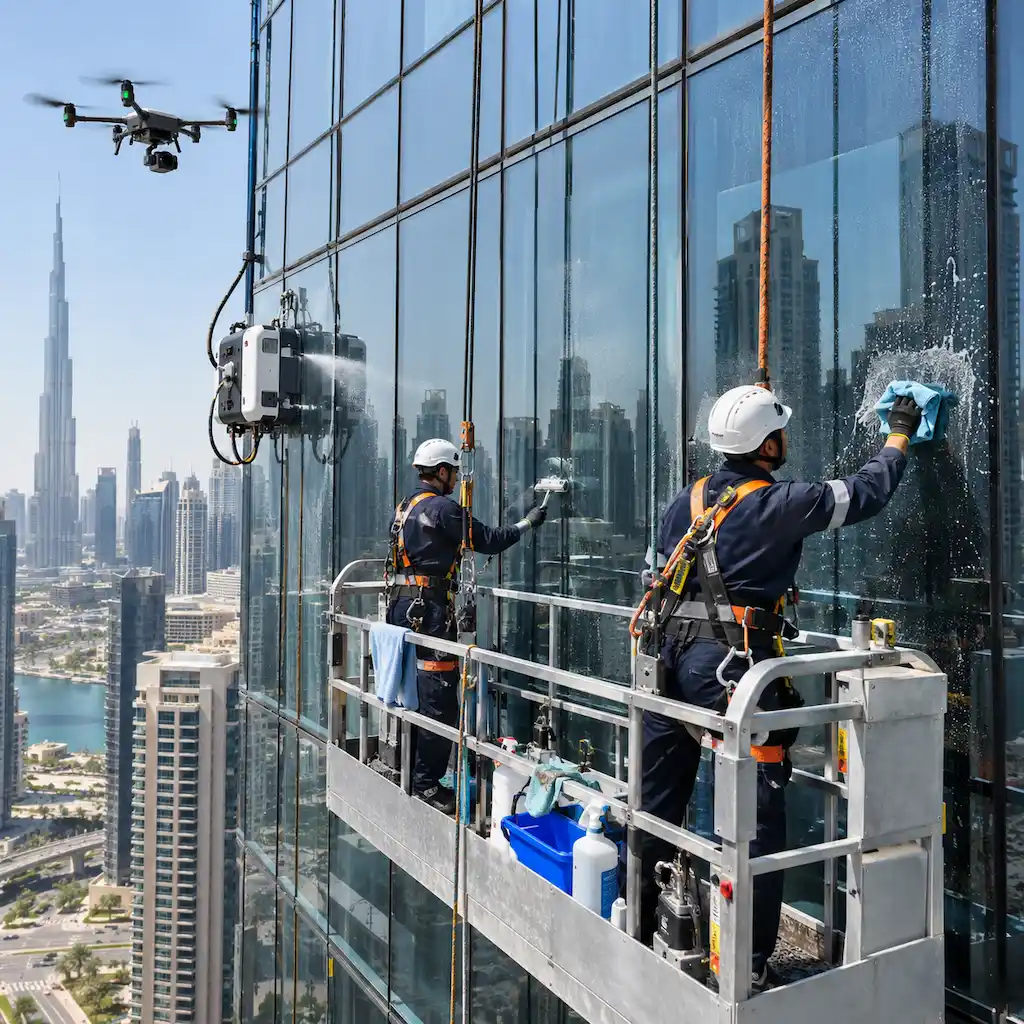
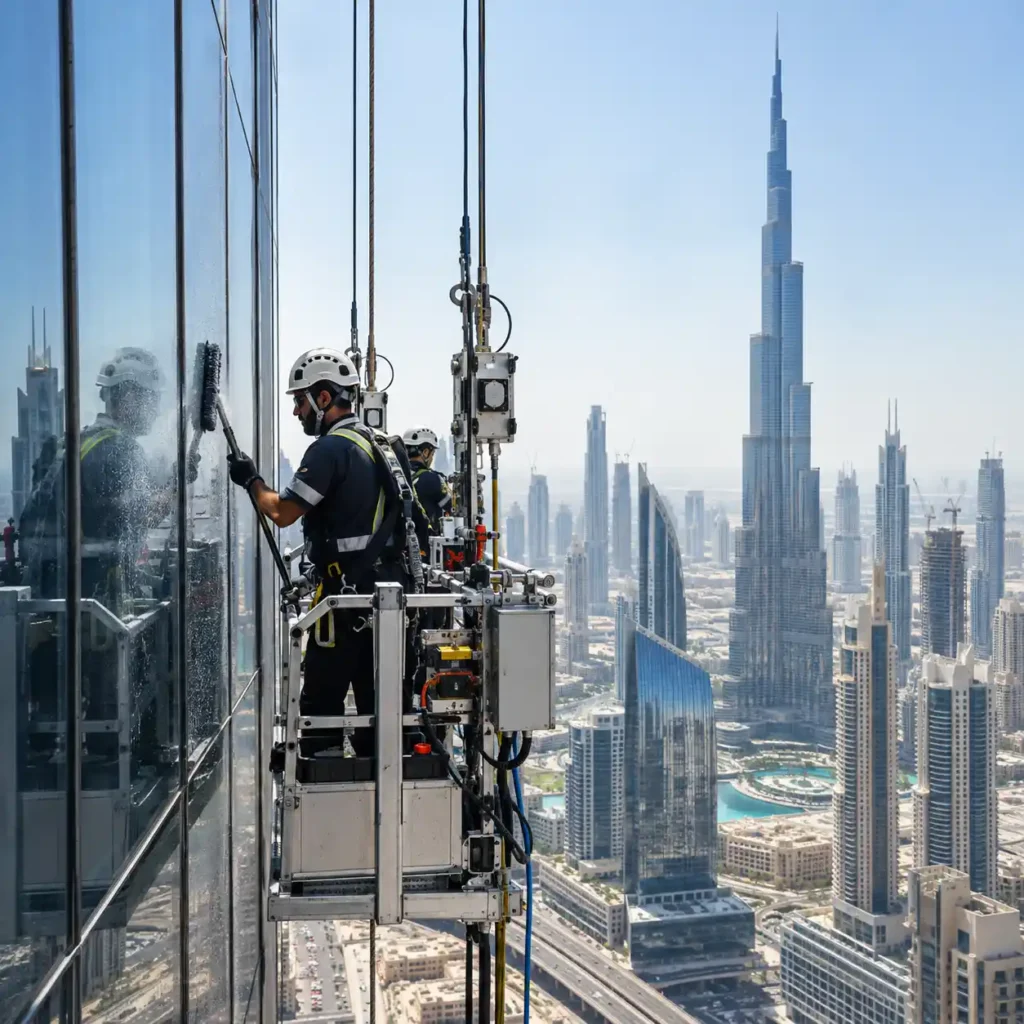
Technicians use a planned system of ropes, suitable anchors and specialist equipment to position themselves at the required working area.
This can be useful when a building has complex geometry or when the work is concentrated in a relatively small area.
It does not mean rope access is automatically the safest, cheapest or most efficient method for every building.
What Rope Access Changed for Dubai’s Towers
More Flexible Access to Difficult Facade Areas
Modern buildings can include projecting architectural features, recessed glazing and changes in facade depth.
A fixed platform may not reach every surface easily.
Where suitable anchorage, edge protection and rescue arrangements are available, rope access can help technicians reach areas that would otherwise require more extensive temporary equipment. This flexibility can also support targeted rope access cleaning where conventional access methods are difficult to arrange.
Less Dependence on Ground-Level Equipment
Scaffolding and mobile elevated work platforms may require substantial ground space.
That can create challenges around occupied towers with entrances, vehicle access and pedestrian circulation.
Rope access can reduce some ground-level equipment requirements, although exclusion zones, controlled access and protection against falling objects remain necessary.
More Options for Targeted Maintenance
Not every maintenance task requires cleaning an entire elevation.
For example, a facilities manager may need a closer assessment of recurring deposits around several upper-floor windows.
Rope access may provide a practical way to reach those locations without establishing access across the whole facade.
Any suspected structural or material defect must still be assessed by appropriately qualified specialists.
Rope Access vs Scaffolding and Cradle Systems
| Method | Potential advantage | Main consideration |
| Rope access | Flexible positioning for suitable localized or complex work | Requires verified anchors, competent technicians and rescue planning |
| Scaffolding | Stable working platforms for extensive work | Installation, space and loading requirements |
| Suspended cradle | Repeated vertical access across suitable elevations | Equipment compatibility, inspection and operating constraints |
| Mobile elevated work platform | Direct access to reachable areas | Ground conditions, reach and operating space |
The choice should follow a site assessment rather than a preference for one technique.
Why Rope Access Still Depends on Building Design
Rope access cannot overcome every architectural obstacle.
A roof may lack suitable anchor arrangements. Sharp edges may complicate rope protection. Projections can obstruct a descent route, and some areas may not have an acceptable rescue solution.
These constraints should be identified before work begins.
For facade cleaning in Dubai, access planning must also consider the surface material, cleaning method and surrounding activity.
What Building Managers Should Evaluate
Before selecting rope access, establish whether the proposed work is genuinely suitable for that method.
Ask the contractor to explain the access route, anchor verification, protection of people below, supervision and rescue arrangements.
Compare the proposed method with the building’s existing maintenance equipment. An installed cradle may be more appropriate for some elevations, while rope access may suit specific difficult sections.
The wider future of high-rise building maintenance depends on choosing access methods according to building conditions rather than treating any one method as a universal solution.
Frequently Asked Questions
Can rope access replace scaffolding on every high-rise?
No. Extensive repairs, heavy materials, unsuitable anchorage or prolonged work may make scaffolding or another access system more appropriate.
Is rope access useful for irregularly shaped buildings?
It can be, provided technicians can safely reach the required areas and the building supports a suitable access and rescue system.
Does rope access reduce maintenance costs?
It may reduce certain setup requirements, but total cost depends on building geometry, work duration, safety arrangements and the number of required access positions.