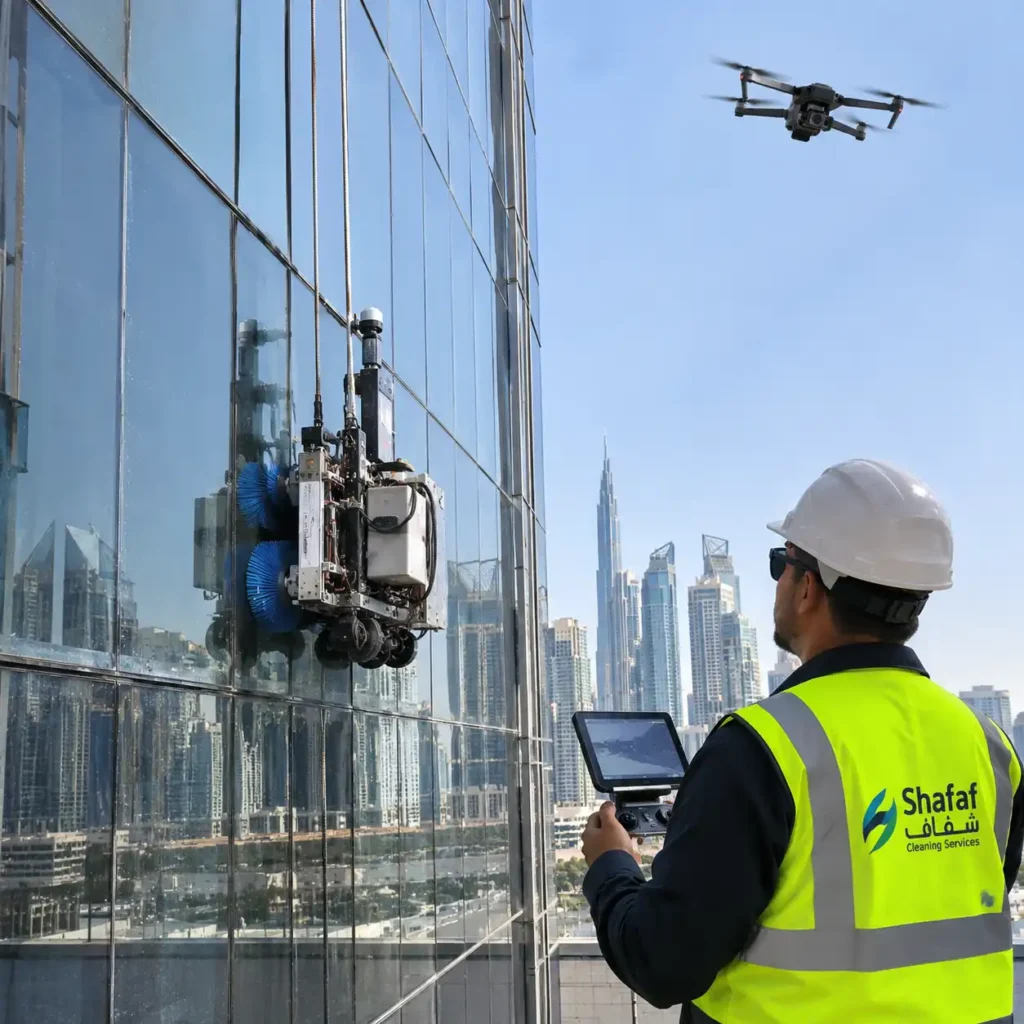
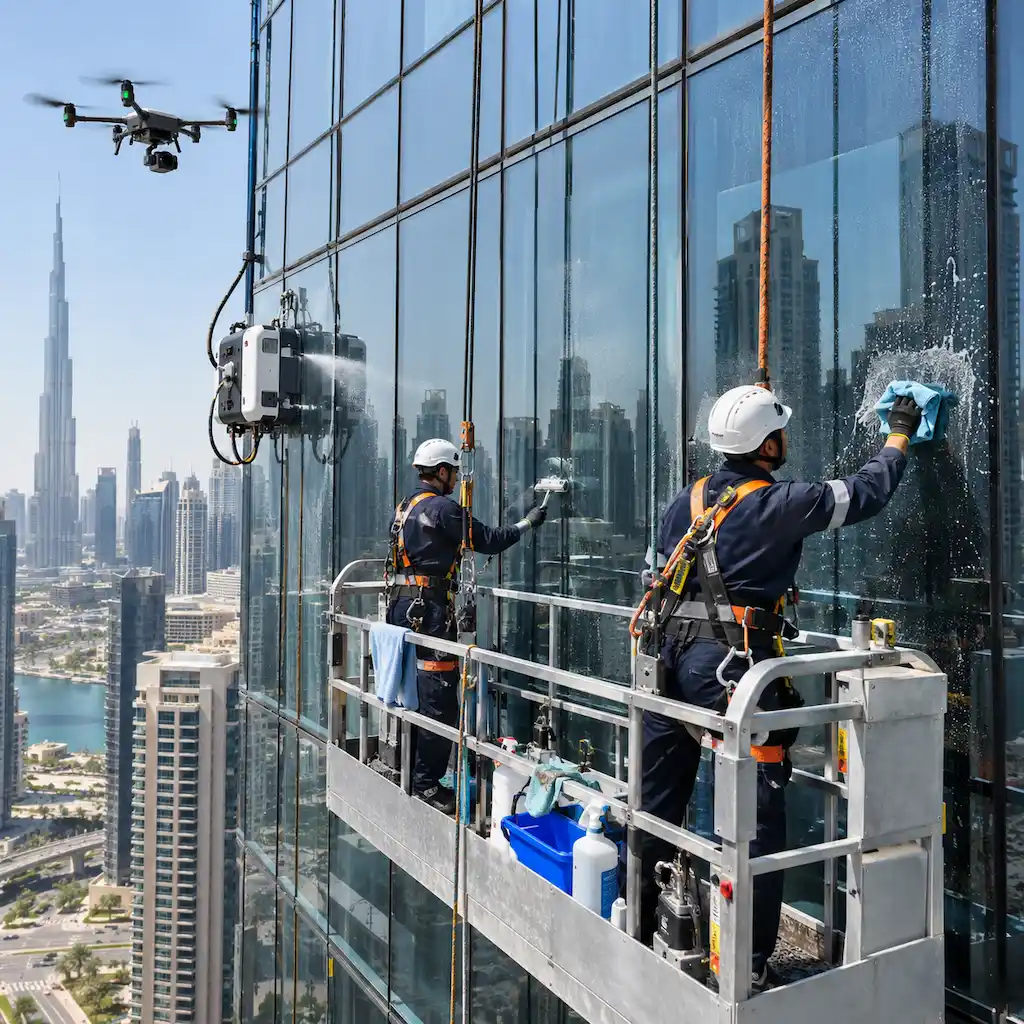
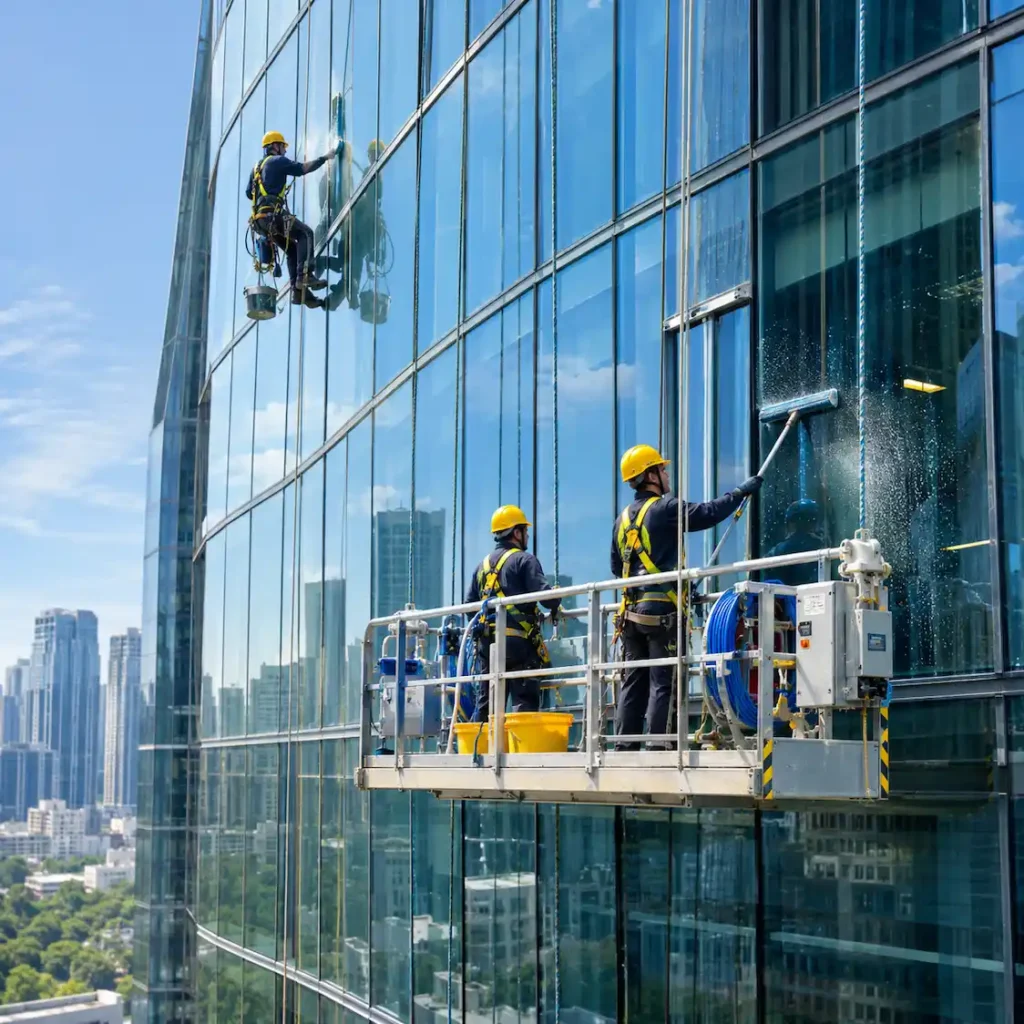
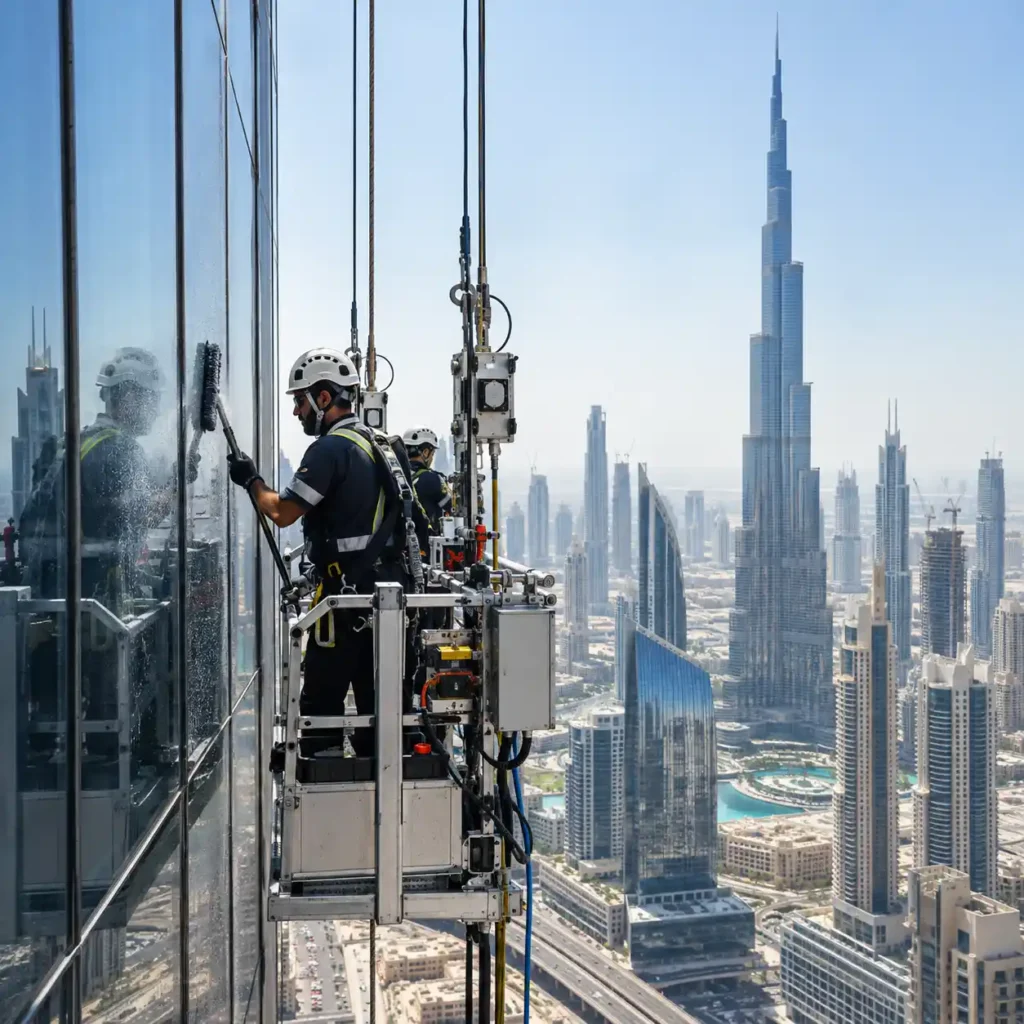
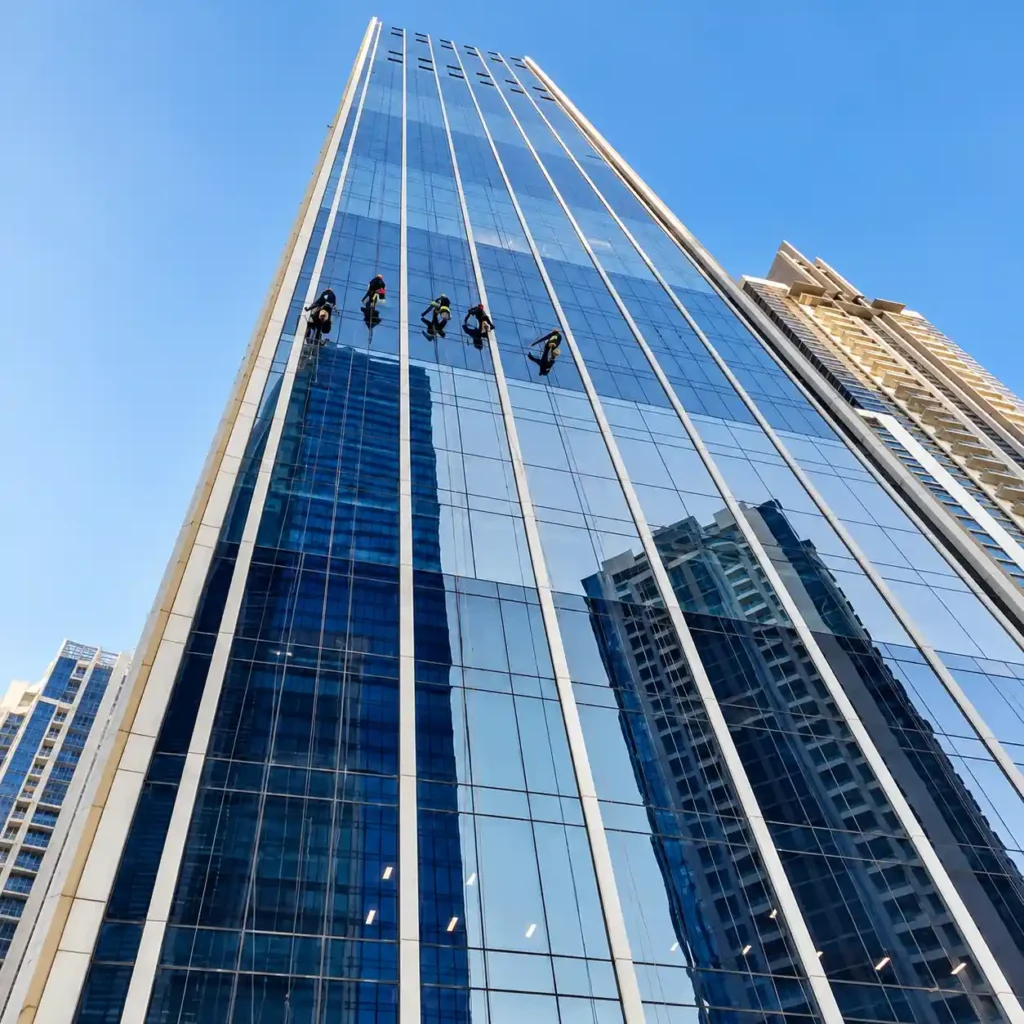
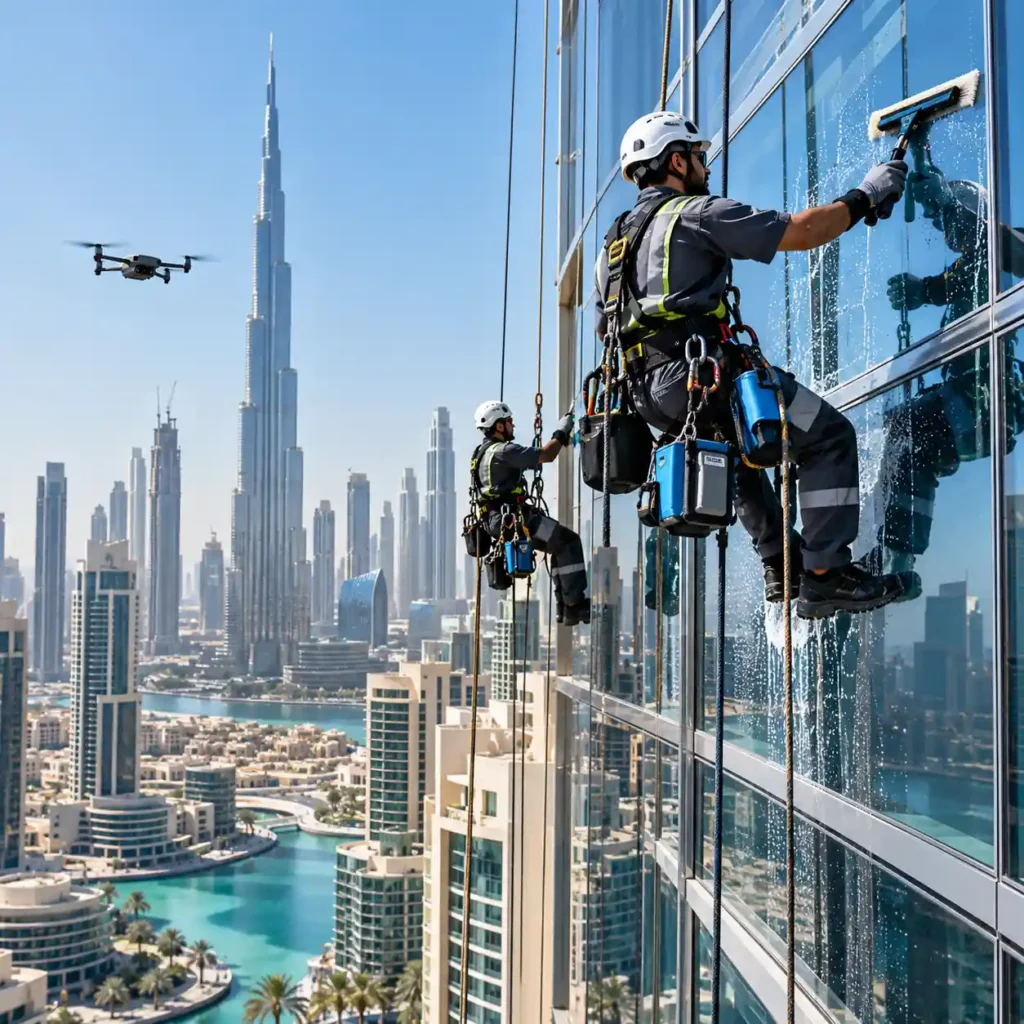
Cleaning the exterior of a skyscraper involves more than reaching windows at extreme heights. Modern high-rise cleaning relies on specialized access systems, suitable cleaning equipment, safety monitoring and clear communication to manage the challenges of working on tall buildings.
From rope access systems and suspended platforms to purified-water cleaning technology, each method serves a different purpose. Understanding how these technologies work helps property managers assess equipment suitability, manage safety risks and maintain building exteriors without damaging sensitive surfaces.
Access Technology Used in Skyscraper Exterior Cleaning
Access equipment determines how technicians reach different parts of a building’s exterior. The most suitable method depends on the building’s height, facade design, available infrastructure and maintenance requirements.
Building Maintenance Units (BMUs)
A Building Maintenance Unit (BMU) is a purpose-designed access system commonly used for exterior maintenance on high-rise buildings.
Depending on the design, it may include roof-mounted machinery, a telescopic boom and a suspended platform that allows technicians to reach different facade sections.
BMUs are particularly useful for buildings designed to accommodate regular exterior cleaning and inspection.
However, having a BMU installed does not automatically mean every section of the building is accessible. Overhangs, recessed windows and architectural features can restrict its movement.
Safe operation requires trained personnel, equipment inspections, maintenance records and compliance with the manufacturer’s operating instructions.
Rope Access Systems
Rope access technology allows trained technicians to reach exterior surfaces using specialized ropes, harnesses and positioning equipment.
A conventional industrial rope access arrangement uses two independently anchored lines: a working line for positioning and a safety line providing backup protection.
Other components include descenders, backup devices, connectors and suitable anchor points.
The effectiveness of the system depends on correct installation, compatible equipment, competent technicians and appropriate rescue arrangements.
Rope access can be useful for buildings with complex facades where permanent access equipment cannot reach certain areas.
However, its suitability must be assessed for each building rather than assumed from the availability of certified equipment. The IRATA International Code of Practice provides technical guidance on independent anchor arrangements and backup protection.
Suspended Platforms and Cradles
Suspended platforms, also called cradles, provide an elevated working area supported by suspension equipment.
They may be installed temporarily or form part of a building’s permanent maintenance arrangements.
These platforms allow technicians to work across sections of the exterior while carrying compatible cleaning tools.
Their use requires an assessment of suspension points, rated loads, platform stability, equipment condition and emergency recovery arrangements.
Water-Fed Pole Systems
Water-fed poles allow technicians to clean reachable glass surfaces from the ground or another suitable working position.
Water travels through an extendable pole to a brush, making it possible to clean some windows without using elevated access equipment.
Where practical, this can reduce exposure to work-at-height risks.
However, pole length, handling forces, electrical hazards and building geometry must still be considered.
Ground-based cleaning is not suitable for every elevation or facade design.
Cleaning Technology: Protecting Glass and Facade Materials
Reaching the exterior surface is only part of skyscraper cleaning. The equipment and cleaning method must also be compatible with the building’s materials.
Modern facades may combine coated glass, aluminium panels, natural stone and painted finishes. These materials can respond differently to water, cleaning products and mechanical contact.
Purified-Water Cleaning Systems
Purified-water systems remove dissolved minerals from water using treatment processes such as reverse osmosis or deionization.
When used correctly on suitable surfaces, purified water can reduce mineral spotting and residue after drying.
However, water purification alone does not guarantee a satisfactory result. Existing deposits, surface coatings, cleaning tools and environmental conditions can affect the finish.
Surface-Compatible Cleaning Tools
Soft brushes, squeegees, controlled application equipment and suitable cleaning solutions help remove dirt without unnecessary abrasion.
The choice of tool depends on the surface material and the type of contamination.
For example, a cleaning method suitable for standard exterior glass may damage a sensitive coating or painted metal panel.
Before selecting equipment for facade cleaning in Dubai, the building’s materials, existing condition and manufacturer care instructions should be reviewed.
A small test area may also be appropriate where material compatibility or cleaning results are uncertain.
Monitoring and Communication Technology
Digital technology can support high-rise cleaning by improving how teams record observations, coordinate activities and communicate changes.
Digital Inspection and Reporting
Digital inspection records help document the condition of exterior surfaces before, during and after cleaning.
Photographs can identify recurring stains, inaccessible areas or surfaces requiring additional attention.
When records include the relevant elevation, location and date, property managers can compare results across maintenance visits.
However, photographs alone cannot establish the cause of every visible defect. Some concerns require closer examination or specialist assessment.
Communication Systems
Reliable communication is essential when technicians, supervisors and ground personnel are working in different locations.
Two-way radios and other suitable communication devices can help coordinate equipment movement, access restrictions and interruptions.
Communication arrangements should be tested against the building’s actual conditions, including areas where signals may be unreliable.
These systems support coordination but do not replace established operating procedures or competent supervision.
How Technology Supports High-Rise Cleaning Safety
Advanced equipment can help manage risks, but no technology eliminates the hazards of working at height.
Safe operations depend on combining suitable equipment with planning, inspections, trained personnel and emergency procedures.
Equipment Inspections and Maintenance
Access equipment should be inspected and maintained according to applicable requirements and manufacturer instructions.
Checks may include ropes, anchors, connectors, suspension mechanisms, safety devices and communication equipment.
Damaged, unsuitable or overdue equipment should not be used until its condition has been appropriately assessed.
Weather Monitoring
Wind, rain and heat can affect exterior cleaning operations.
Strong winds may cause suspended platforms or ropes to move unpredictably, while high temperatures can increase worker exposure risks.
Weather conditions must be assessed against equipment operating limits, site-specific hazards and applicable safety requirements.
A cleaning schedule should allow work to be postponed when conditions become unsuitable.
Emergency and Rescue Planning
A rescue plan should reflect the access method, working position, building layout and resources available on site.
For example, recovering a technician suspended on ropes requires different arrangements from evacuating a suspended platform.
Emergency procedures should be established before work begins rather than developed after an incident.
How Property Managers Can Choose Suitable Cleaning Technology
The most advanced equipment is not necessarily the most appropriate for every skyscraper.
When evaluating contractors for building cleaning in Dubai, property managers should consider the building’s design, access limitations, facade materials and proposed maintenance scope.
Important questions include:
- Which access system will be used, and why is it suitable for this building?
- Can the equipment reach all areas included in the cleaning scope?
- Are inspections, maintenance records and operating procedures available?
- How will cleaning tools be checked for compatibility with facade materials?
- What weather restrictions and emergency arrangements apply?
- How will completed work and unresolved concerns be documented?
Clear answers help property managers compare proposed methods beyond equipment descriptions or pricing alone.
The wider role of these systems in the future of high-rise building maintenance in Dubai is to support better planning, consistent maintenance records and informed decisions throughout a building’s life.
Conclusion
Safe skyscraper exterior cleaning depends on selecting equipment that matches the building’s design, facade materials and working conditions.
Building maintenance units, rope access systems, suspended platforms and modern cleaning tools each serve a specific purpose. Digital reporting, communication equipment and weather monitoring can further support safe and organized operations.
For property managers, the priority is not simply choosing the newest technology. It is understanding how each system will be used, what limitations apply and whether the proposed method can deliver the required cleaning results safely and consistently.
Frequently Asked Questions
What technology is used for skyscraper exterior cleaning?
Common technologies include building maintenance units, rope access equipment, suspended platforms, water-fed poles, purified-water systems and digital monitoring tools. Equipment selection depends on the building’s design and cleaning requirements.
How do workers clean windows on very tall buildings?
Workers may use roof-mounted building maintenance units, suspended cradles or rope access systems. These methods allow trained technicians to reach exterior surfaces while following the required safety procedures.
What is a building maintenance unit?
A building maintenance unit is a specialized access system designed to support exterior building work. Depending on its configuration, it may use roof-mounted equipment and suspended platforms to move workers along the facade.
Is rope access safe for skyscraper cleaning?
Rope access can be an appropriate method when properly planned and performed by competent technicians using suitable equipment, independent protection arrangements and a site-specific rescue plan. It is not automatically suitable for every building.
Can skyscraper windows be cleaned without working at height?
Some lower or accessible elevations can be cleaned using ground-based water-fed poles. However, very tall buildings and complex facades generally require other suitable access systems.
Can technology make high-rise cleaning completely risk-free?
No. Equipment can help control risks, but weather conditions, equipment faults, site restrictions and human factors must still be managed through appropriate planning, supervision and safety procedures.