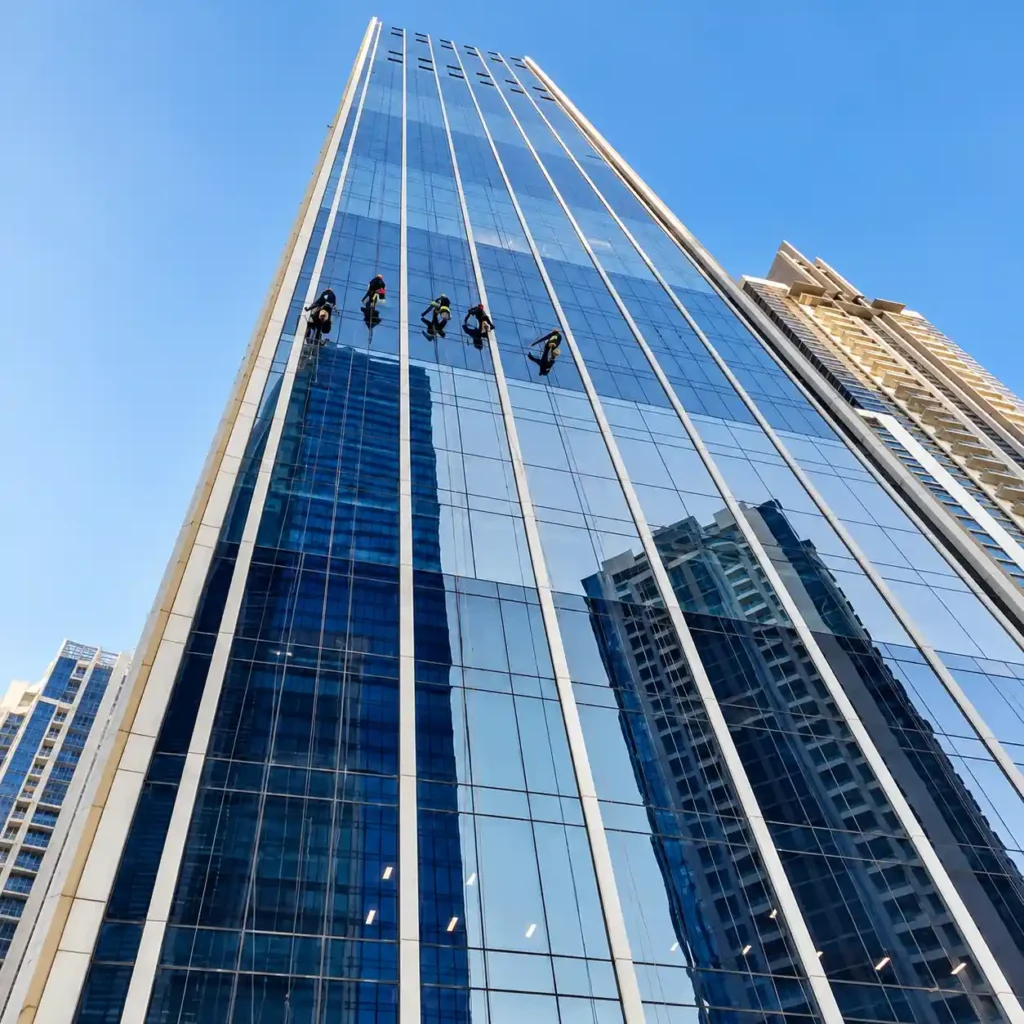
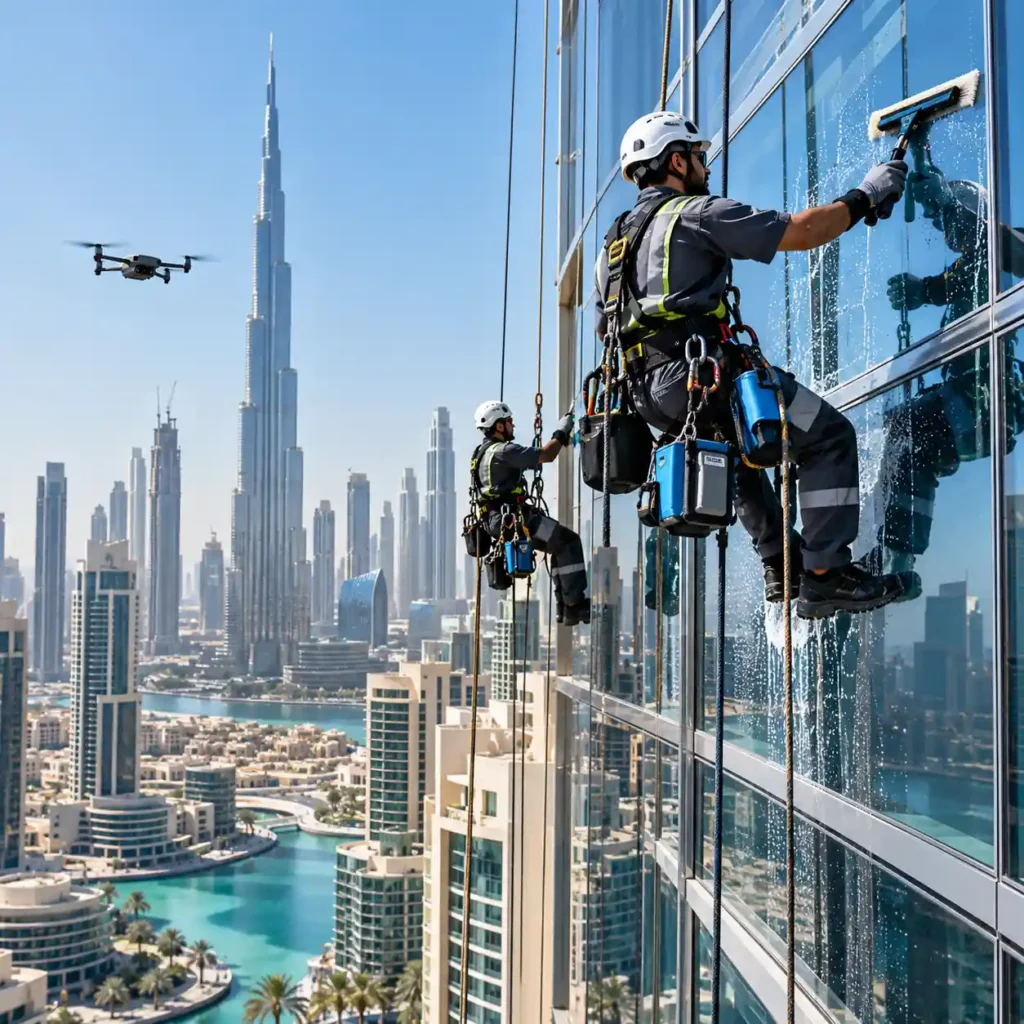
A property manager notices recurring stains near the upper floors of a Dubai skyscraper. Identifying the affected area may require specialist access, while cleaning it involves another set of equipment and safety considerations.
Could a drone inspect the facade before workers arrive? Could robotic equipment clean the affected surfaces?
These technologies offer potential improvements in high-rise building maintenance, but they perform different tasks. Drone facade inspection focuses on collecting visual information, while robotic facade cleaning involves physically treating building surfaces.
Understanding their capabilities and limitations helps property managers evaluate whether these emerging technologies are practical for their buildings.
How Drone Facade Inspection Works
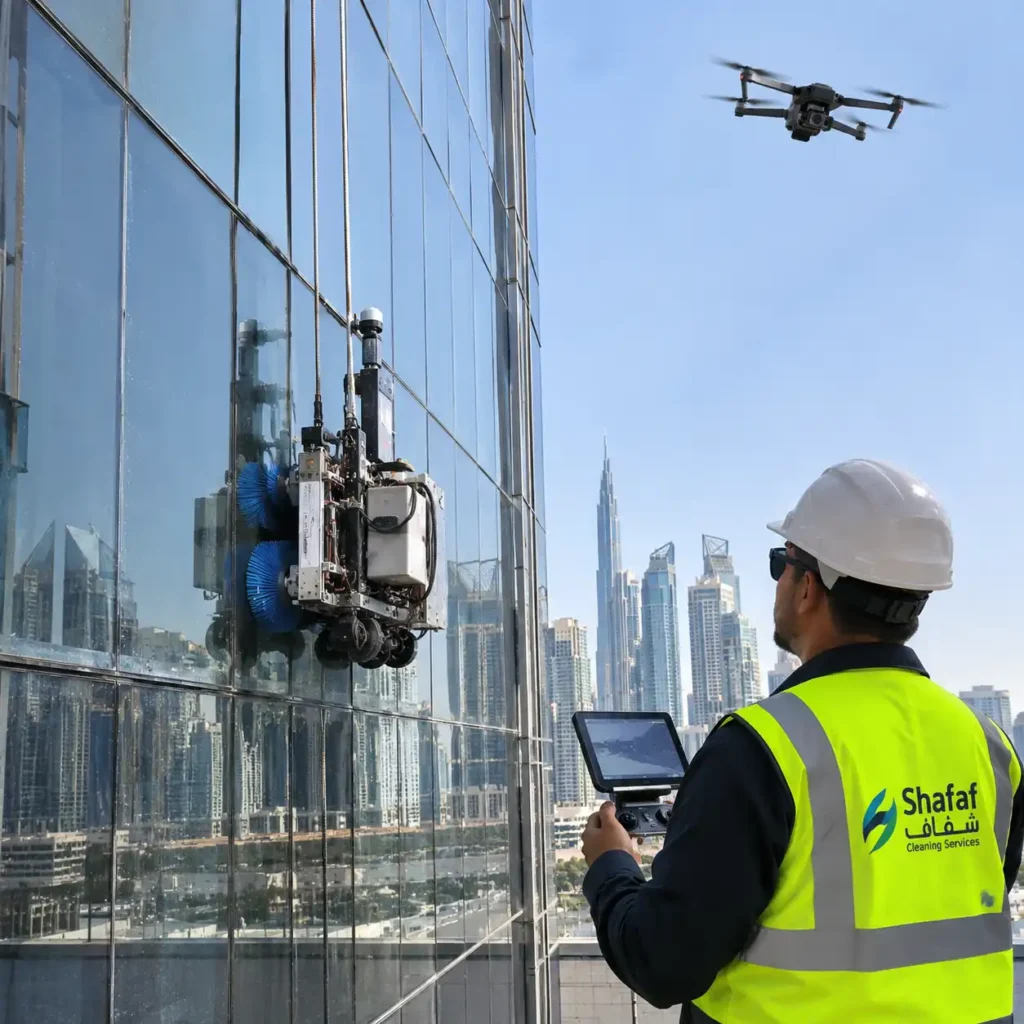
Drone facade inspection uses camera-equipped unmanned aircraft to capture images of a building’s exterior.
Where flights are legally authorised, drones can potentially document areas that are difficult to observe from the ground.
What Can Drones Identify?
Aerial photographs may help maintenance teams locate:
- Visible cracks and surface deterioration.
- Stains and discolouration.
- Damaged exterior panels.
- Areas requiring closer investigation.
Images collected from consistent viewpoints can also help property managers compare visible conditions over time.
However, drone photographs cannot independently establish the structural significance of cracks or determine whether concealed components are damaged.
Some concerns require direct examination, specialist testing or further investigation.
What Are Robotic Facade Cleaning Systems?
Robotic facade cleaning systems use mechanised equipment to clean suitable exterior surfaces.
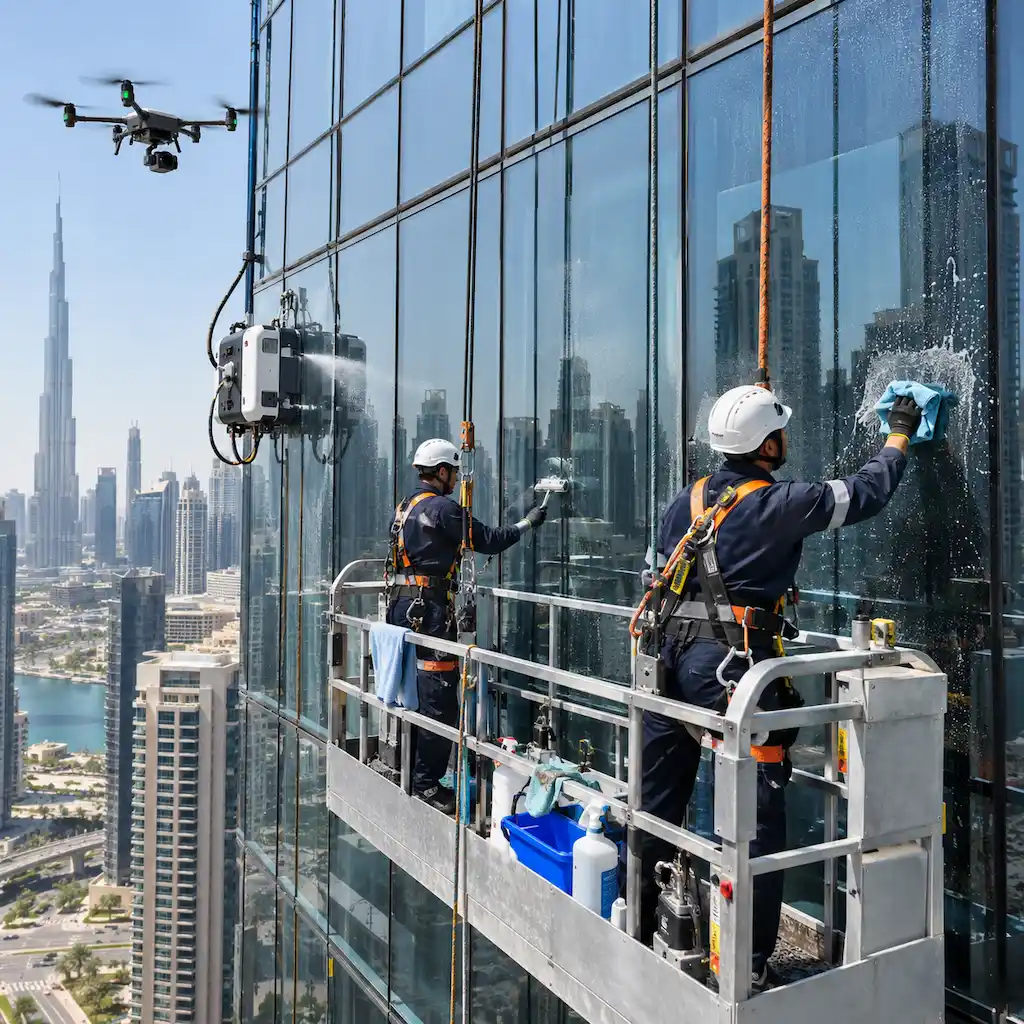
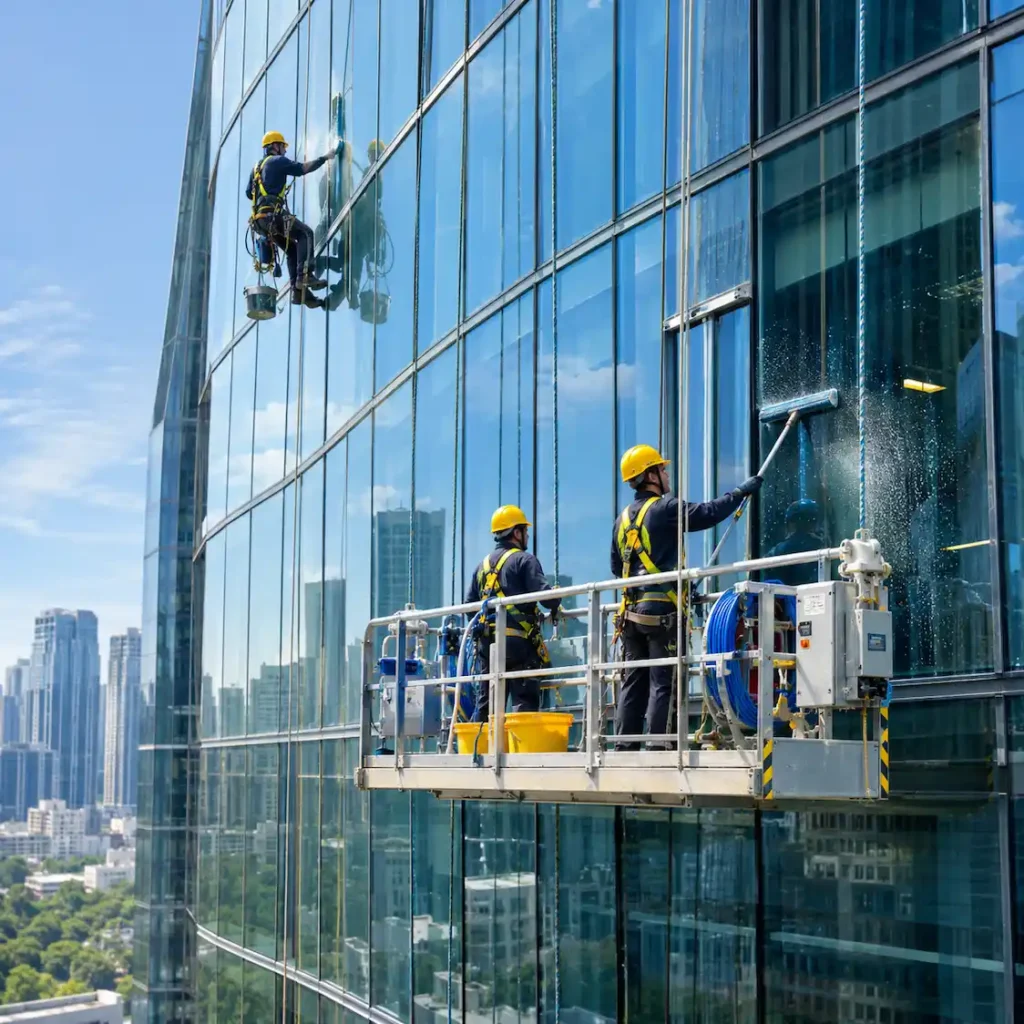
Depending on their design, these systems may operate through suspended platforms, guided tracks or specialised surface-attachment mechanisms.
Cleaning tools can include brushes, controlled water delivery and equipment selected for particular facade materials.
Where Can Robotic Cleaning Be Useful?
Buildings with large, relatively uniform glass surfaces may offer more suitable operating conditions than facades with complex architectural features.
However, equipment compatibility must be assessed before use.
A robot designed for flat glass panels may struggle with recessed windows, projecting structures, irregular corners or changes in surface depth.
Property managers should evaluate the equipment against their building’s actual facade rather than assuming that one robotic system can clean every skyscraper.
Practical Challenges of Automated Building Maintenance
Although automation may reduce some repetitive activities, it introduces operational challenges that require careful planning.
Surface Compatibility
Glass, stone, aluminium panels and protective coatings have different cleaning requirements.
Brush pressure, water flow and cleaning chemicals must be suitable for the installed materials.
Incorrect treatment can damage surfaces regardless of whether the equipment is operated manually or automatically.
Equipment Safety and Recovery
A robotic cleaning system can experience mechanical faults, power interruptions or positioning problems.
Before operation, contractors should establish how equipment will be secured, monitored and recovered safely.
Weather conditions, access restrictions and pedestrian areas also influence whether automated cleaning is appropriate.
Drone Inspection Regulations in Dubai
Drone operations in Dubai are subject to aviation regulations and applicable authorisations.
Dubai’s Law No. 4 of 2020 establishes requirements for unmanned aircraft activities, including permits and operational conditions.
An additional restriction was introduced in 2026.
The UAE General Civil Aviation Authority issued Safety Decision 2026-03, temporarily suspending drone operations. Its revised Issue 03, dated 27 April 2026, retained the suspension while allowing specific operations authorised through written GCAA exemptions.
Because aviation restrictions can change, property managers must confirm the latest requirements with the GCAA and Dubai Civil Aviation Authority before arranging any drone inspection.
Owning appropriate equipment does not establish permission to operate it.
Can Drones and Robots Replace Traditional Facade Cleaning?
Drones and robotic systems should not be considered direct replacements for every established maintenance method.
A conventional inspection drone captures images but cannot perform physical cleaning.
Robotic systems may clean compatible surfaces, but they cannot necessarily access every building feature or resolve underlying facade defects.
Traditional access methods may therefore remain necessary for detailed examination, repairs and cleaning.
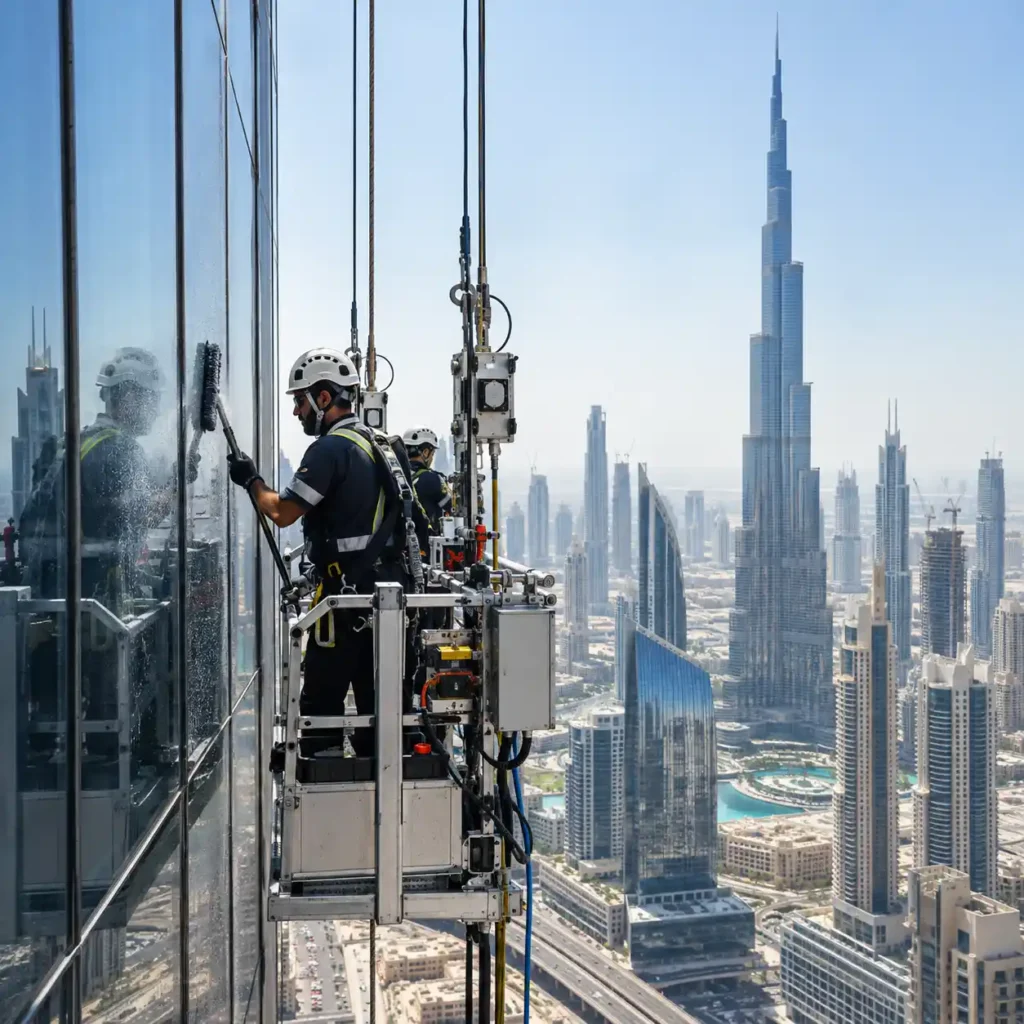
For example, professional facade cleaning in Dubai may involve different access arrangements depending on building height, exterior materials and architectural design.
The most suitable approach depends on the maintenance task rather than the technology’s novelty.
How Property Managers Can Evaluate These Technologies
Before introducing automated equipment, property managers should identify the specific maintenance objective.
Important considerations include:
- Whether the task involves inspection, cleaning or technical assessment.
- Compatibility with the building’s facade materials.
- Equipment access and recovery arrangements.
- Applicable permissions and safety requirements.
- Operator competence and supervision.
- Inspection quality or cleaning performance.
- Costs compared with established methods.
For teams responsible for building cleaning in Dubai, automation should support a clearly defined maintenance requirement.
The wider role of emerging high-rise maintenance technology also depends on how equipment, specialist expertise and maintenance records work together.
The Future of Drones and Robotics in Building Maintenance
Drones and robotic cleaning systems could improve how Dubai’s high-rise buildings are inspected and maintained.Their potential value lies in collecting useful information, supporting suitable cleaning tasks and helping maintenance teams plan work more effectively.
However, regulations, building design, surface compatibility and equipment limitations must guide their use.The future of building maintenance is therefore likely to involve carefully selected technology working alongside established access methods and professional expertise rather than replacing them entirely.
Frequently Asked Questions
Can drones inspect skyscrapers in Dubai?
Drone technology can support exterior inspections, but actual operations depend on current aviation restrictions and applicable authorisations. Regulatory permission must be verified before arranging flights.
Can robots clean an entire high-rise building?
Some robotic systems can clean suitable facade surfaces. Their coverage depends on building geometry, equipment capabilities, access arrangements and surface compatibility.
Are drone inspections better than manual inspections?
Drone inspections can provide useful visual documentation, but they cannot replace every type of physical assessment. The appropriate method depends on the defects being investigated.