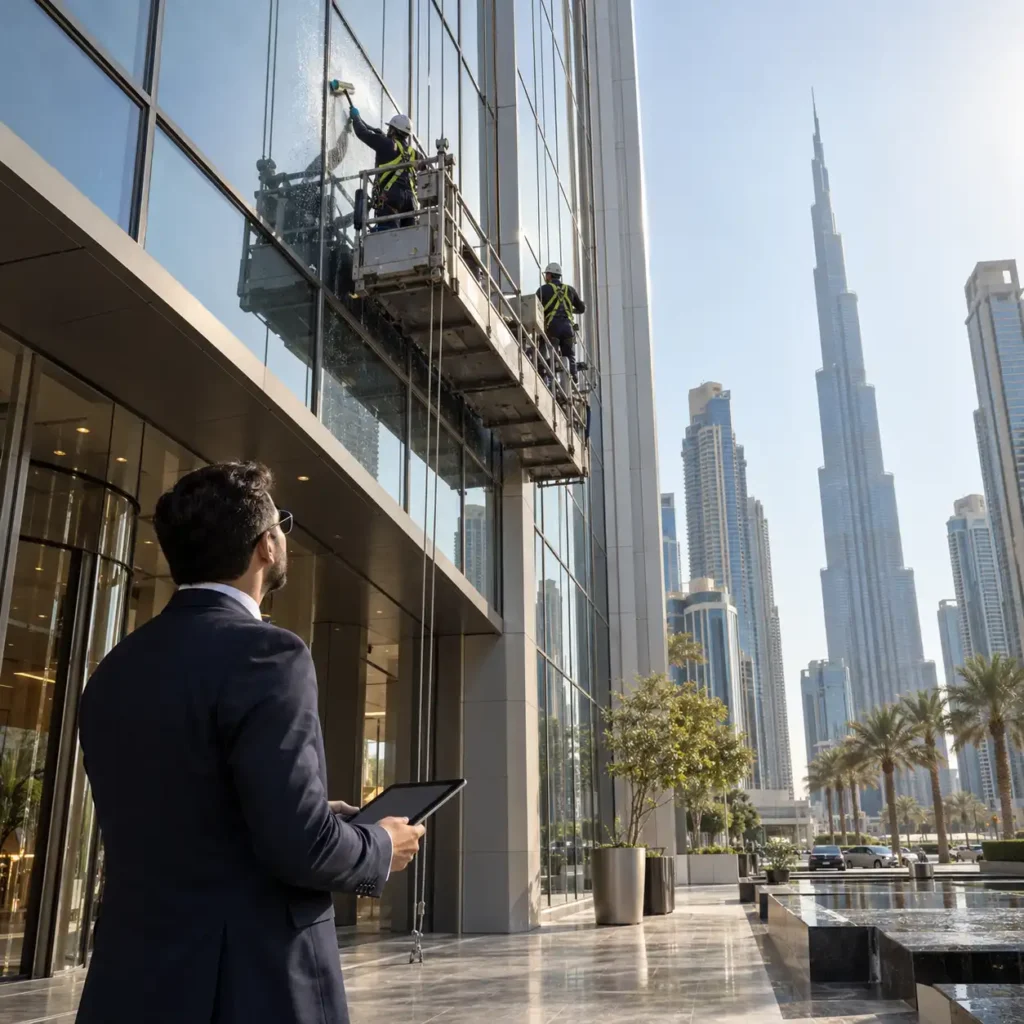
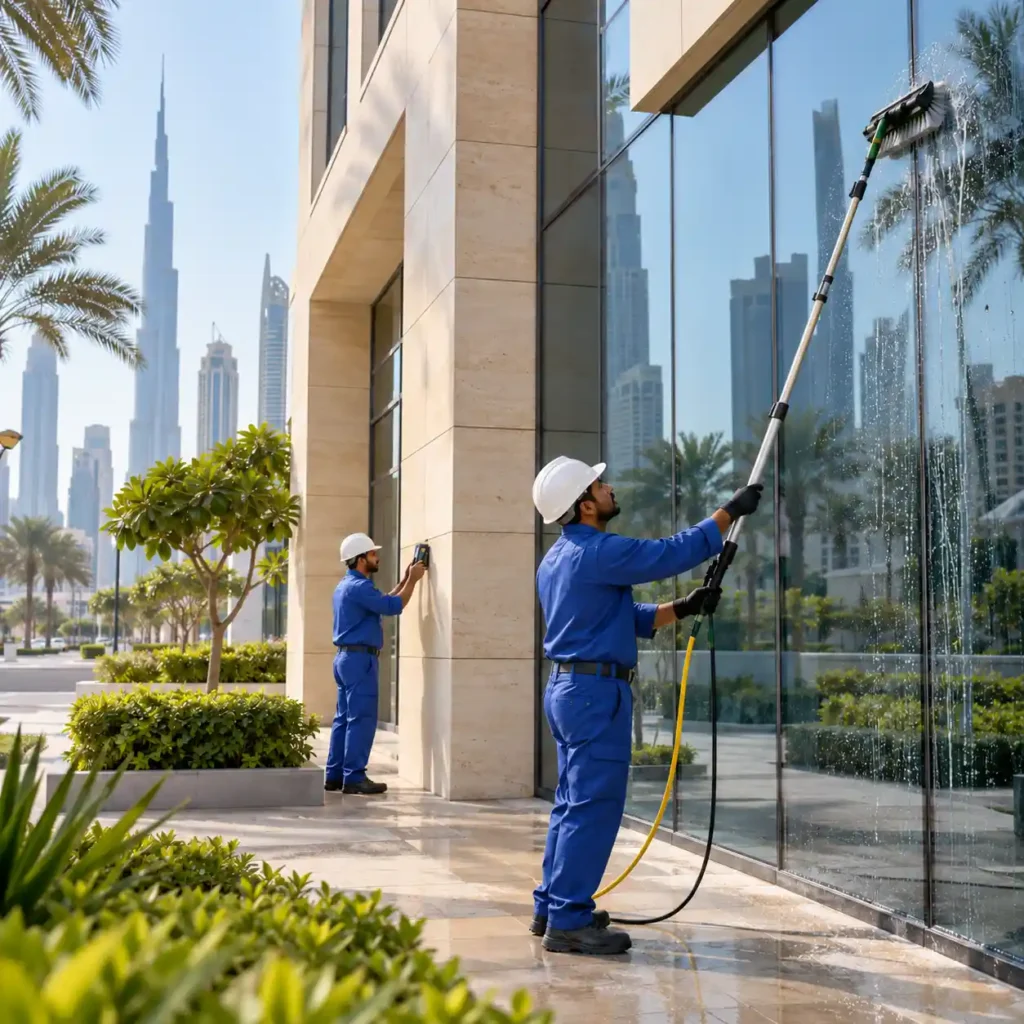
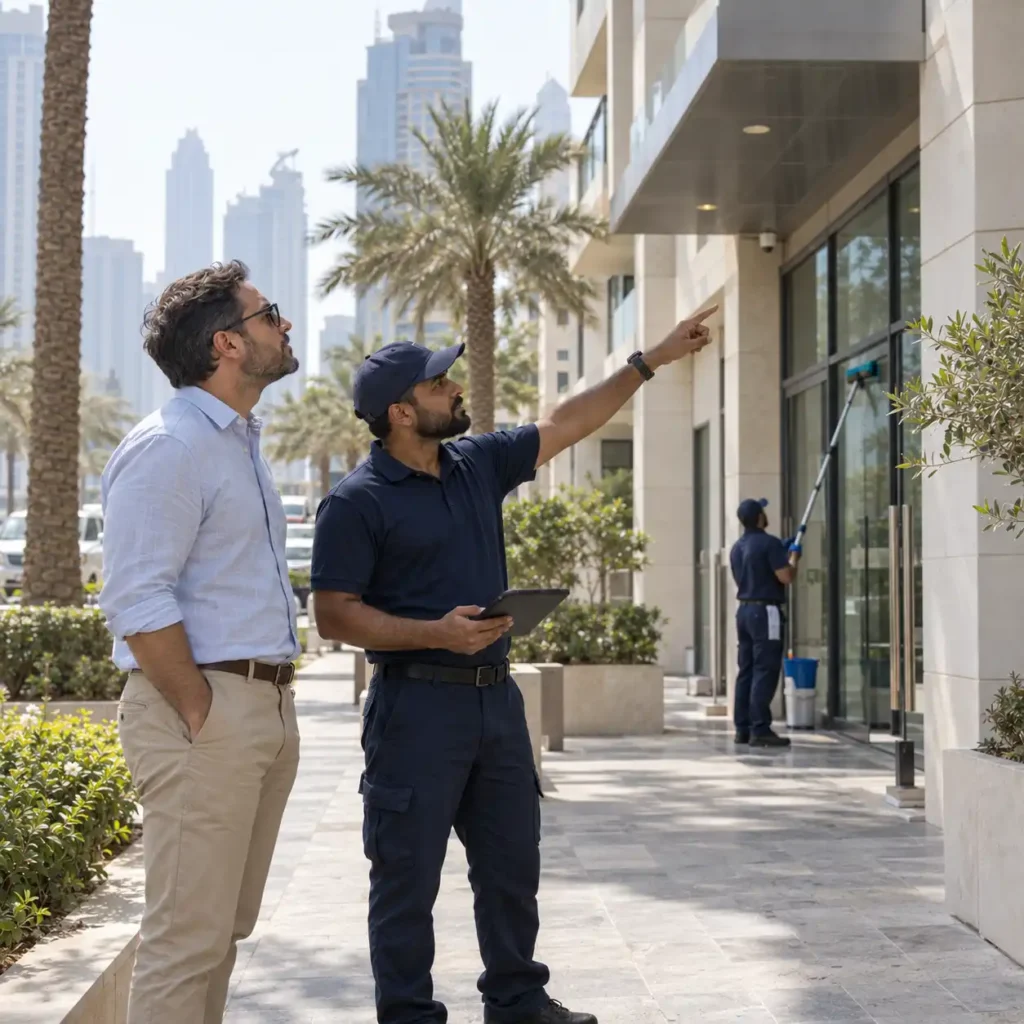
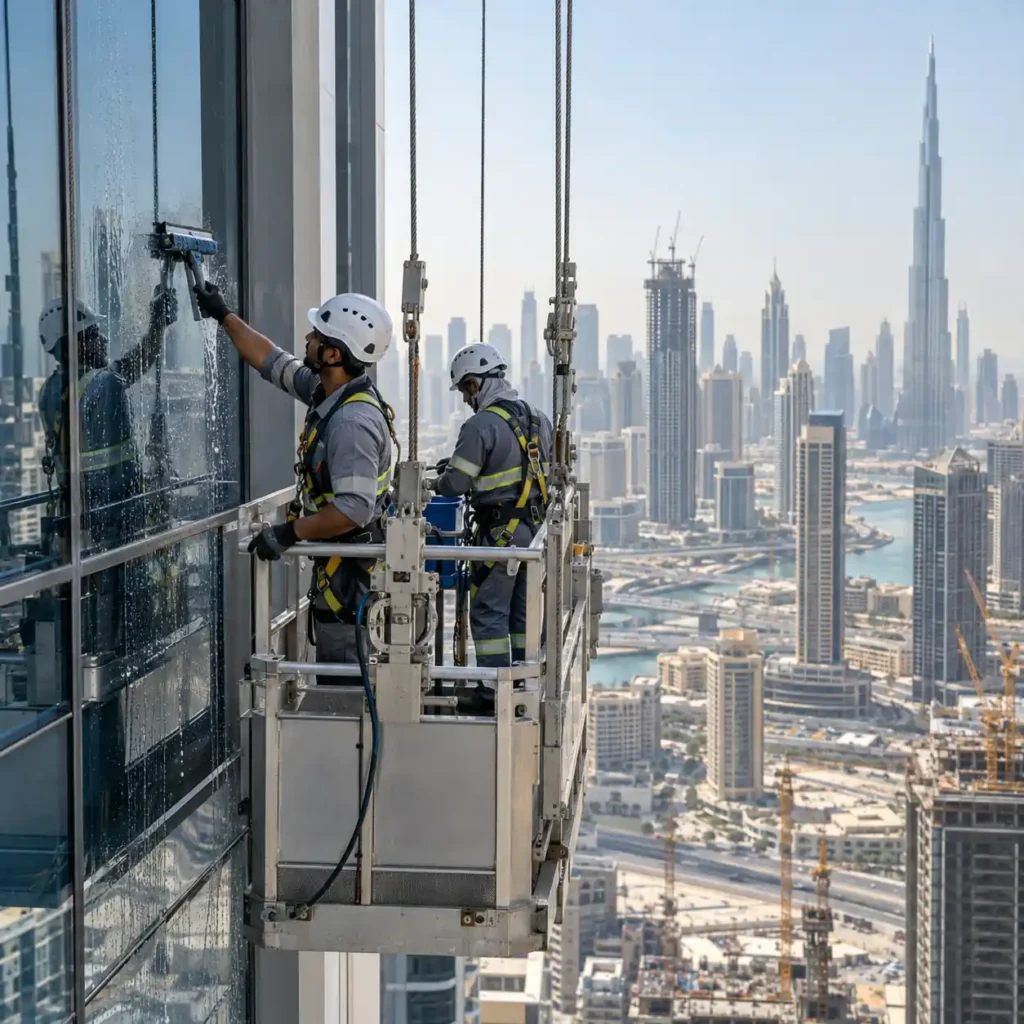
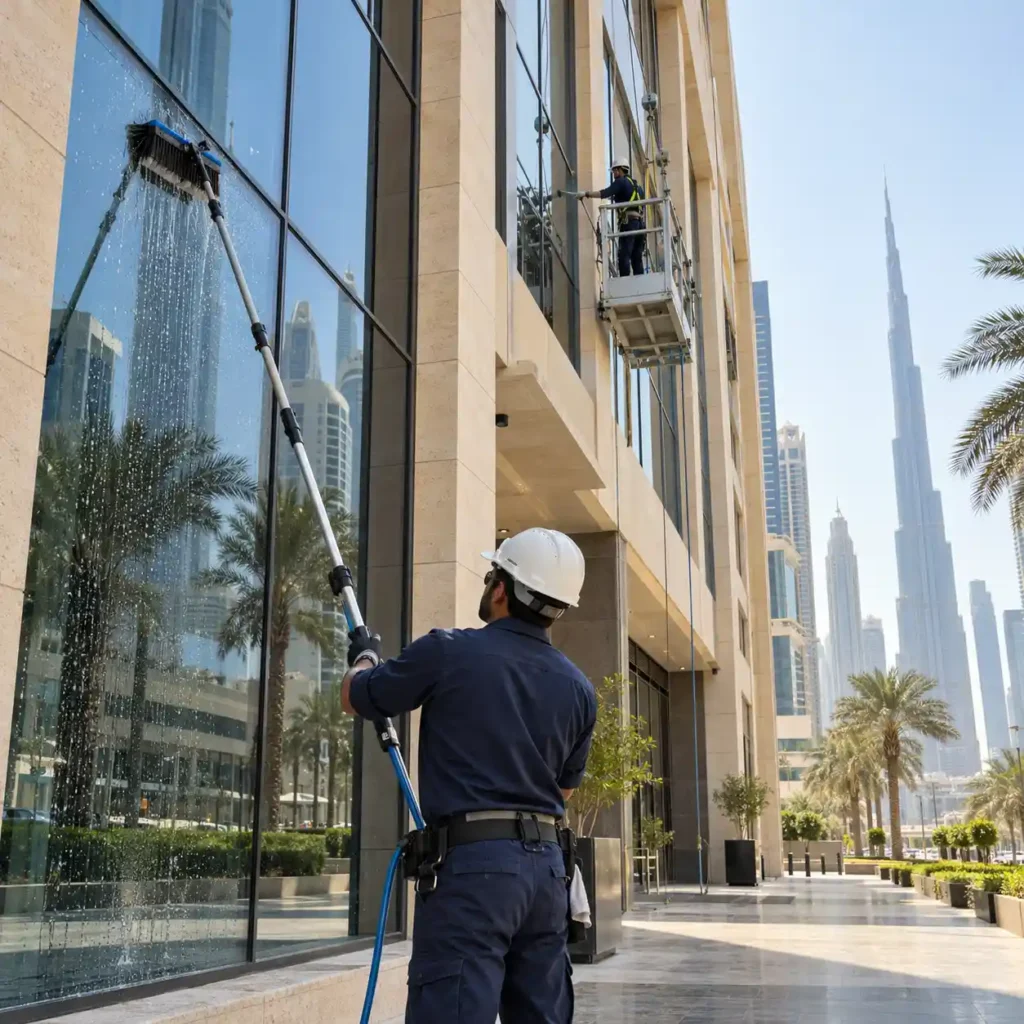
Building exterior maintenance in Dubai is becoming increasingly focused on better planning, documented inspections, coordinated facility management and surface-specific cleaning methods. In 2026, property owners can improve maintenance decisions by connecting cleaning observations with repair requirements, tracking recurring issues and evaluating resource use.
Dubai Municipality’s initiatives in integrated facilities management and asset lifecycle planning provide public-sector examples of these approaches. However, their adoption across private properties should not be assumed.
For property owners and facility managers, the priority is to identify which building exterior maintenance trends can improve operational efficiency, protect exterior surfaces and make service quality easier to verify.
Integrated Facility Management for Building Exterior Maintenance
Dubai Municipality announced an integrated facilities management model in January 2026, bringing facilities services, maintenance and operations into a coordinated framework supported by digital dashboards and predictive systems.
For building exteriors, this approach highlights the importance of communication between cleaning teams, maintenance contractors and property managers.
For example, a cleaning inspection may identify recurring staining, blocked drainage or deterioration around facade components. Sharing these observations with the responsible maintenance team helps determine whether routine cleaning is sufficient or further assessment is needed.
Property owners do not necessarily need an advanced digital platform to achieve this. A central maintenance register, clearly assigned responsibilities and consistent reporting can provide a practical starting point.
Condition-Based Exterior Maintenance and Inspection
Fixed cleaning schedules help property managers plan budgets and arrange access. However, the same schedule may not suit every building or elevation.
Properties exposed to construction dust, heavy traffic or recurring moisture may require different inspection frequencies. Similarly, repeated marks beneath a facade feature may indicate an underlying issue that routine cleaning alone will not resolve.
A condition-based approach combines scheduled reviews with observations from the building itself.
Property managers should record changes in surface condition, identify recurring problems and document whether completed work delivers lasting results. This information supports more informed decisions about cleaning frequency, further investigation and repair requirements.
Condition-based planning should complement established maintenance schedules rather than replace essential inspections or agreed service commitments.
Digital Inspections and Exterior Maintenance Records
Digital photographs, inspection reports and maintenance dashboards are useful when they help teams make decisions and track outstanding work.
For building exterior maintenance, records should identify the relevant elevation or area, inspection date, work completed and any unresolved defects. Consistent labels make it easier for incoming contractors and property managers to understand previous observations.
Useful records can include:
- Completed cleaning areas and inspection coverage.
- Access restrictions and areas that could not be serviced.
- Recurring stains, visible deterioration and other observations.
- Outstanding repairs, approvals and follow-up actions.
Organised records also help property managers distinguish between a cleaning issue and a condition that requires technical assessment.
A simple, consistently maintained reporting system can be more useful than a large collection of photographs without context.
Lifecycle Planning for Building Exterior Maintenance
Dubai Municipality’s Specialised Asset Management Strategy 2026–2030 addresses planning, governance, data quality, operations, maintenance and lifecycle management for public assets.
For private property owners, the wider lesson is to consider how current maintenance decisions affect future work.
Cleaning a surface that requires repair may lead to unnecessary repeat work. Treating a deteriorated finish without assessing its condition may produce disappointing results or create additional risks.
A lifecycle-oriented plan considers the condition of exterior materials, expected maintenance requirements, future repairs and the availability of historical service records.
For a more detailed approach to recurring cleaning requirements, see our guide to lifecycle cleaning plans.
Sustainable Building Exterior Cleaning and Resource Efficiency
Resource efficiency is another consideration for property managers reviewing exterior maintenance contracts. Professional facilities management guidance, including RICS guidance on resource management, supports evaluating how buildings and their services use resources.
Rather than relying on broad sustainability claims, owners should ask contractors to explain their working methods and how performance is assessed.
Questions worth asking include:
- How does the proposed process minimise unnecessary water and material use?
- How is wastewater or runoff managed?
- Can better planning reduce repeat visits or avoidable rework?
- How does the method protect the exterior surface while achieving the agreed result?
A method should be evaluated on its actual performance, resource requirements and suitability for the building, not simply on equipment descriptions or environmental labels.
Facade Materials and Surface-Specific Cleaning Methods
Building exteriors contain different materials, finishes and components, so a single cleaning method may not be appropriate for every surface.
Before approving a treatment, property managers should confirm the material involved, review applicable care instructions and request an explanation of the proposed method. Where suitability is uncertain, an appropriate test area may help assess the result before wider application.
For window cleaning in Dubai, clarify whether the service includes only the glazing or also covers frames and surrounding components.
The agreed scope should identify the surfaces included, access arrangements and any exclusions. This helps ensure that the service reflects the building’s actual requirements rather than a generic cleaning package.
Building Exterior Maintenance Checklist for 2026
Use your next service or contract review to assess whether your maintenance process supports better decisions and more consistent results.
- Coordination: Can exterior cleaning observations reach the team responsible for repairs and building operations?
- Documentation: Are inspection photographs, reports and outstanding actions labelled consistently?
- Planning: Are scheduled tasks reviewed when documented conditions change?
- Resource efficiency: Can contractors explain how their methods manage water, materials and repeat work?
- Surface protection: Are cleaning methods appropriate for the specific facade materials?
- Accountability: Are responsibilities, service scope and follow-up actions clearly documented?
The broader 2026 exterior building care trends in Dubai provide additional context for evaluating these decisions across different property types.
When comparing building cleaning services in Dubai and Sharjah, focus on clear scopes, appropriate cleaning methods, documented results and reliable communication. The most valuable maintenance improvement is the one that addresses a real operational weakness at your property.
Frequently Asked Questions
What are the key building exterior maintenance trends in 2026?
Important areas of focus include integrated facilities management, condition-based maintenance planning, digital inspection records, lifecycle planning and measurable resource efficiency. Their suitability depends on the property’s condition, materials and operational requirements.
Should condition-based inspections replace a fixed cleaning schedule?
No. Condition-based inspections can complement planned maintenance schedules by helping property managers adjust tasks when documented conditions justify a change. Essential inspections and contractual requirements should still be maintained.
What information should an exterior maintenance report include?
A useful report identifies the location and date of the work, areas completed, relevant photographs, access limitations, observed defects and outstanding actions. Clear responsibility assignments make follow-up easier.
How can property owners assess sustainable exterior cleaning claims?
Ask providers to explain their methods, resource use, runoff management and approach to reducing unnecessary repeat work. Evaluate these details alongside surface protection, safety requirements and the agreed cleaning outcome.
Why do exterior cleaning methods need to match facade materials?
Different materials and finishes can respond differently to water pressure, chemicals and mechanical action. Confirming material suitability before treatment helps reduce the risk of damage and supports more appropriate maintenance decisions.